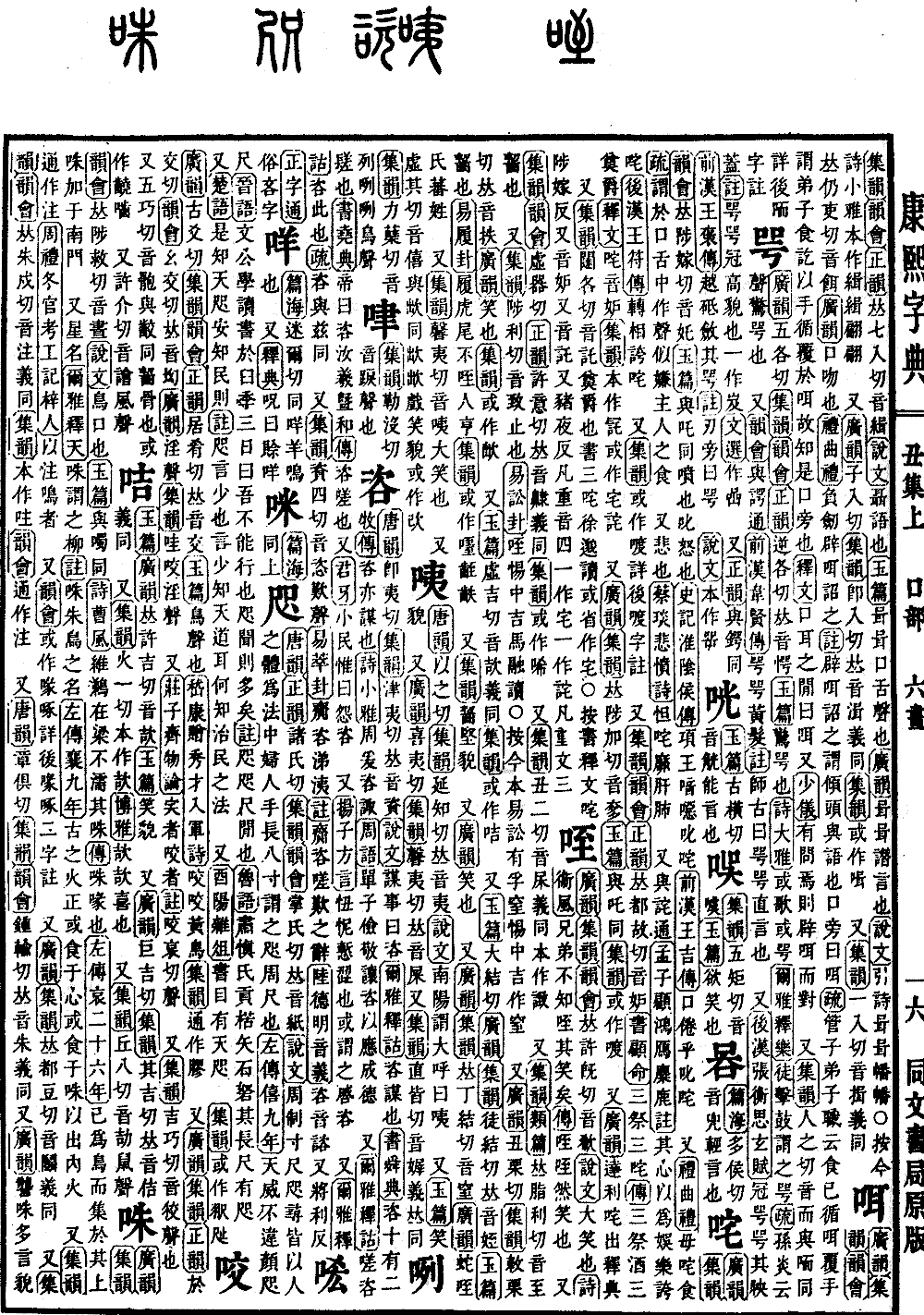
Chou Collection, Upper Volume
Radical: Mouth (kǒu)
Character: zi
Kangxi stroke count: 9
Page 186, Entry 11
Pronounced zi.
According to the Shuowen Jiezi (Shuowen), to plan affairs is called zi. According to the Erya (Erya), Shigu, zi means to plan.
In the Book of Documents (Shangshu), Shun Dian, it states: Zi, the twelve pastors. The commentary states: Zi also means to plan. In the Book of Odes (Shijing), Xiaoya, it states: Zhou yuan zi zou. In the Discourses of Zhou (Guoyu), it states: Master Dan was frugal, respectful, and yielding, planning in order to respond to perfected virtue.
Also according to the Erya (Erya), Shigu, jie zi means to sigh. In the Book of Documents (Shangshu), Yao Dian, it states: The Emperor said: Zi, you Xi and He. The commentary states: Zi means to sigh. In the Jun Ya, it states: The common people only speak of complaints and sighs.
Also according to Yangzi, Dialect (Fangyan), to be embarrassed or bashful is sometimes called zi.
Also according to the Erya (Erya), Shigu, zi means this. The sub-commentary states: Zi is the same as the character for this (zi).
Also pronounced zi. A sound of sighing. In the Book of Changes (Yijing), Cui Gua, it states: Ji zi ti yi. The annotation states: Ji zi is an expression of sighing. According to Lu Deming, Sound and Meaning (Yinyi), the character zi is pronounced like the character for consult (zi), and is also pronounced like the character for profit (li) in reverse.