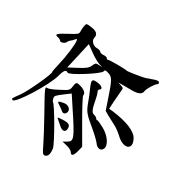
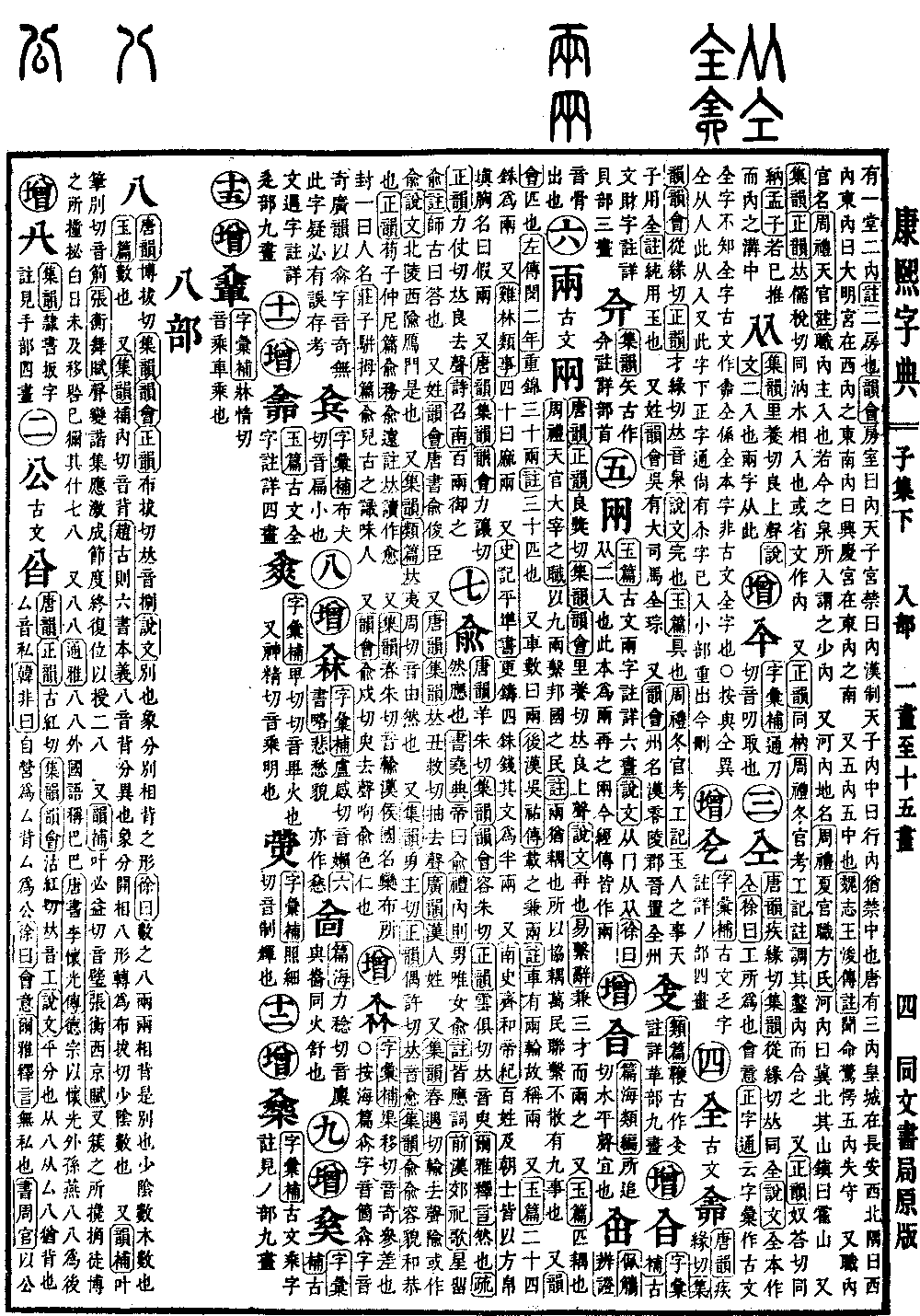
Zi Collection, Page Position: Lower
Radical: Enter (rù)
Kangxi Strokes: 9
Page 126, Entry 15
Pronounced yu.
Book of Exemplary Rhymes (Tangyun), Collected Rhymes (Jiyun), and Collection of Rhymes (Yunhui) and Correct Rhymes (Zhengyun) all agree on the pronunciation; it is pronounced the same as yu (rising tone).
Literary Expositor (Erya), Explanation of Words: It means yes. Commentary: It indicates consent or agreement.
Book of Documents (Shujing), Canon of Yao: The Emperor said yes. Book of Rites (Liji), Inner Chapters: A man says yes, a woman says yes. Commentary: Both are words of response.
History of the Former Han (Qian Hanshu), Hymns for the Suburban Sacrifices: The stars remain yes. Commentary: Shigu states: It means to answer.
Also a surname. Collection of Rhymes (Yunhui): In the Old History of Tang (Tangshu), there is Yu Junchen.
Also, pronounced chou (departing tone). Broad Rhymes (Guangyun): It is a surname from the Han dynasty.
Also, pronounced shu (departing tone). The character for a mountain pass (yu) is sometimes written as this. Explaining Graphs and Analyzing Characters (Shuowen Jiezi): It refers to the northern ridge and the western mountain pass, which is Yanmen.
Also, pronounced you. It means yes.
Also, pronounced yu (falling tone). Collected Rhymes (Jiyun): Yu-yu describes a gentle and respectful countenance. Correct Rhymes (Zhengyun): Xunzi, Master Kong's Chapter: Yu-wu yu-yuan. Commentary: Pronounced yu (falling tone).
Also, pronounced shu. It is the name of a marquisate during the Han dynasty, where Luan Bu was enfeoffed. Another source claims it is a person's name. Zhuangzi, Webbed Toes Chapter: Yu'er was an ancient person who was skilled at discerning flavors.
Also, Collection of Rhymes (Yunhui): Pronounced yu (departing tone). Xu-yu describes a benevolent facial expression.