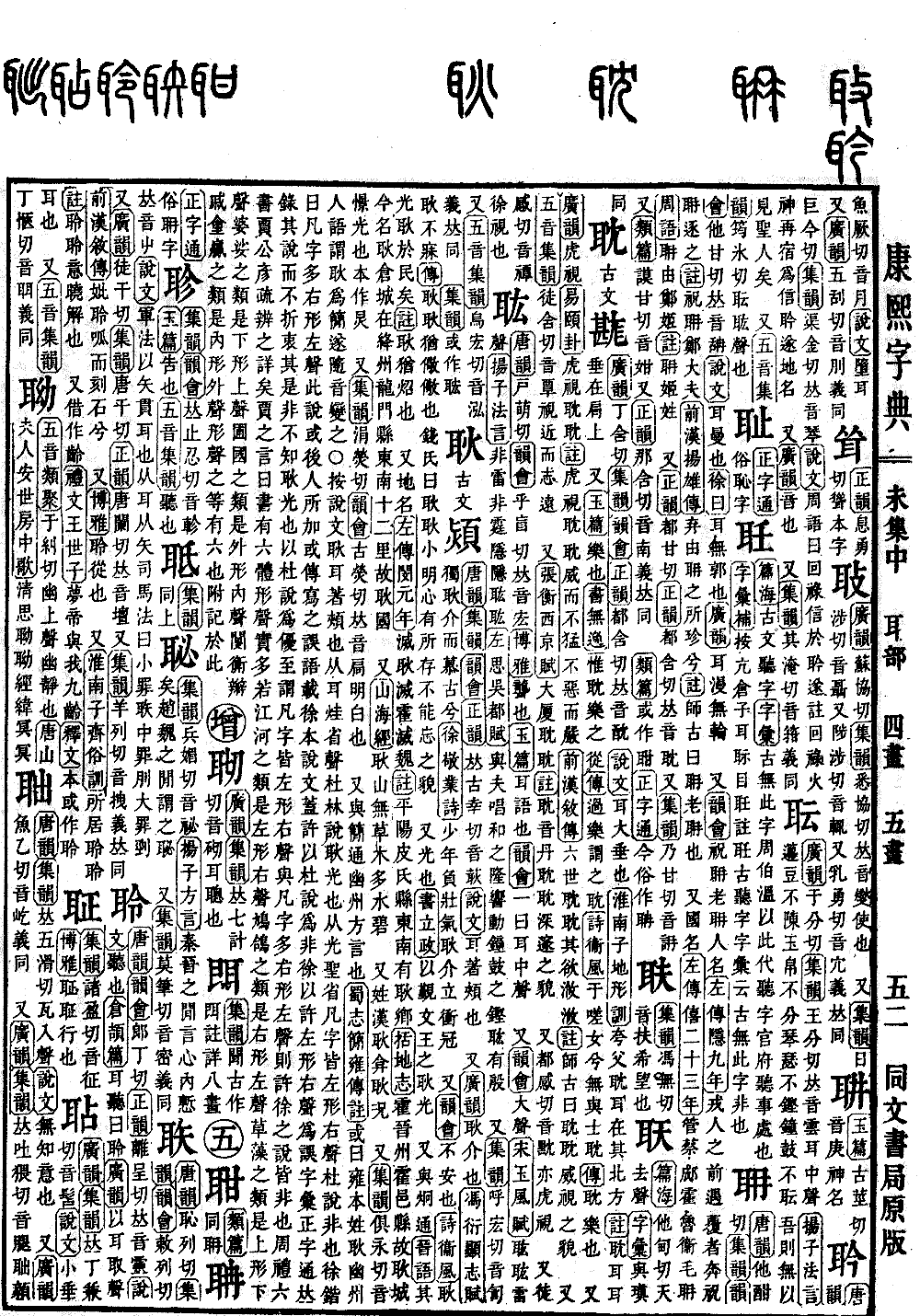
Wei Collection, Upper Volume
Radical: Ear (ěr)
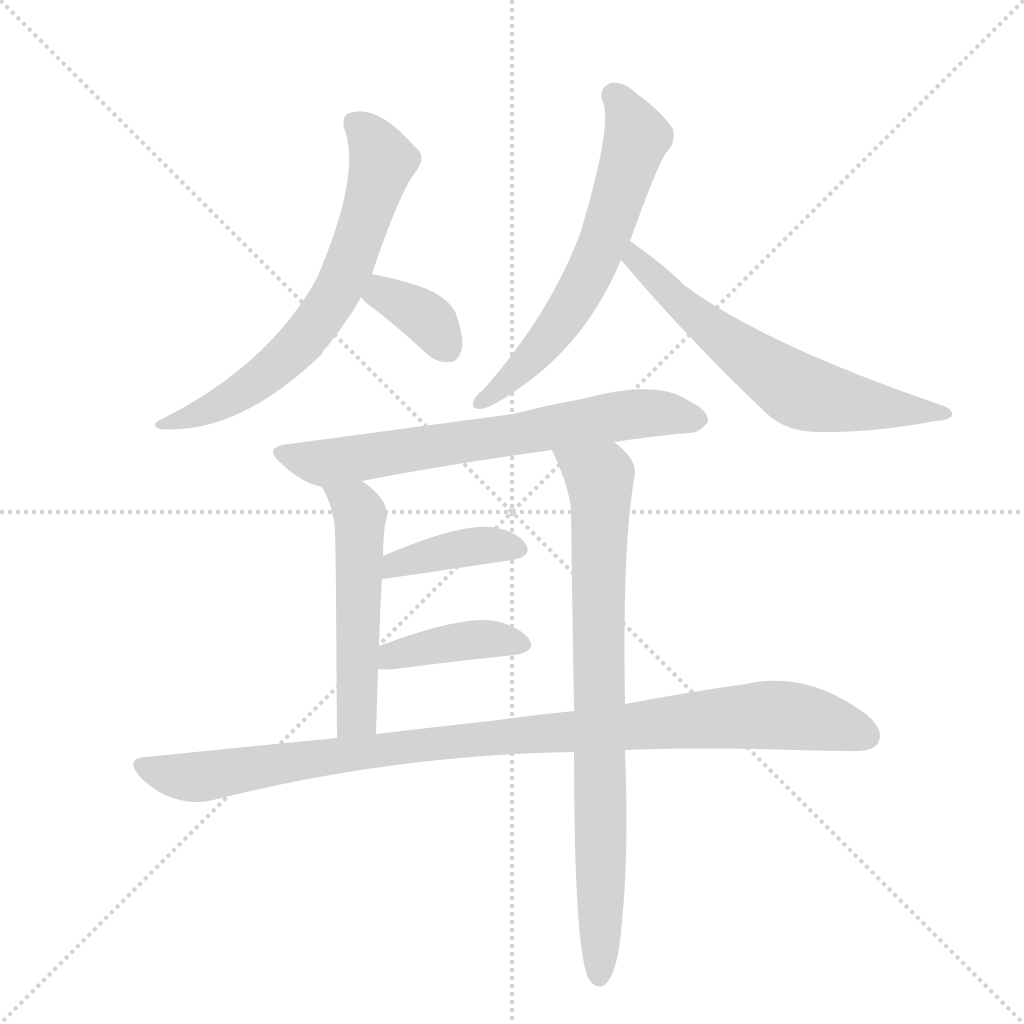
Song
Kangxi Stroke Count: 17
Page 966, Entry 01
Correct Rhymes (Zhengyun): Pronounced song. The original form of the character for to rise or to elevate.
Song
Broad Rhymes (Guangyun): Pronounced song.
Collected Rhymes (Jiyun): Pronounced sun.
Rhyme Anthology (Yunhui): Pronounced xun.
Correct Rhymes (Zhengyun): Pronounced song.
Pronounced song.
Dialect (Fangyan) by Yang Xiong: Song means deaf. Being born deaf is called song in the regions of Chen, Chu, the Yangtze, and the Huai River. Commentary: This refers to hearing nothing, often implying the ears are pricked up in an attempt to hear. It also means tall or high.
Poetry Collection (Huihe Lianju) by Han Yu: The heart of the sword knows death has not yet arrived, poetic thoughts still stand alone and tall.
Also from Dialect (Fangyan): Song means desire. It is called song in the regions of Jing and Wu. From the passes westward to the regions of Qin and Jin, mutual encouragement is called song.
Also from Dialect (Fangyan): Song means to be alarmed or terrified (song). Commentary: This refers to being startled.
Zuo Tradition (Zuo Zhuan), 14th Year of Duke Cheng: The grand officers heard of this, and there was none who was not alarmed and fearful.
Discourses of the States (Guoyu): In the past, King Wuding of the Shang dynasty was able to elevate his virtue. Commentary: Song means to respect.
Also from Collected Rhymes (Jiyun): Pronounced jiang. The meaning is the same.