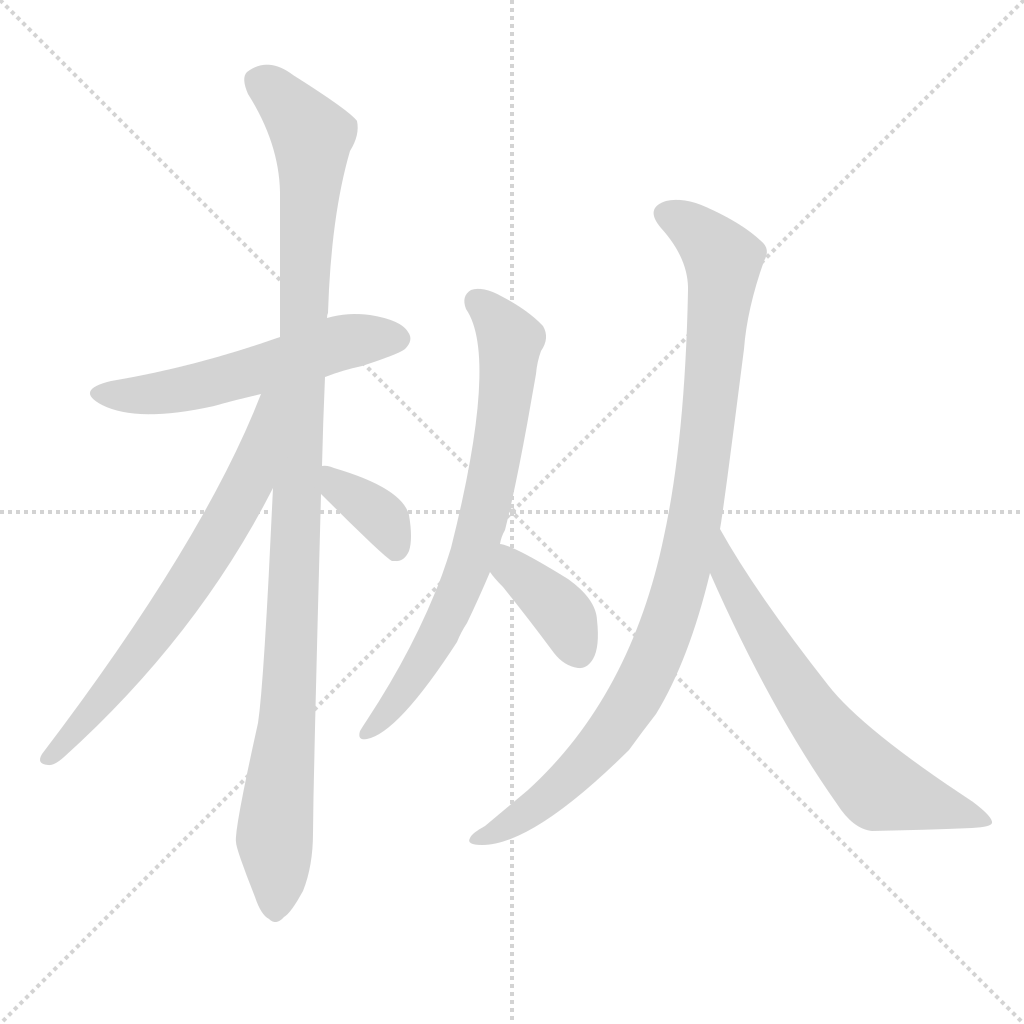
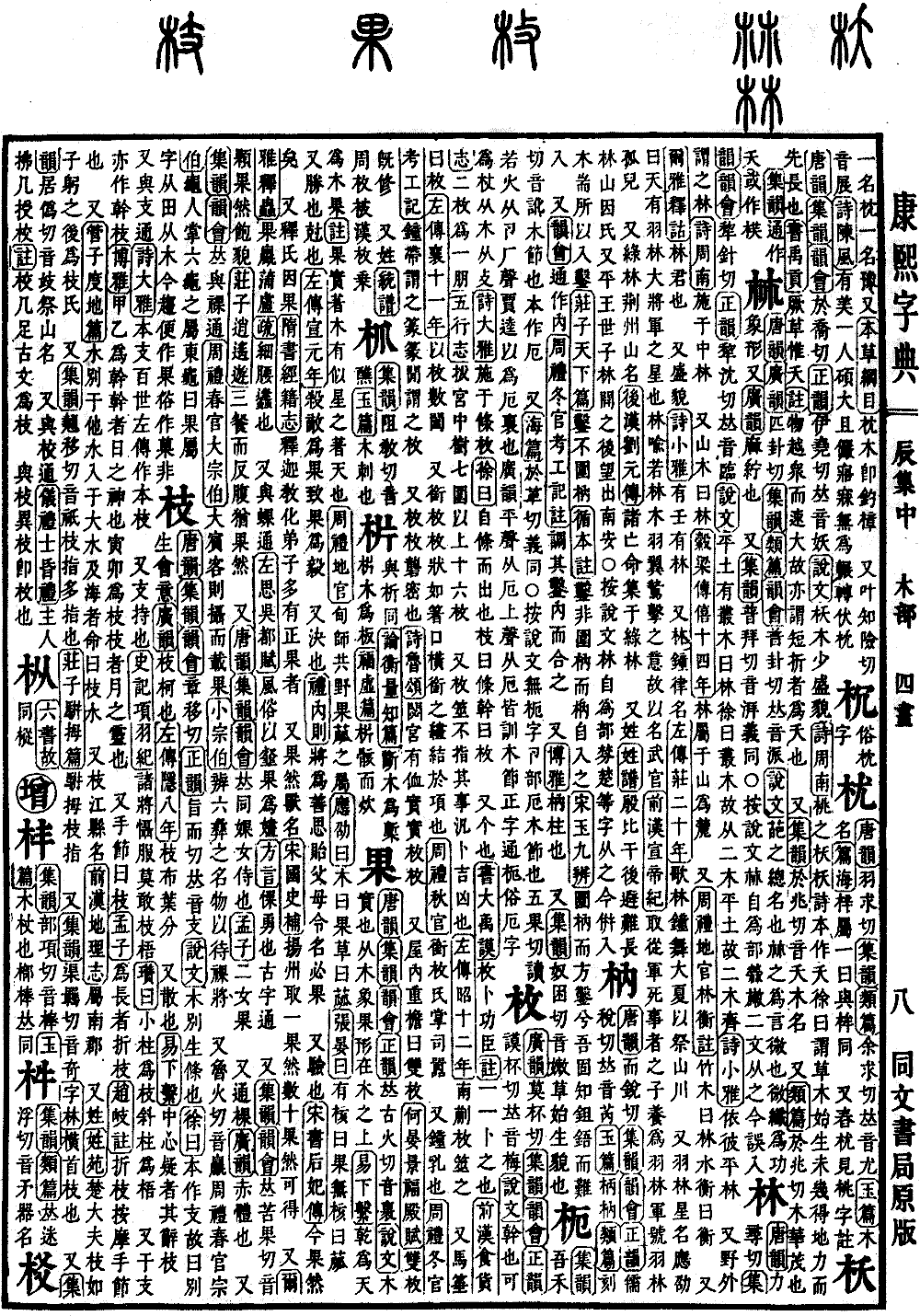
Chen Collection, Middle Volume. Radical: Tree (mù). Kangxi strokes: 15. Page 516, Entry 13.
According to the Six Writings (Liushu gu), it is the same as the character for fir.
Pronounced cong.
Shuowen Jiezi cites the Erya: The fir (cong) has the leaves of a pine and the trunk of a cypress. Guo Pu comments: The beams used in the Grand Ancestral Temple today are made of this wood.
Also, the History of the Former Han (Qian Han Shu), Biography of Huo Guang, records: Fifteen outer burial coffins were made of fir wood.
Also, the Book of Odes (Shijing), Daya section, records: The description of the sawtooth decorations (chongyang) on the wooden frame for hanging bells and chime stones standing tall is called cong. Xu Miao reads it as cong, Shen Chong reads it as cong, and it is also read as chong. The commentary explains: This describes the appearance of the sawtooth decorations standing high and tall.
It also carries the meaning of striking. The History of the Former Han (Qian Han Shu), Biography of Sima Xiangru, records: Striking the gold drums.
It is also a surname. The Records of the Grand Historian (Shiji), Annals of Gaozu, records: The King of Han ordered Lord Cong to guard Xingyang.
Also pronounced zong.
Also pronounced cong.
Also pronounced zong.
All of the above pronunciations and meanings are the same.