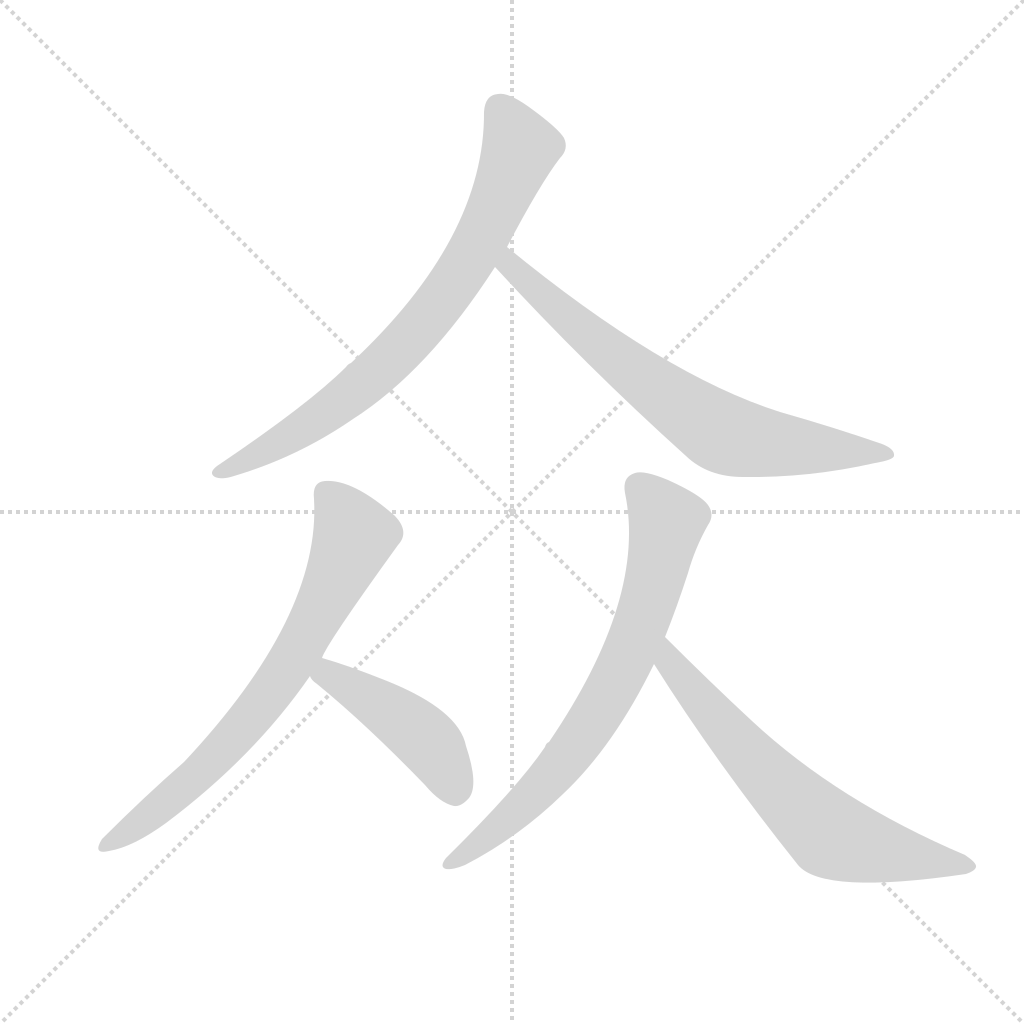
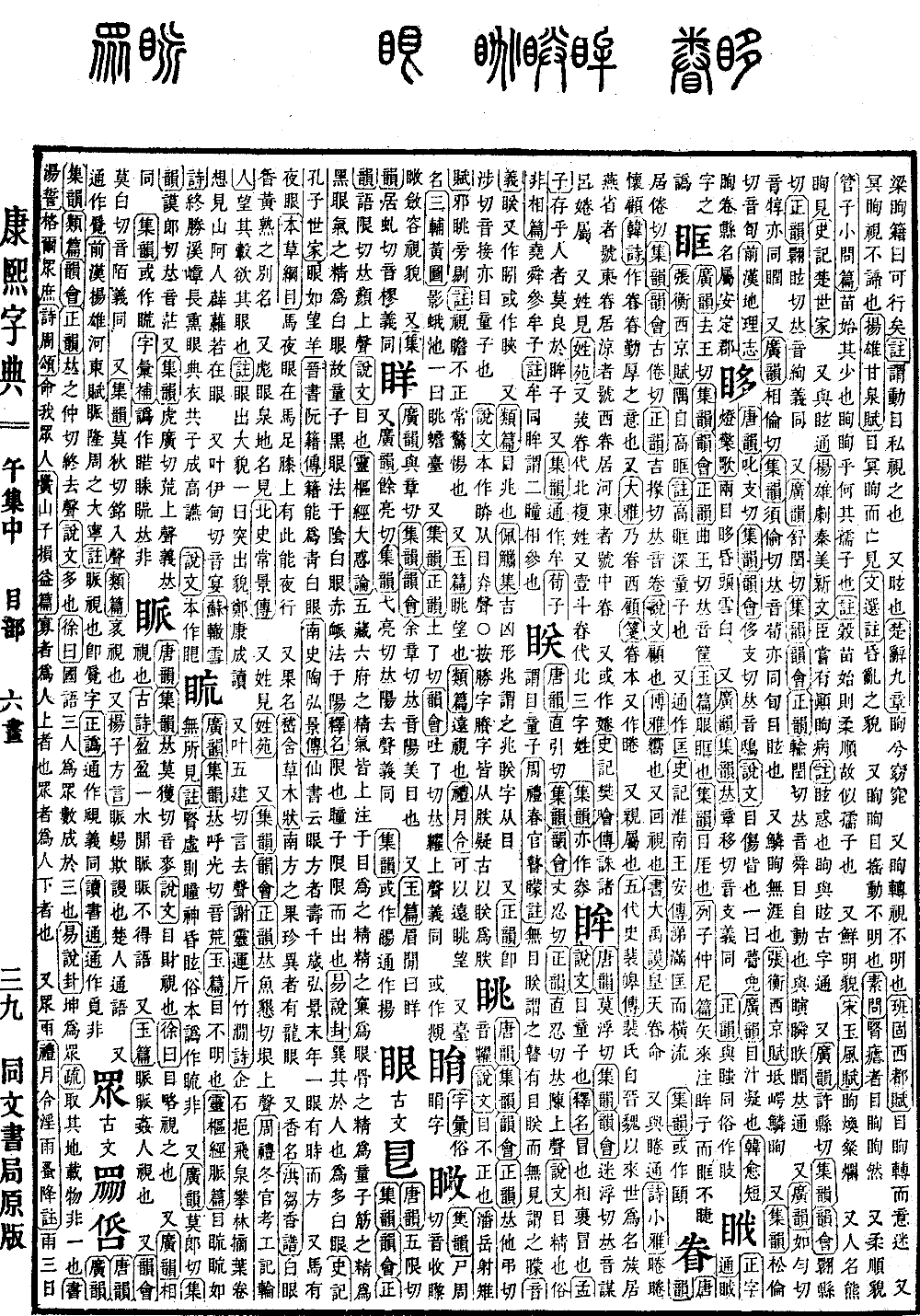
Supplementary Addendum. Zi Collection, Page Position: Upper. Radical: Person (rén).
Kangxi stroke count: 11. Page 807.
Pianhai Leibian: Pronounced yú qín qiè, same pronunciation as yín. It means many people standing. It is different from the character with three people stacked vertically. It is commonly written in the variant form as the character for multitude, which is incorrect. This character is an ancient form.
Tangyun, Guangyun, Jiyun, Leipian, Yunhui, Zhengyun: Pronounced zhī zhòng qiè, same pronunciation as the departing tone of zhōng (i.e., the sound of zhòng).
Shuowen Jiezi: Defined as many.
Xu Kai comments: The Discourses of the States (Guoyu) states that three people make a multitude. In numbers, three signifies completion.
Book of Changes (Yi): The Earth trigram symbolizes a multitude.
Commentary: This draws on the meaning of the great earth bearing all things, which are not merely one kind.
Book of Documents (Shu): Come, you multitude.
Book of Odes (Shijing): Command my numerous farmers.
Hongshanzi Sunyi Pian: The few are those who are above people. The many are those who are below people.
There is also the term zhong yu.
Record of Rites (Liji): In the monthly ordinances, rain lasting more than three days is called lin; the current version of the monthly ordinances writes it as zhong yu.
It is also the name of a star constellation.
Records of the Grand Historian (Shiji): The Lou constellation represents gathering the multitude.
It is also a county name.
Book of Han (Hanshu): Anzhong County, established in the Qin dynasty, belonged to Nanyang Commandery.
Also, according to Tangyun: Pronounced zhí róng qiè; according to Jiyun and Yunhui: Pronounced zhī róng qiè, same pronunciation as zhōng. The meaning is the same.
It is also the name of a plant.
Erya: The commentary on grasses says zhong is also known as shu. It is sticky millet. There is also the lu plant, also known as guan zhong, which is a medicinal herb.
It is also a surname.
Zuo Tradition (Zuo Zhuan): There are Zhong Zhong and Zhong Fu, where the courtesy name is used as a surname.
Also, following the rhyme, read as zhū liáng qiè, same pronunciation as zhāng.
Daozang Ge: Holding hands in the Hall of Bright Truth, looking up to the supreme emperor. In the northern region, there are feather-clad people singing; among the jade maidens, the virtuous ones are numerous.
Also, following the rhyme, read as zhū réng qiè, same pronunciation as zhēng.
Yangzi Tai Xuan Jing: To reduce the mugwort is to be unable to govern the multitude. To reduce the yellow is the way of the official.
Also, following the rhyme, read as cái yín qiè, same pronunciation as qín.
Yangzi Tai Xuan Jing: To reduce one's dignity is to wish to restrain oneself. To reduce the mugwort is to be unable to govern the multitude.
Zhengzitong: The character structure consists of a horizontal eye over three people, representing many people. The eye represents the count. Zihui writes it as the character for multitude and classifies it under the blood radical, which is incorrect.