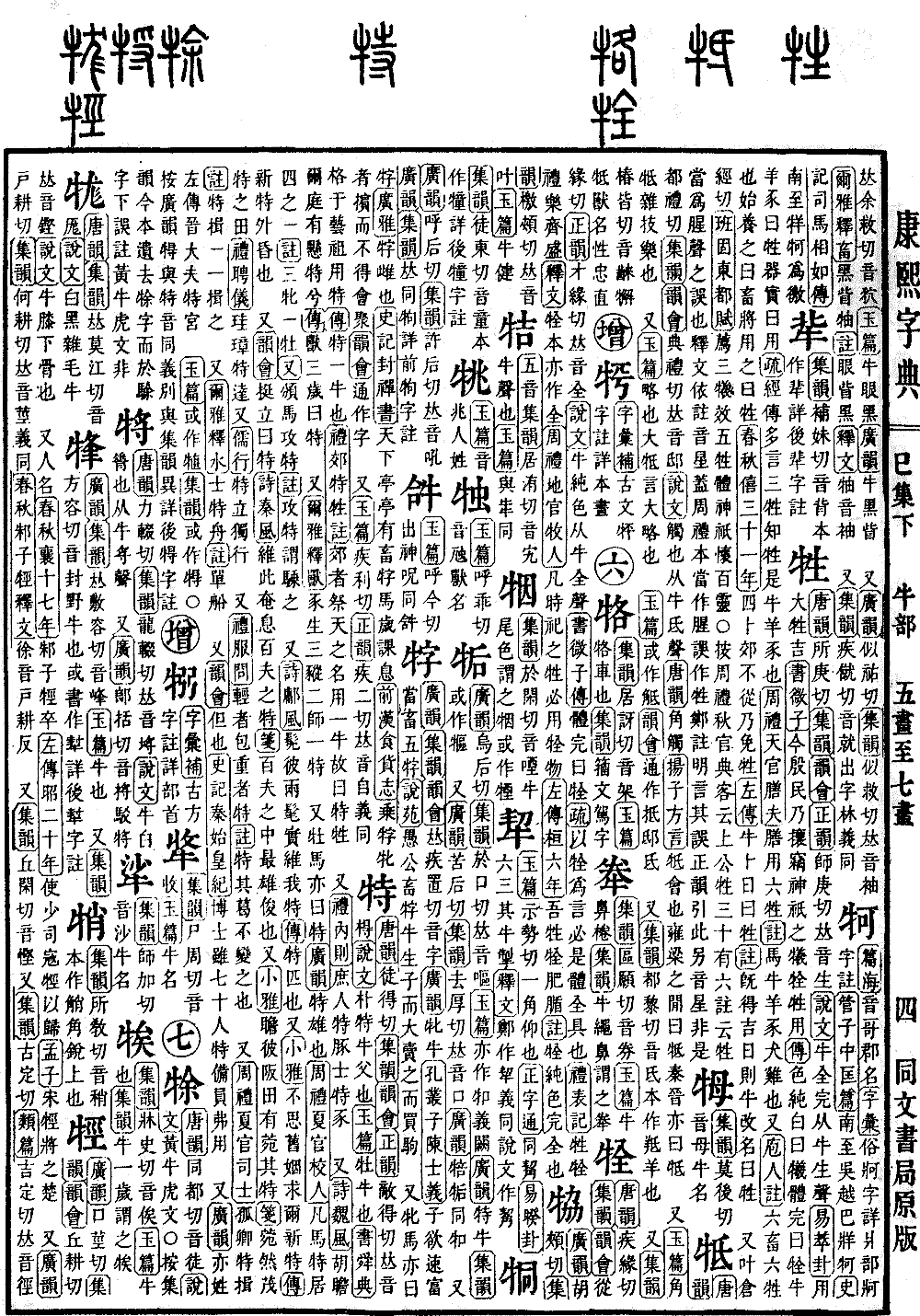
Si Collection, Lower Volume
Radical: Ox (niú)
Page 700, Entry 03
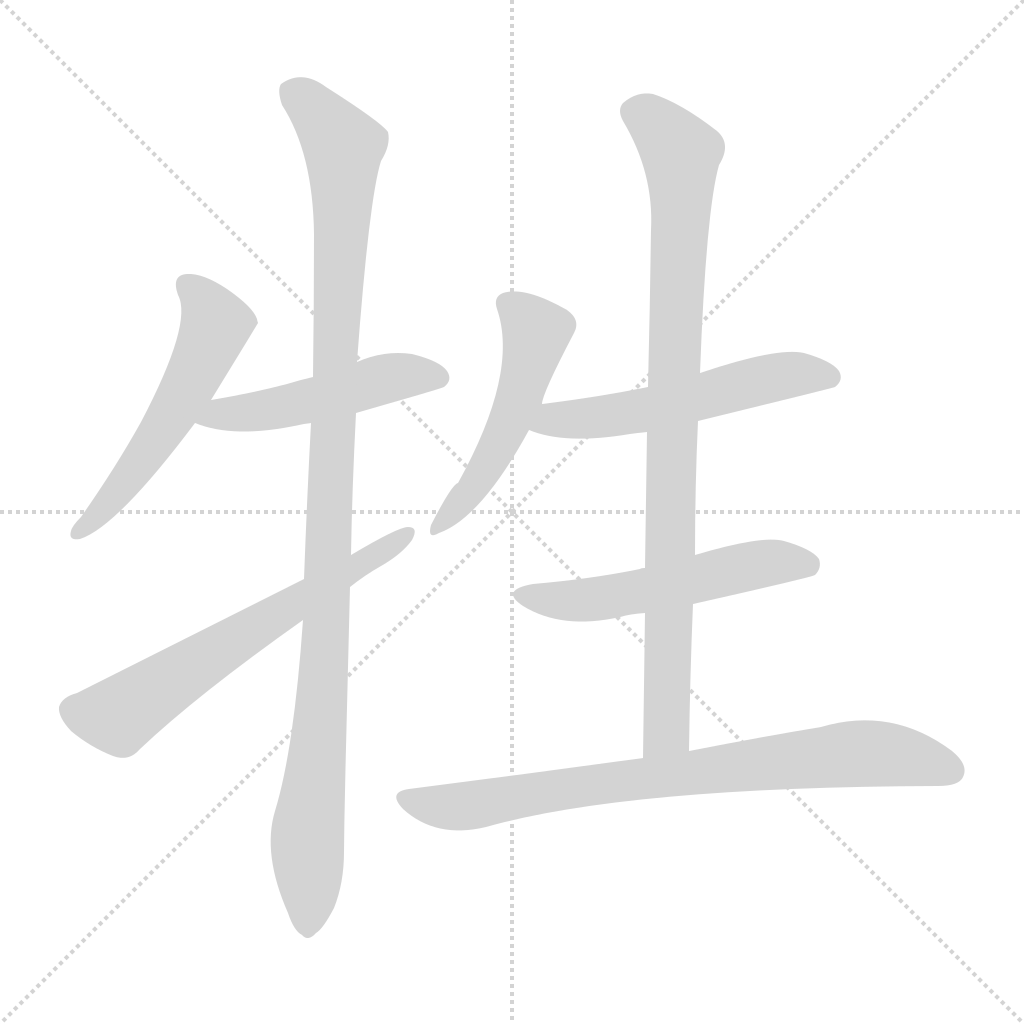
Pronounced sheng.
Shuowen Jiezi (Dictionary of Characters): A complete ox. From radical Ox, with sheng acting as a phonetic component.
Book of Changes (Yijing), Hexagram Cui: It is auspicious to use a large sacrificial animal.
Book of Documents (Shujing), Announcement of Weizi: Now the people of Yin steal and plunder the sacrificial animals used for the spirits.
Commentary: A pure white animal is called xi; an animal with a complete body is called quan; an ox, sheep, or pig is called sheng; containers for sacrificial items are called yong.
Sub-commentary: The classics often refer to the three sacrificial animals, from which it is understood that sheng refers to oxen, sheep, and pigs.
Rites of Zhou (Zhouli), Office of Heaven, Dietary Officer: The royal diet uses the six sacrificial animals.
Annotation: This refers to the horse, ox, sheep, pig, dog, and chicken.
Further, the Rites of Zhou, Cook Office Annotation: The six domestic animals are the same as the six sacrificial animals. When first raised, they are called chu; when prepared for sacrifice, they are called sheng.
Spring and Autumn Annals (Chunqiu), 31st Year of Duke Xi: Divined four times regarding the suburban sacrifice, but it was not auspicious, so the use of sacrificial animals was suspended.
Zuo Commentary (Zuozhuan): After the day has been selected through divination, the ox is renamed sheng.
Annotation: Once the auspicious day is selected, the ox is renamed sheng.
Also pronounced cang (as in a rhyme).
Ban Gu, Eastern Capital Rhapsody (Dongdu Fu): Presenting the three sacrificial animals, offering the five types of livestock. Paying reverence to the spirits and cherishing the various deities.
Note: The Rites of Zhou, Autumn Office, Office of Guest Reception states: The high dukes use thirty-six sacrificial animals. The annotation says: Sheng (sacrificial animal) should be xing (raw meat); the character used is an error caused by phonetic similarity. The Explanation of Characters (Shiwen) follows the annotation and gives the pronunciation xing, suggesting that the Rites of Zhou originally contained the character for raw meat and was mistakenly written as the character for sacrificial animal. Zheng Xuan's annotation has clearly pointed out this error. The Correct Rhymes (Zhengyun) cites this passage and provides an additional pronunciation of xing, which is incorrect.
Textual Research: Ban Gu, Eastern Capital Rhapsody: Presenting the three sacrificial animals, offering the five types of livestock. Paying reverence to the spirits and cherishing the various deities. Following the original text, the character ti has been corrected to li (reverence).