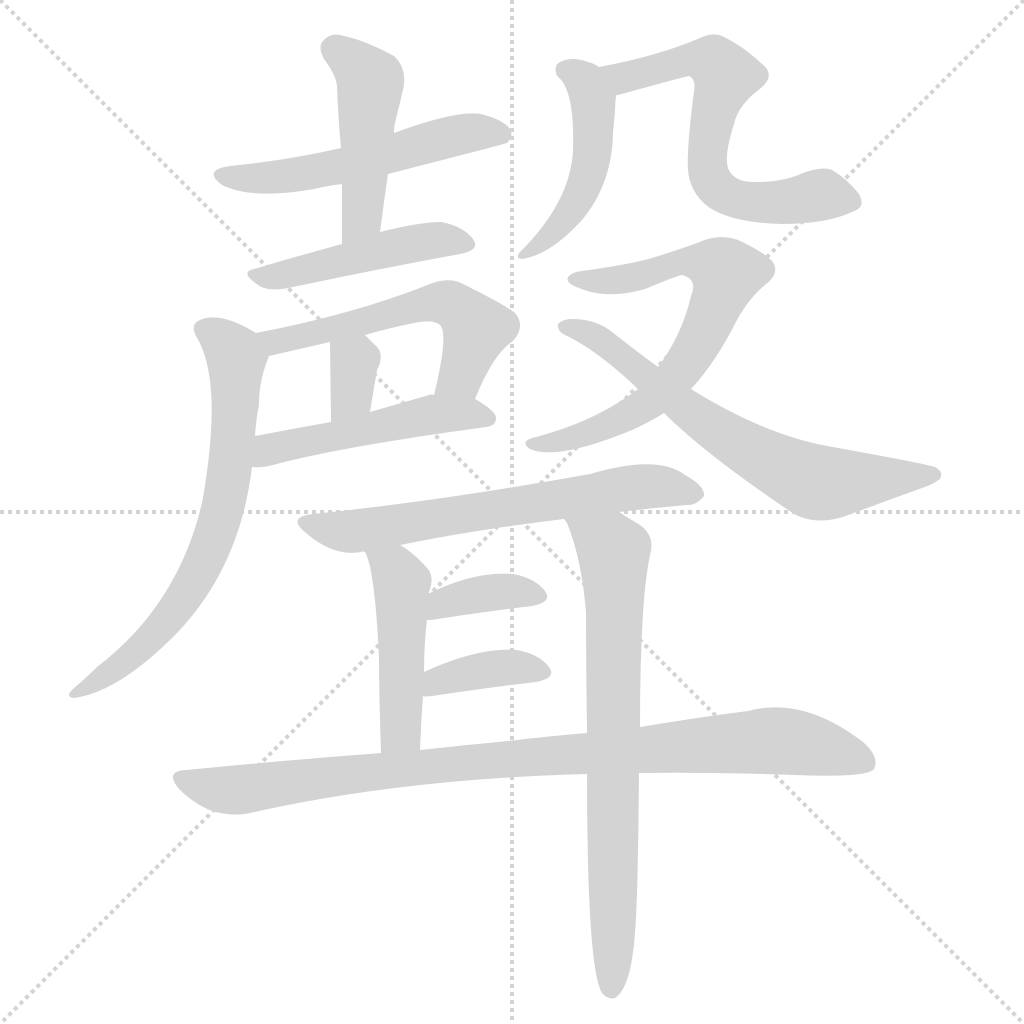
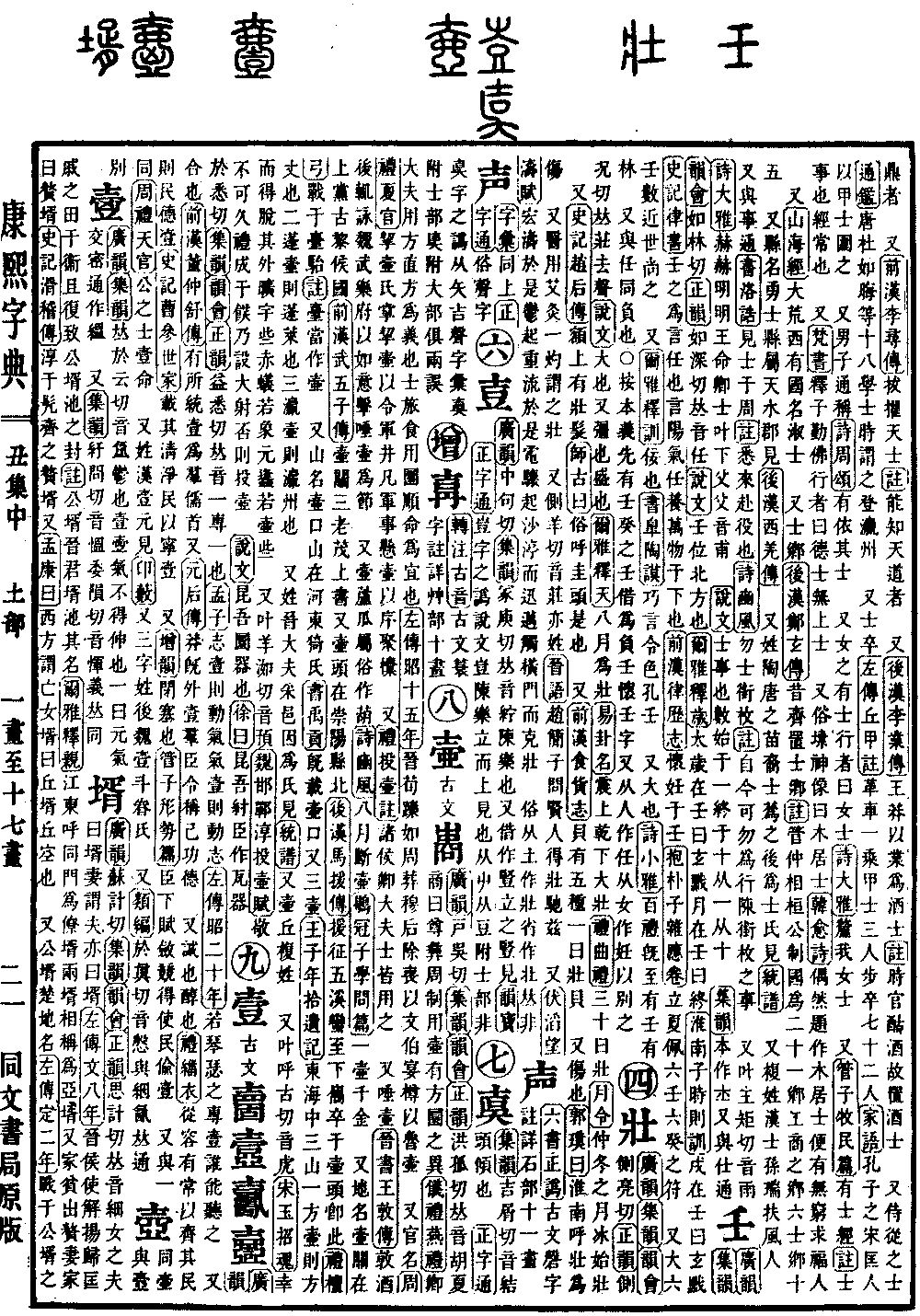
Wei Collection, Middle Volume. Radical: Ear (ěr). Kangxi strokes: 17. Page 243, Entry 01.
Ancient form is written as 殸.
According to Tang Rhymes (Tangyun), Collected Rhymes (Jiyun), and Rhyme Compendium (Yunhui), pronounced sheng (level tone). According to Correct Rhymes (Zhengyun), pronounced sheng (level tone).
In the Explanation of Simple and Compound Characters (Shuowen), it is defined as sound.
In the Book of Documents (Shujing), specifically the Canon of Shun (Shundian), it is written: Poetry expresses intent, song prolongs these words, music harmonizes the sound, and the pitch pipes harmonize the music. The commentary explains that sound refers to the five tones: gong, shang, jue, zhi, and yu.
In the Book of Rites (Liji), specifically the Monthly Ordinances (Yueling), it states: In the month of mid-summer, restrict sounds and colors. The commentary notes that sound refers to music.
Also, all audible vibrations are called sound.
In Zhang Zai’s Correcting Youthful Ignorance (Zhengmeng), it is stated: Sound is formed by the mutual compression of form and qi. When two qi compress, it produces phenomena like echoes in a valley or the sound of thunder. When two forms compress, it produces phenomena like the beating of a drum or the sound of striking an object. When form compresses qi, it produces sounds like those of a feather fan or a whistling arrow. When qi compresses form, it produces sounds like human speech or the music of reed pipes. These are all inherent capabilities of things reacting to nature, which people are accustomed to and do not notice.
The Rhyme Compendium (Yunhui) notes that rhyme books refer to the level, rising, departing, and entering tones as the four tones.
It also refers to sound and instruction (moral influence). In the Book of Documents (Shujing), specifically the Tribute of Yu (Yugong), it says: To the east reaching the sea, to the west reaching the deserts, the north and south all reaching to the sound of instruction, extending to the four seas.
In the Zuo Commentary (Zuozhuan), sixth year of Duke Wen, it states: Establish customs and moral influence. The commentary notes this means to establish methods of moral influence based on the customs of the land.
It also refers to reputation. In the Mencius (Mengzi), it states: If one’s reputation exceeds one’s reality, a noble person feels ashamed. The commentary notes that reputation means fame.
It also means to proclaim. In the Mencius (Mengzi), it states: Begin with the sound of bells and end with jade chimes to proclaim. The commentary notes that sound here means to proclaim.
According to the Law of Posthumous Titles (Shifa), one who is not born in the ancestral home is called sheng. The commentary notes this means born at the home of the maternal grandmother.
In the Spring and Autumn Annals (Chunqiu Jingzhuan Jijie), it mentions using Shengzi as a secondary wife, who gave birth to Duke Yin. The commentary notes that sheng is a posthumous title.
It is also a surname.
According to Rhyme Supplements (Yunbu), it rhymes with the pronunciation shang. In a poem by Han Yu presented to Zhang Ji, it is written: The spoiled child has not yet been weaned, and thinking of him one cannot forget. Suddenly I feel he is by my side, and my ears seem to hear the sound of his weeping.