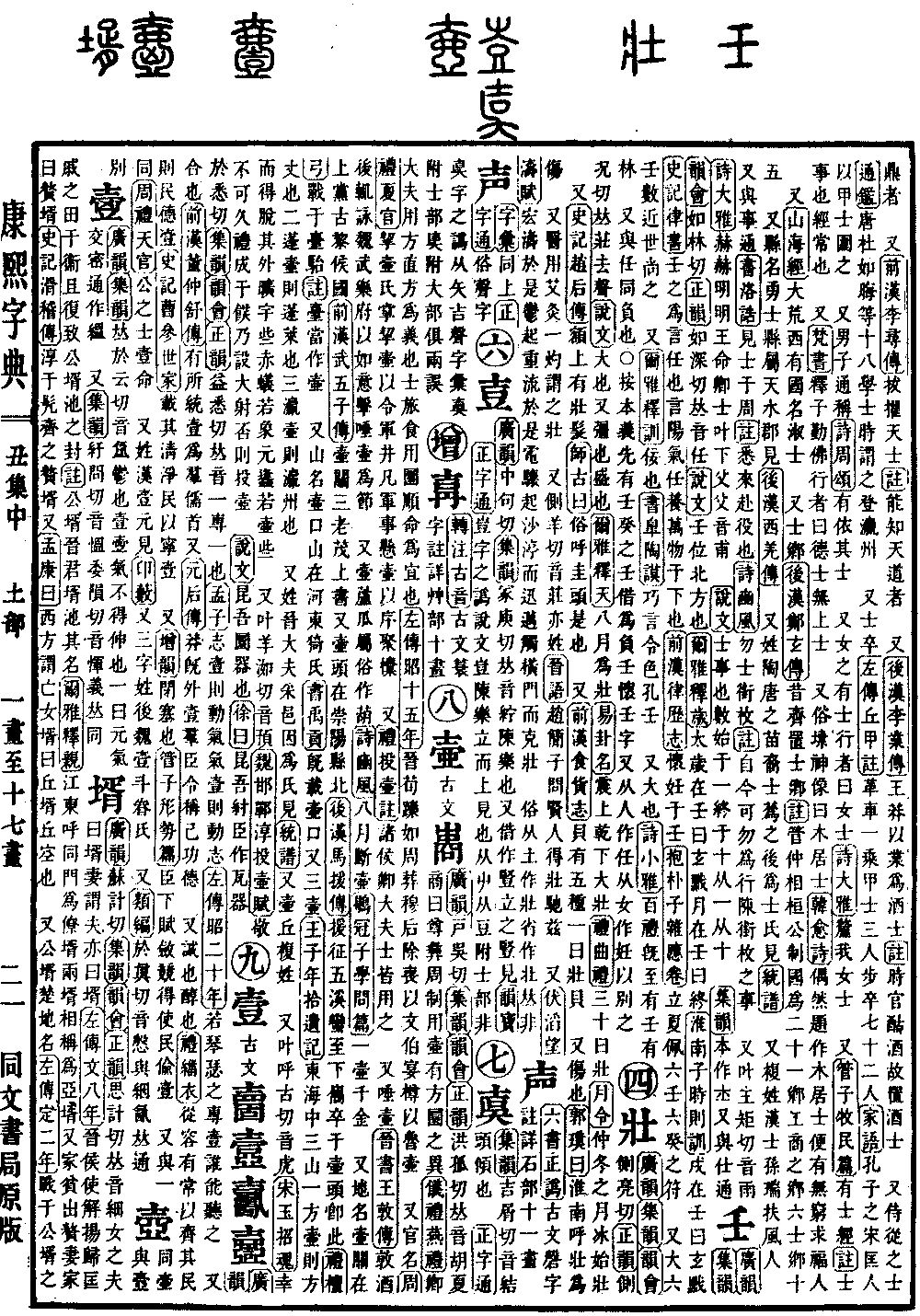
Chou Collection, Middle Volume. Radical: Scholar (shì). Kangxi stroke count: 17. Page 243, Entry 04.
Collection of Characters (Zihui): Same as the character for sound. Correct Meaning Guide (Zhengzitong): A vulgar form of the character for sound. The ancient form of the character for sound is written with the component for percussion.
Tang Rhymes (Tangyun), Collection of Rhymes (Jiyun), and Compendium of Rhymes (Yunhui): Pronounced sheng (level tone). Correct Rhymes (Zhengyun): Pronounced sheng (level tone). The pronunciation is the same as the level tone of the character for saint.
Explaining Graphs and Analyzing Characters (Shuowen): Refers to sounds.
Book of Documents (Shangshu), Canon of Shun (Shundian): Poetry expresses intent, song prolongs the language, the intonation follows the prolongation, and the musical temperaments harmonize the sounds.
Commentary: Sound refers to the five tones, namely gong, shang, jue, zhi, and yu.
Book of Rites (Liji), Monthly Ordinances (Yueling): In the month of mid-summer, cease musical performances and sensual pleasures.
Annotation: Sound refers to music.
Also, any kind of noise is called a sound.
Zhang Zai, Correct Discipline (Zhengmeng): Sound is formed by the mutual compression of physical forms and breath. When two breaths compress each other, it is like echoes in valleys or the sound of thunder. When two physical forms collide, it is like drumsticks striking a drum or knocking. When a physical form compresses breath, it is like a feather fan or a whistling arrow. When breath compresses a physical form, it is like human speech or the sounds of sheng and huang reed instruments. These are all natural instincts of things responding to one another, which people have grown accustomed to and do not notice.
Compendium of Rhymes (Yunhui): Rhyme books divide sounds into four categories: level, rising, departing, and entering.
Also refers to prestige and moral instruction.
Book of Documents (Shangshu), Tribute of Yu (Yugong): To the east reaching the sea, to the west covering the shifting sands, and in the north and south extending to the prestige and moral instruction, reaching the four seas.
Zuo Tradition (Zuozhuan), Sixth Year of Duke Wen: Establish customs and moral instructions.
Annotation: Establish the laws of prestige and moral instruction according to the customs of the land.
Also refers to reputation.
Mencius: Thus, when one's reputation exceeds the reality, a superior person is ashamed of this.
Annotation: Reputation refers to fame.
Also refers to proclaiming.
Mencius: It is like initiating with the sound of a bell and concluding with the sound of a jade chime.
Annotation: Sound means to proclaim.
Also, in the Laws of Posthumous Titles (Shifa): One not born in their ancestral state is given the title sound.
Annotation: Born in the maternal grandfather's house.
Spring and Autumn Annals, Collected Explanations of Classics and Commentaries (Chunqiu Jingzhuan Jijie): Used the title Sound Duke as a successor spouse, who gave birth to Duke Yin.
Annotation: Sound is a posthumous title.
Also a surname.
Also, in the Supplement to Rhymes (Yunbu): Pronounced shang (level tone).
Han Yu, Poem Presented to Zhang Ji: The delicate child has not yet been weaned, and thinking of him I cannot forget. Suddenly he seems to be by my side, and my ears seem to hear the sound of his weeping.