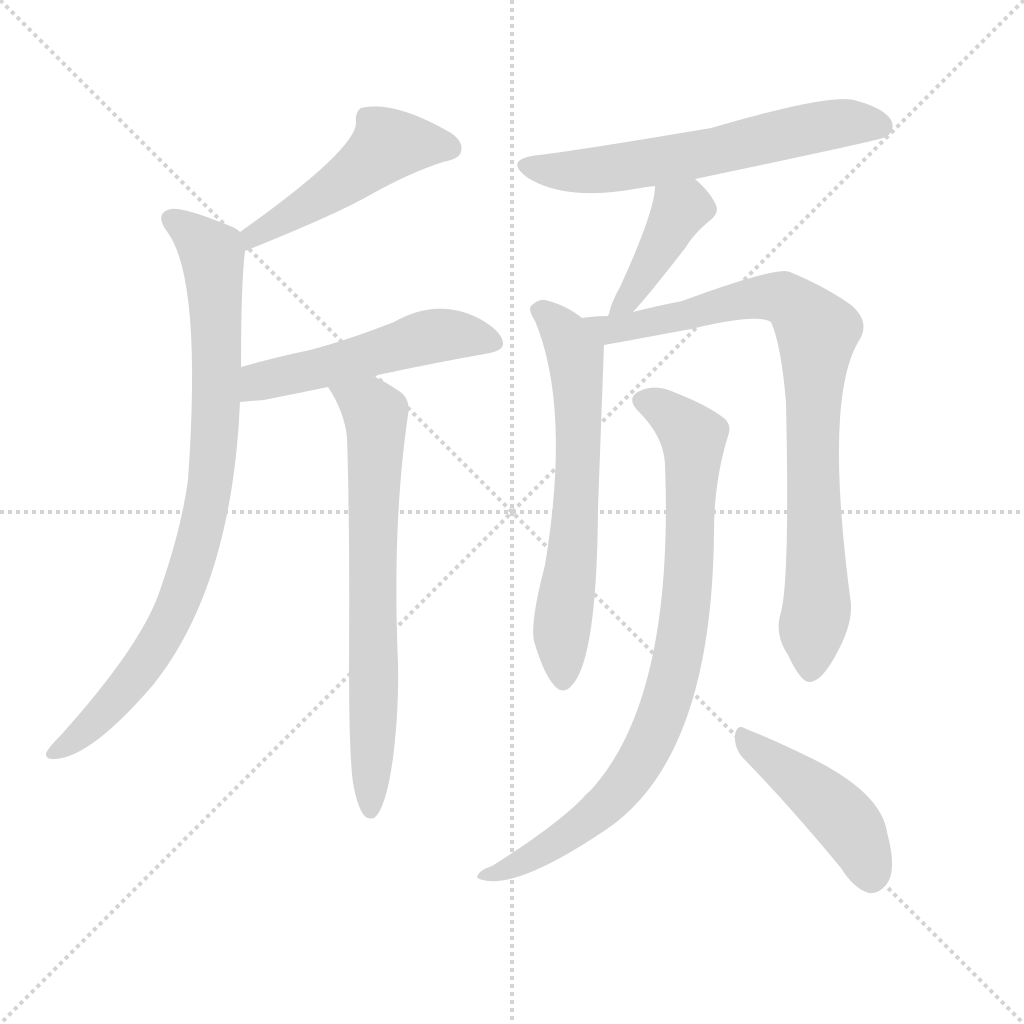
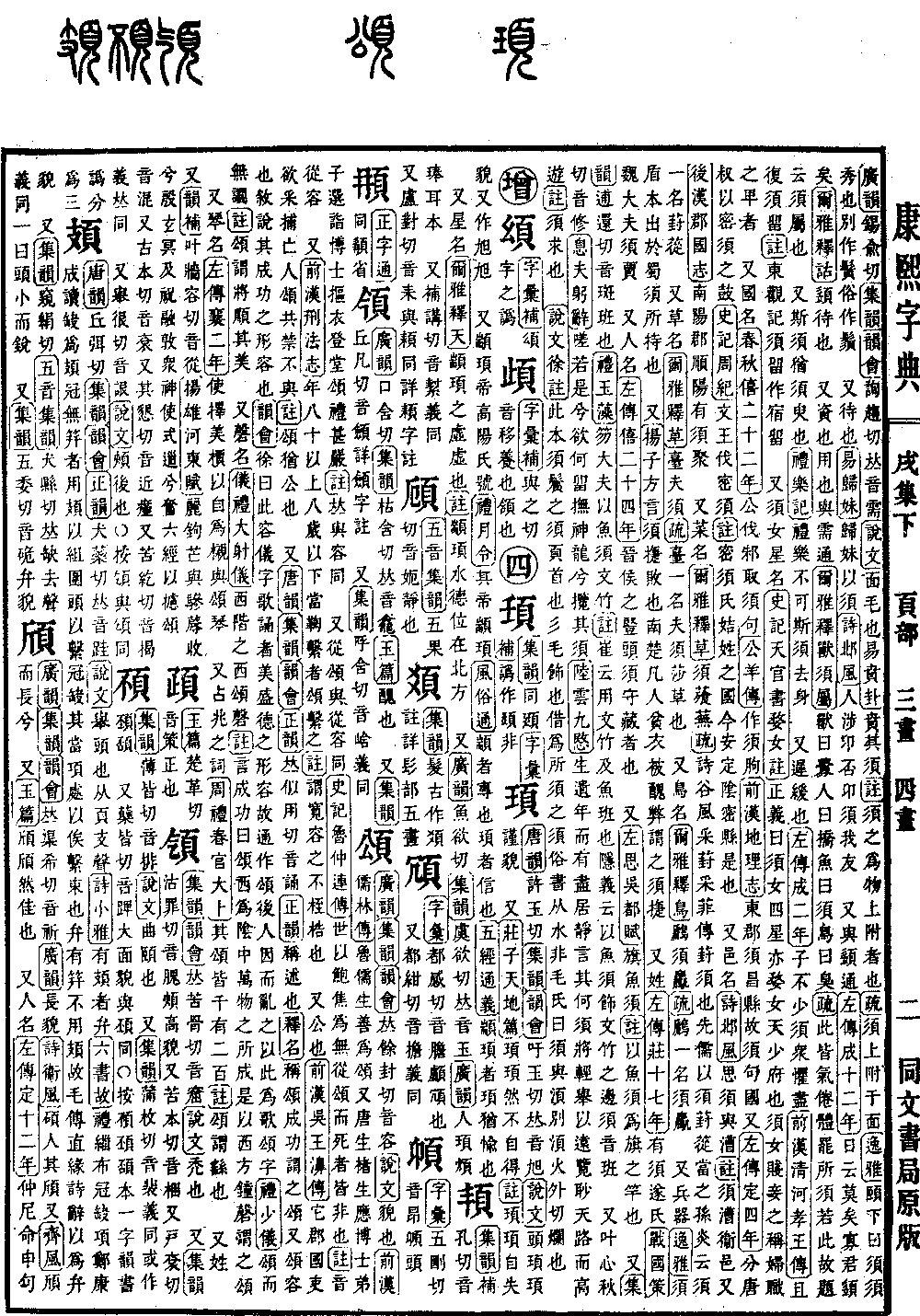
Xu Collection, Lower Volume
Radical: Leaf (yè)
Kangxi Strokes: 13
Page 1400, Entry 01
Broad Rhymes (Guangyun), Collected Rhymes (Jiyun), Dictionary of Rhymes (Yunhui): Pronounced qi (rising tone).
Broad Rhymes: The appearance of being tall and slender.
Book of Odes (Shijing), Odes of Wei: The noble person is tall and slender.
Also, Odes of Qi: Tall and slender, how long.
Jade Chapters (Yupian): Qi qiran means excellent.
Also a personal name. Zuo Commentary (Zuozhuan), twelfth year of Duke Ding: Confucius ordered Shen Juxu and Le Qi to descend and attack. Commentary: A high official of Lu, qi is pronounced qi (rising tone).
Collected Rhymes: Pronounced ken (falling rising tone). To reach or arrive.
Book of Rites (Liji), Tan Gong: Knocking the forehead to the ground before bowing, it reaches the limit of sincerity. Explanatory Text (Shiwen): Qi is pronounced ken (falling rising tone), the appearance of sorrow and pity.
Also qi dian, the appearance of being firm and tough.
Rites of Zhou (Zhouli), Winter Officials, Record of Trades (Kaogongji), Carriage Makers: The carriage pole should be firm and tough. Commentary: The appearance of being firm and tough. Master Zheng says: Qi is read as ken (falling rising tone); dian is read as tian (falling rising tone).
Also small or young.
Rites of Zhou (Zhouli), Winter Officials, Record of Trades (Kaogongji), Carpenters: Commentary: Yao is read as shao. Qi means small. Sub-commentary: Shao and qi both mean small. Explanatory Text (Shiwen): Qi is pronounced qing (level tone). Also pronounced ken (falling rising tone).