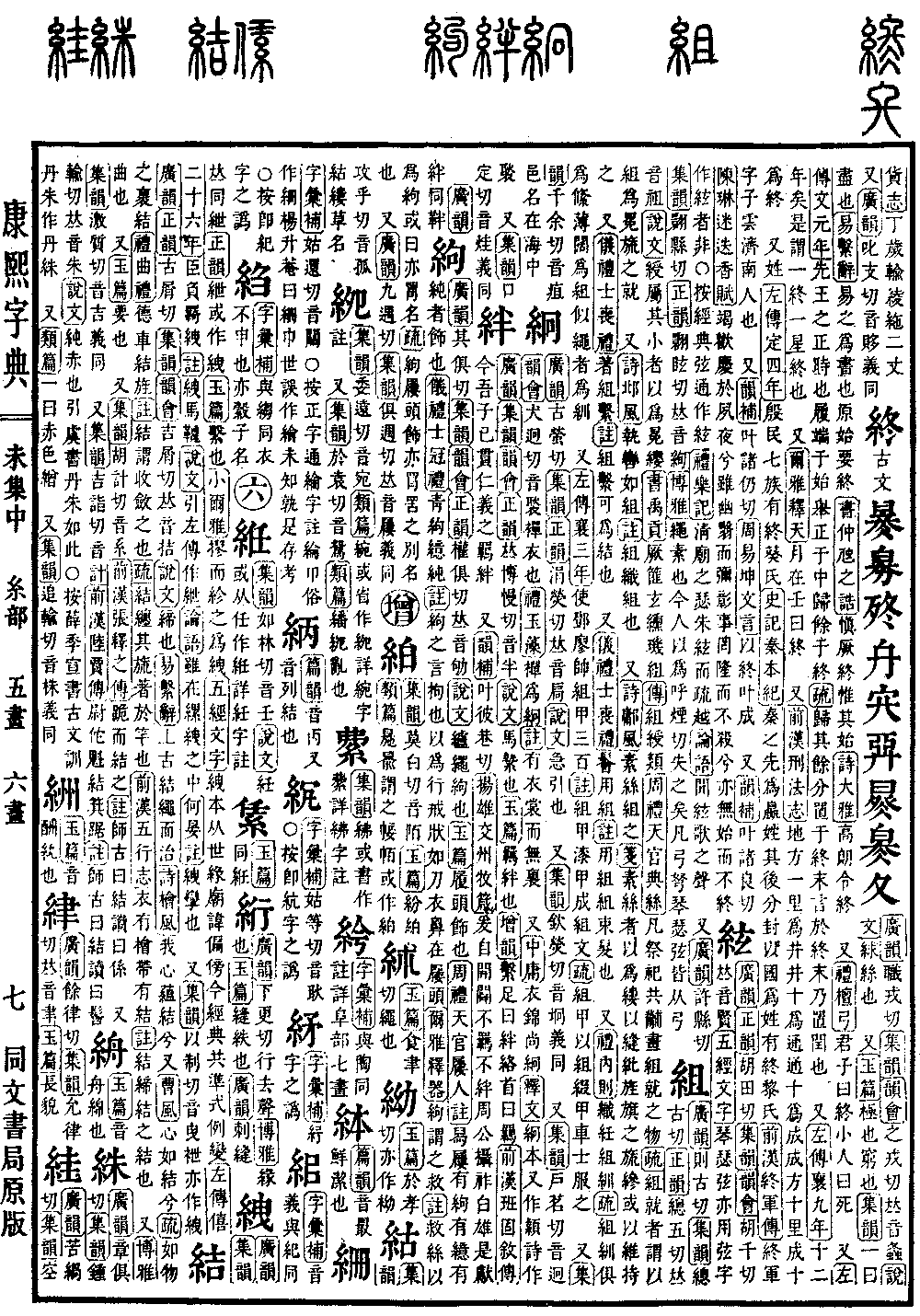
Wei Collection, Upper Volume
Radical: Silk (mì)
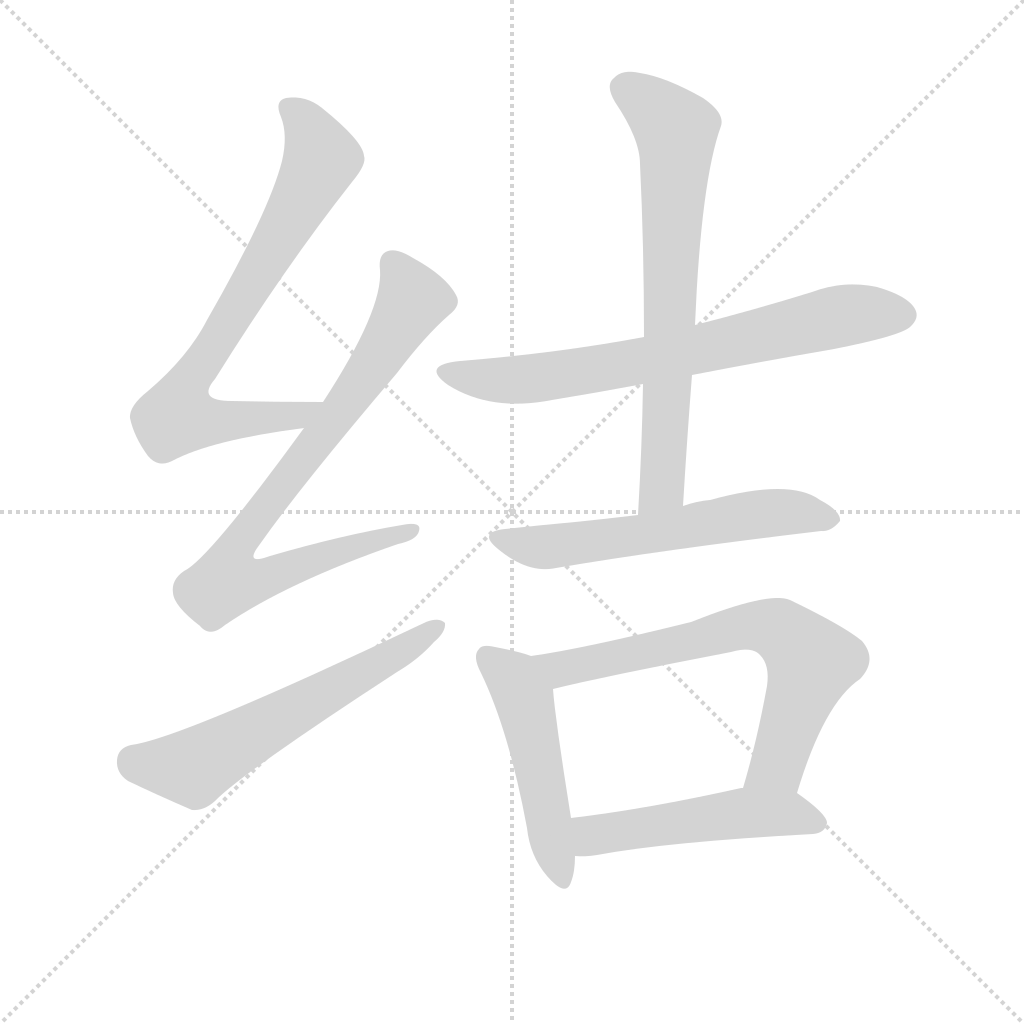
結
Kangxi strokes: 12
Page 921, Entry 04
Guangyun and Zhengyun: Pronounced jie (entering tone). Jiyun and Yunhui: Pronounced jie (entering tone).
Shuowen: To tie or bind.
Book of Changes (Yijing), Xici: In high antiquity, they tied knots in ropes to govern.
Book of Odes (Shijing), Guifeng: My heart is knotted and constrained.
Also, Caofeng: The heart is like a knot. Commentary: Like an object being wrapped and bound.
Book of Rites (Liji), Quli: On a carriage of virtue, the banner is tied. Commentary: Tied, meaning gathered and drawn in. Commentary: Tied, meaning its streamers are wound and attached to the pole.
History of the Former Han (Hanshu), Treatise on the Five Elements: Clothes have button knots, belts have ties. Commentary: Tied, the knot of binding.
Also, Guangya: To curve.
Also, Yupian: Essential or waist.
Also, Jiyun: Pronounced xi (falling tone).
History of the Former Han (Hanshu), Biography of Zhang Shizhi: Knelt and tied it. Commentary: Shigu says: Tie, read as fasten.
Also, Jiyun: Pronounced ji (entering tone). The meaning is the same.
Also, Jiyun: Pronounced ji (falling tone).
History of the Former Han (Hanshu), Biography of Lu Jia: Wei Tuo had a topknot and sat with legs spread wide. Commentary: Shigu says: Tie, read as topknot.