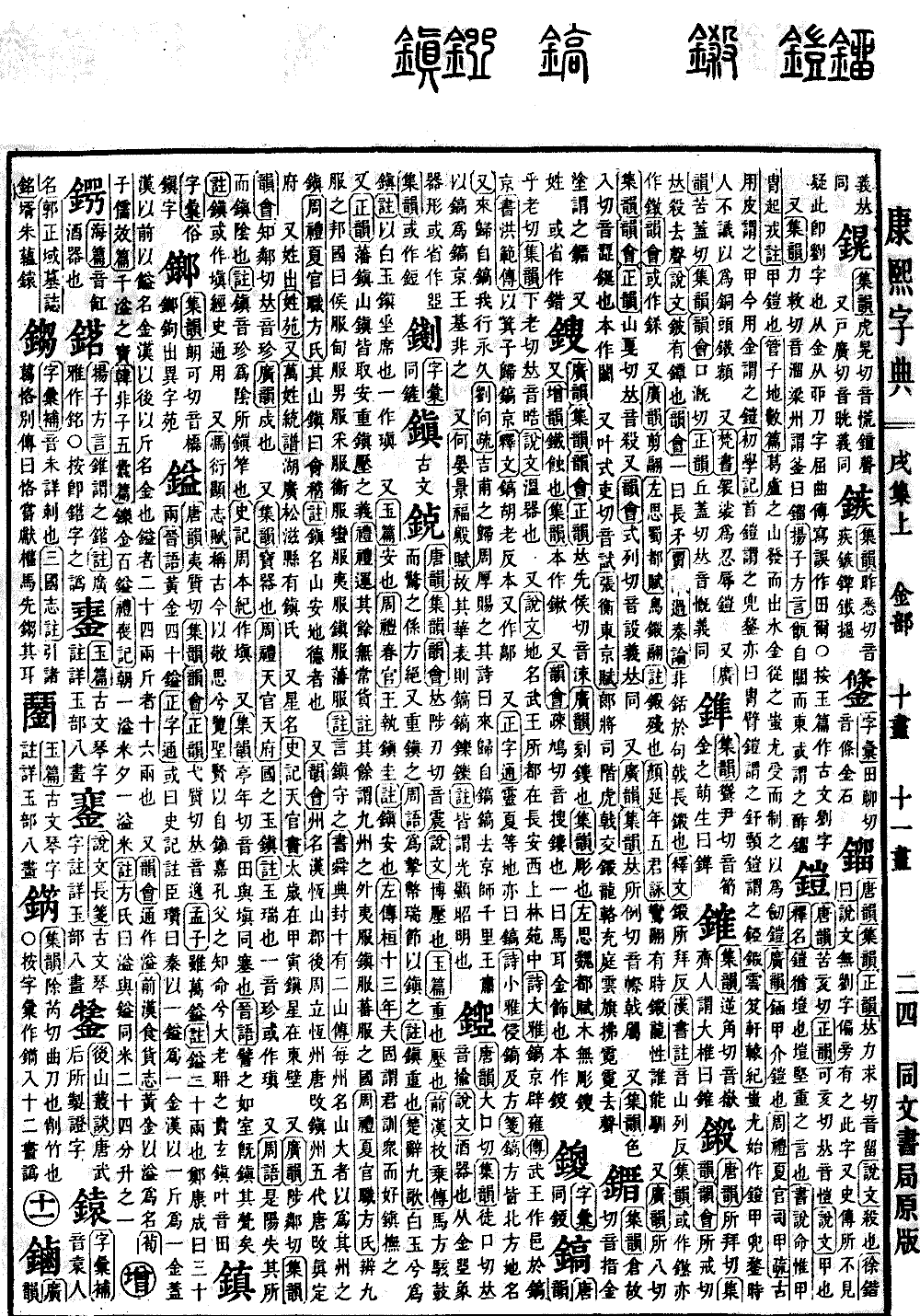
Xu Collection, Upper Volume
Radical: Metal (jīn)
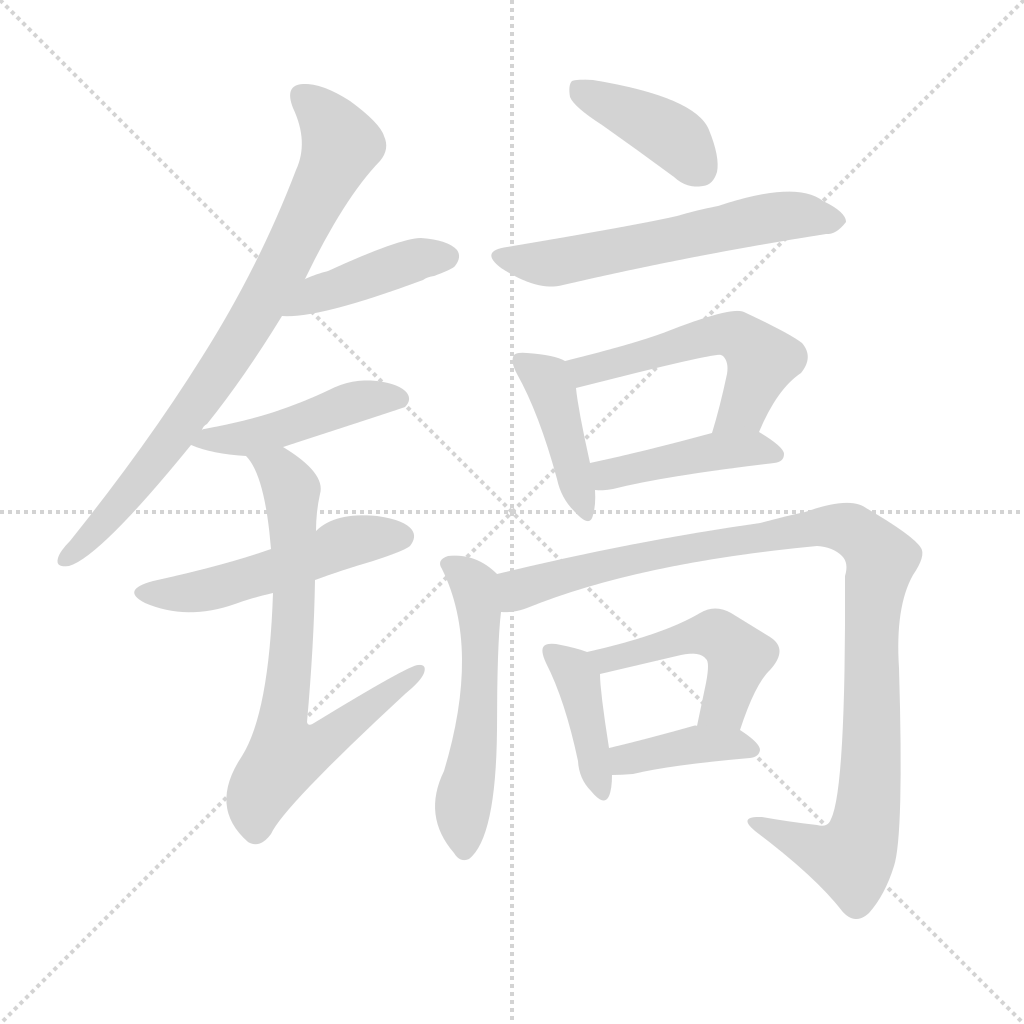
Hao
Kangxi Strokes: 18
Page 1318, Entry 01
Pronounced hao (falling-rising tone).
According to the Explaining Graphs and Analyzing Characters (Shuowen Jiezi), it is a warming vessel. It is also a place name; the capital established by King Wu, located in the Shanglin Garden west of Chang'an.
Book of Odes (Shijing), Greater Odes: Haojing and Biyong. The commentary states: King Wu built his city at Haojing.
Book of Documents (Shangshu), Hongfan Commentary: With Jizi returning to Haojing.
The Explaining Text (Shiwen) states: Hao is pronounced hao (rising tone). Originally also written as the variant form (hao).
The Correct Meaning Through Investigation (Zhengzitong) notes: Ling, Xia, and other places are also called Hao.
Book of Odes (Shijing), Lesser Odes: Invading Hao and Fang. The commentary notes: Hao and Fang are both place names in the north.
Also: Returning from Hao, my journey was long.
Liu Xiang's Memorial: When Jifu returned, the Zhou king rewarded him generously. The poem says: Returning from Hao. Hao is one thousand li from the capital. Wang Su considered Hao to be Haojing, but Wang Ji disagreed.
He Yan, Rhapsody on the Jingfu Hall: Therefore its ornate pillars are hao hao shuo shuo. The commentary notes: These terms all refer to being bright, illustrious, and clear.