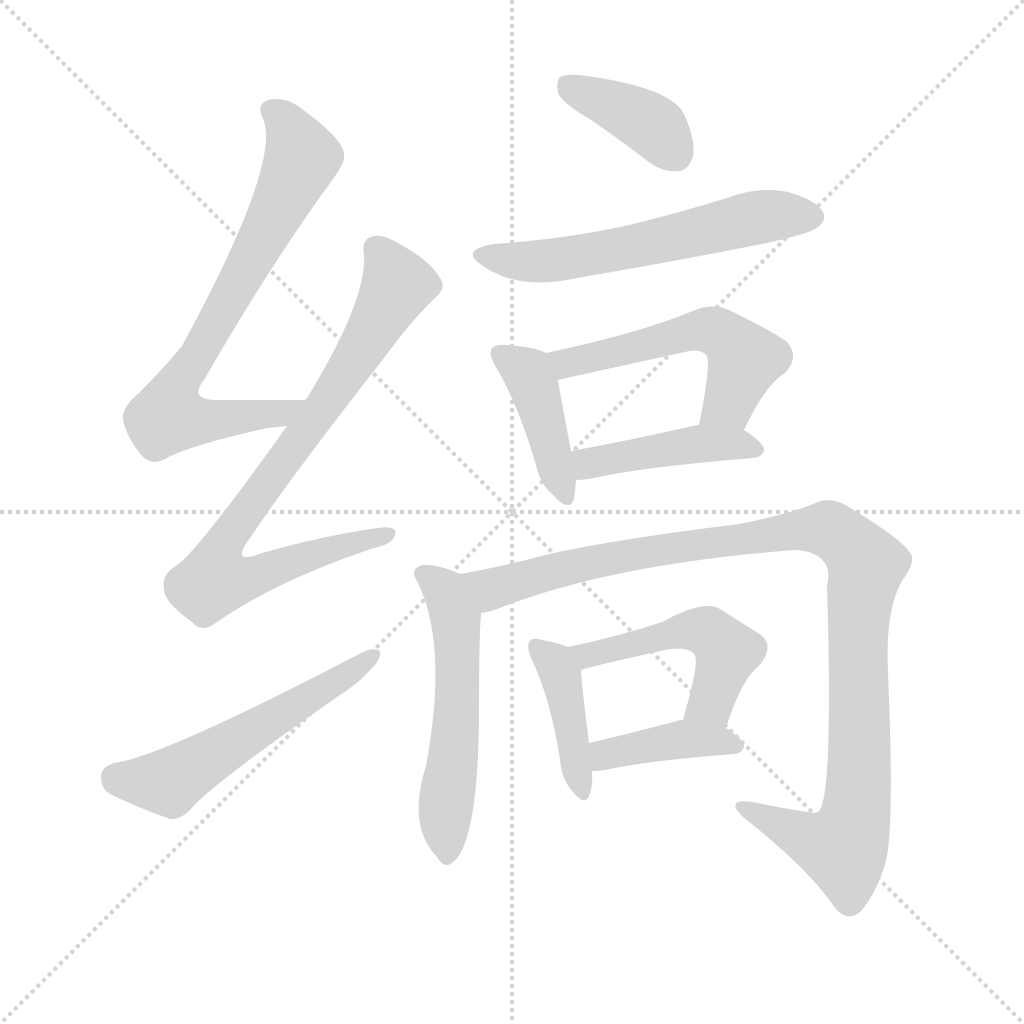
Wei Collection, Middle Volume
Radical: Silk (mì)
Kangxi Strokes: 16
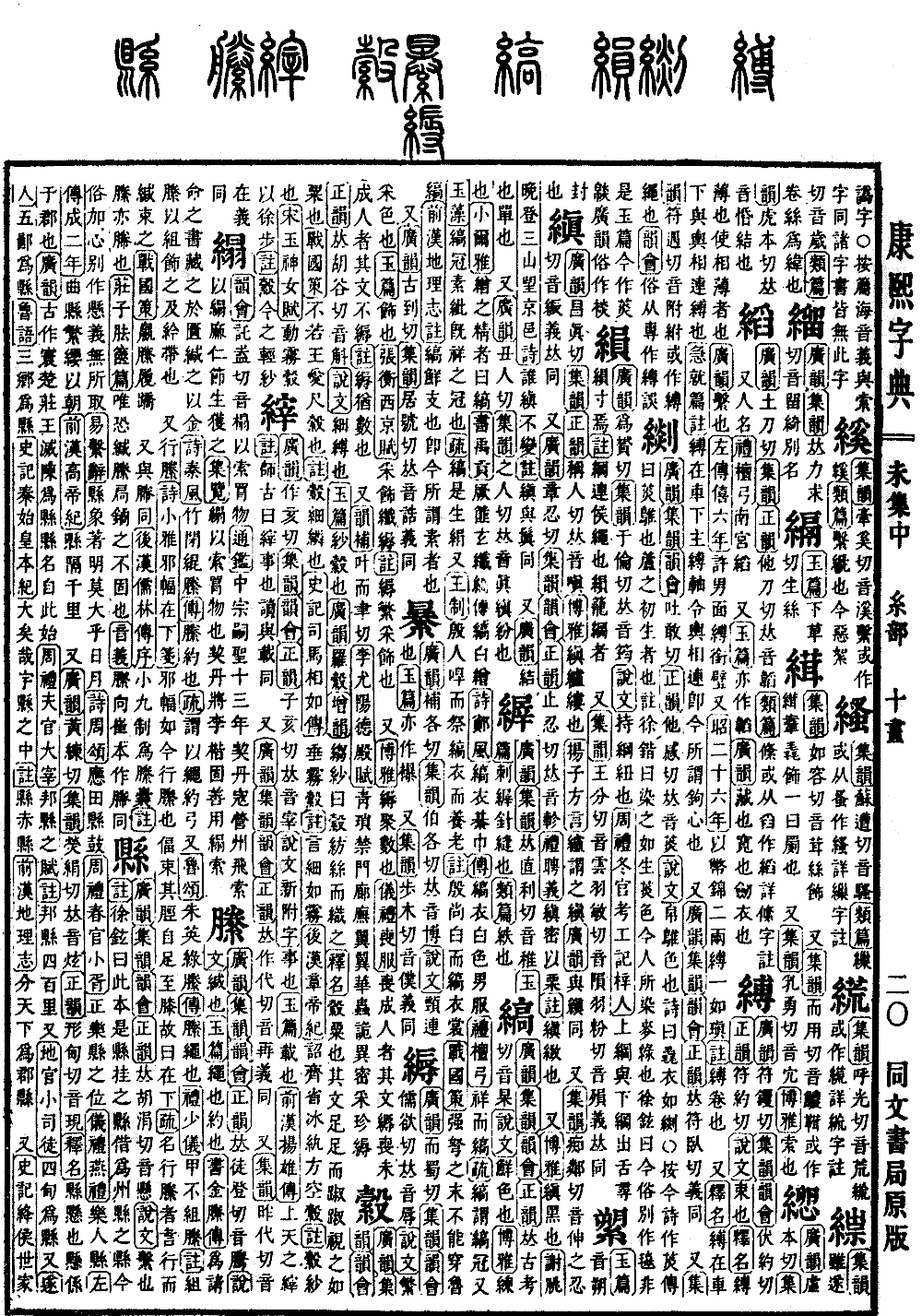
Page 934, Entry 06
Broad Rhymes (Guangyun), Collected Rhymes (Jiyun), Rhyme Gathering (Yunhui), Standard Rhymes (Zhengyun): Pronounced gao (rising tone).
Explanation from the Explaining Graphs and Analyzing Characters (Shuowen): A bright, fresh color.
Explanation from the Expanded Admonitions (Boya): A white, processed silk fabric.
Explanation from the Little Er'ya (Xiao Er'ya): Refined silk textiles are called gao.
Book of Documents (Shujing), Tribute of Yu (Yugong): They offered baskets of fine gao. Commentary: Gao is a white silk textile.
Book of Odes (Shijing), Odes of Zheng (Zhengfeng): Wearing a white silk garment and a dark patterned kerchief. Commentary: A gao garment is a white men's garment.
Book of Rites (Liji), Tan Gong: After the auspicious sacrifice, one wears gao. Commentary: Gao refers to the gao mourning cap.
Jade Regulations (Yuzao): The gao cap with white silk edging; this is the cap worn after the auspicious sacrifice. Commentary: Gao is raw silk.
Royal Regulations (Wangzhi): The Yin people held funeral rites and sacrifices, wearing gao garments to provide for the elderly. Commentary: The Yin people revered the color white, and therefore wore white clothing.
Strategies of the Warring States (Zhanguoce): When an arrow shot from a powerful crossbow reaches the end of its flight, it cannot even penetrate thin silk from Lu.
Commentary on the Geography Treatise of the Former Han (Qianhan Dili Zhi Zhu): Gao is the same as xianzhi, which is what is now called plain silk.
Broad Rhymes (Guangyun): Pronounced gao (falling tone). Collected Rhymes (Jiyun): Pronounced gao (falling tone). The meaning is the same.