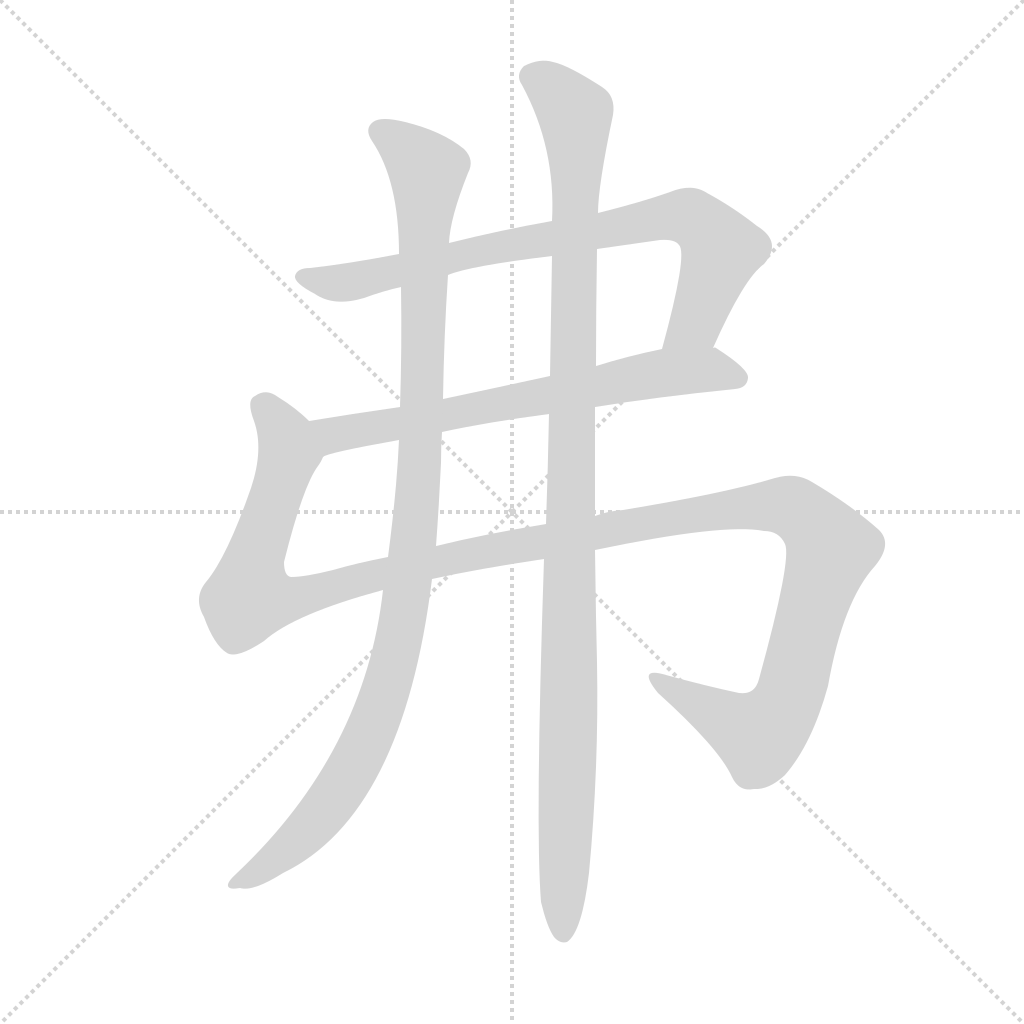
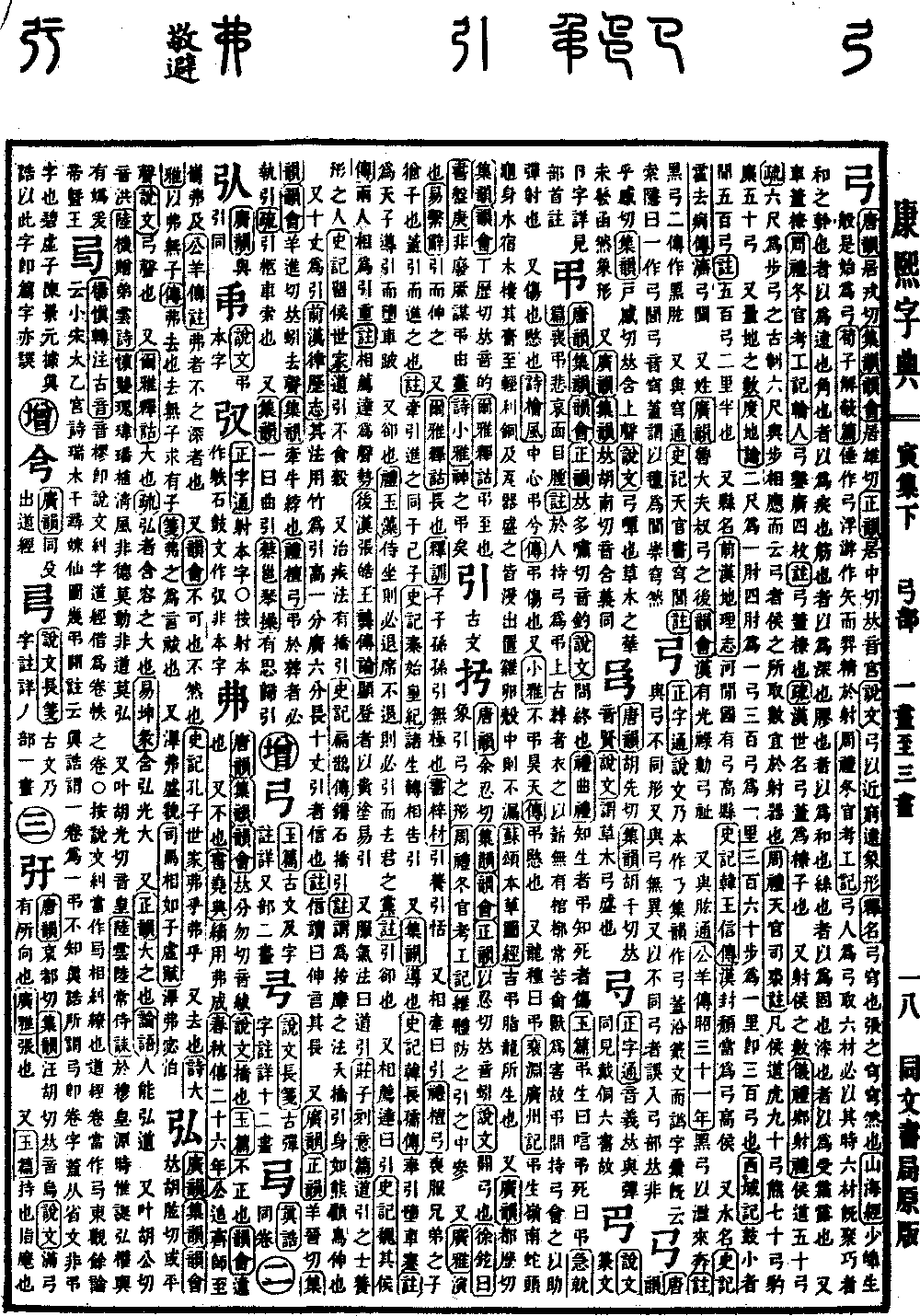
Yin Collection, Lower Volume
Radical: Bow (gōng)
Kangxi stroke count: 5
Page 356, Entry 16
Tang Dynasty Rhyme Dictionary (Tangyun), Collected Rhymes (Jiyun), and Rhyme Meeting (Yunhui) define it as pronounced fu.
According to the Explaining Graphs and Analyzing Characters (Shuowen), it means to rectify. According to the Jade Chapters (Yupian), it means not straight. According to the Rhyme Meeting (Yunhui), it means to violate. It also means no or not.
In the Book of Documents (Shujing): The achievements were not completed.
In the Spring and Autumn Annals (Chunqiu), Duke Xi, 26th year: The Duke pursued the Qi army to Sui but did not reach them.
The commentary to the Gongyang Commentary (Gongyangzhuan) states: The word fu is an emphatic form of the word for not.
According to the Rhyme Meeting (Yunhui), it also means cannot or is not so.
In the Records of the Grand Historian (Shiji), Biography of Confucius: Not so, not so.
It also means to depart or remove.
In the Book of Odes (Shijing): Remove the state of having no sons.
The commentary states: Fu means to depart. It means to remove the state of having no sons in order to seek to have sons.
The annotation states: The word fu is used in the sense of to cleanse.
It also appears in the term bi-fu, which describes a flourishing appearance.
In Sima Xiangru's Rhapsody on Sir Vacuous (Zixufu): The flourishing appearance of the waters.
Research note: In Sima Xiangru's Rhapsody on Sir Vacuous (Zixufu), the original text used the character for anchoring; it has been corrected to the character for water rushing.