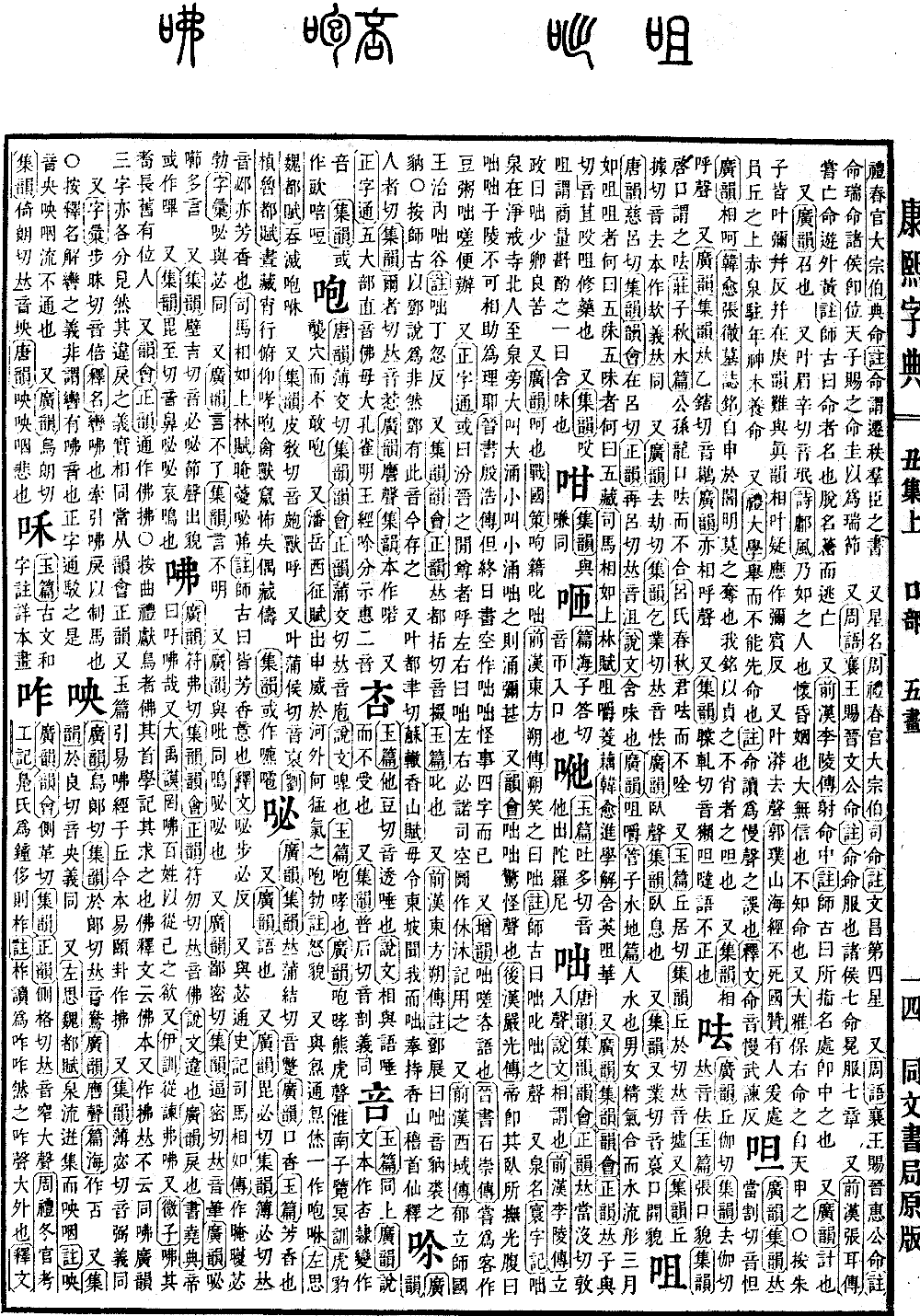
Chou Collection, Upper Volume
Radical: Mouth (kǒu)
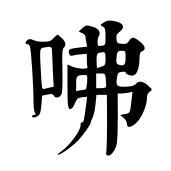
Character: Fu
Kangxi Strokes: 8
Page 184, Entry 13
Broad Rhymes (Guangyun): Pronounced fu. Collected Rhymes (Jiyun), Rhyme Meetings (Yunhui), and Orthodox Rhymes (Zhengyun): Pronounced fu, with the same reading as fo.
Explanation of Writing (Shuowen): To violate or go against.
Broad Rhymes (Guangyun): Contrary or perverse.
Classic of History (Shujing), Canon of Yao: The Emperor said: Alas, this is contrary. Also, Counsels of the Great Yu: Do not go against the wishes of the people to follow your own desires. Also, Instructions of Yi: Listen to remonstrance without going against it. Also, Viscount of Wei: To go against those who are elders and long-established in office.
Rhyme Meetings (Yunhui) and Orthodox Rhymes (Zhengyun): Interchangeable with the characters fo and fu. Note that the Record of Rites (Liji), Section on Summary of Propriety (Quli), states: Those who present birds should cover their heads. The Record of Learning (Xueji) states: The way he pursues things is very perverse. The Explanation of Texts (Shiwen) states that the character fo was originally written as fu, without mentioning that it is identical to fu. The Broad Rhymes (Guangyun) lists these three characters separately, but their meanings of being contrary or perverse are identical; one should defer to the Rhyme Meetings (Yunhui) and the Orthodox Rhymes (Zhengyun).
Jade Chapters (Yupian) cites the Book of Changes (Yijing), saying: To go against the standards of the hills. The current version of the Book of Changes (Yijing), Hexagram of Nourishment (Yi), writes this as fu.
Collected Rhymes (Jiyun): Pronounced bi. The meaning is the same.
Collection of Characters (Zihui): Pronounced bei.
Explanation of Names (Shiming): The term pei (reins) carries the meaning of fu, referring to pulling and controlling a horse to make it submissive. Note that the Explanation of Names (Shiming) is defining the meaning of pei, not stating that pei carries the pronunciation of fu; the Comprehensive Dictionary of Correct Characters (Zhengzitong) refutes this, which is correct.