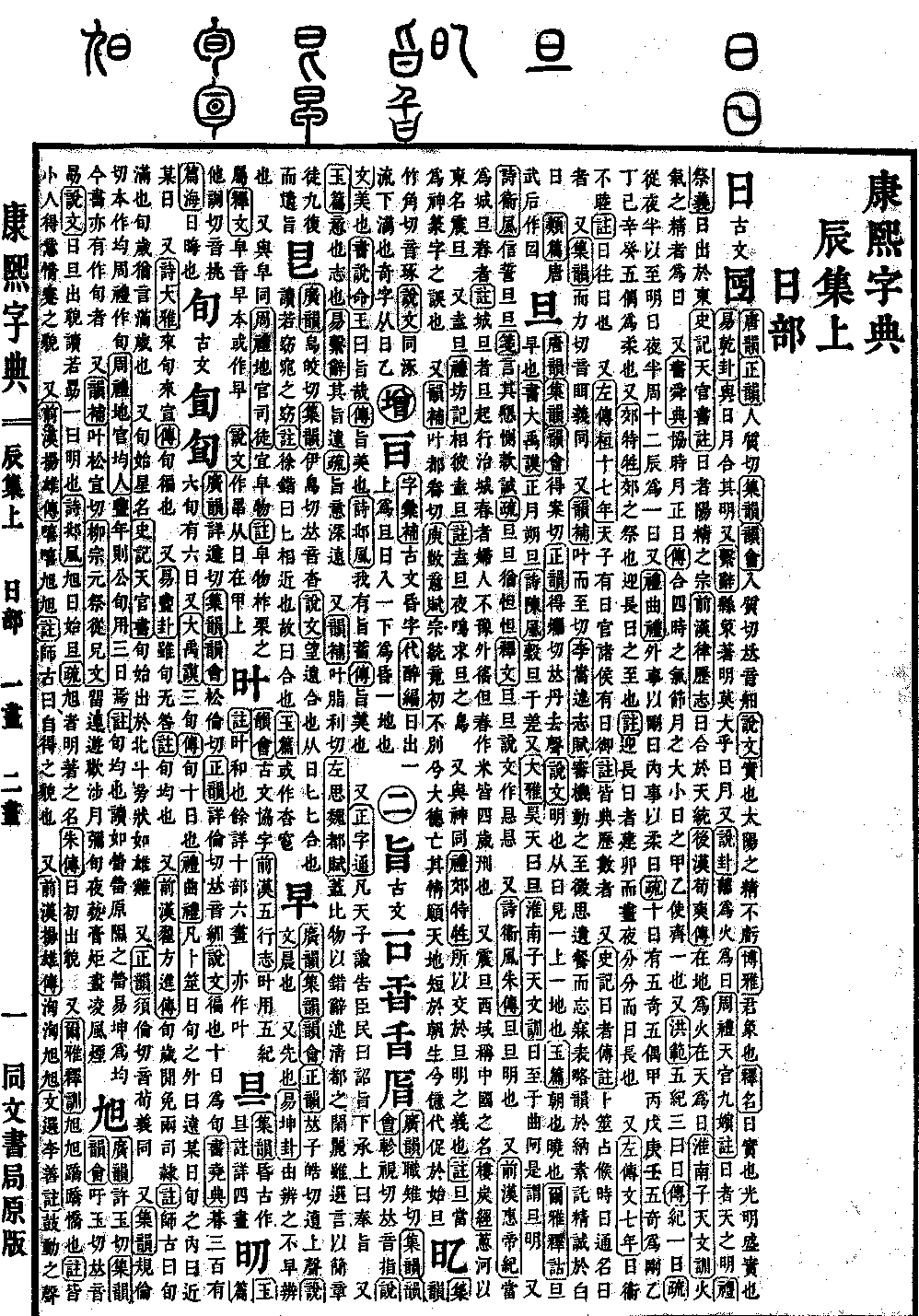
Chen Collection, Upper Volume
Radical: Sun (rì)
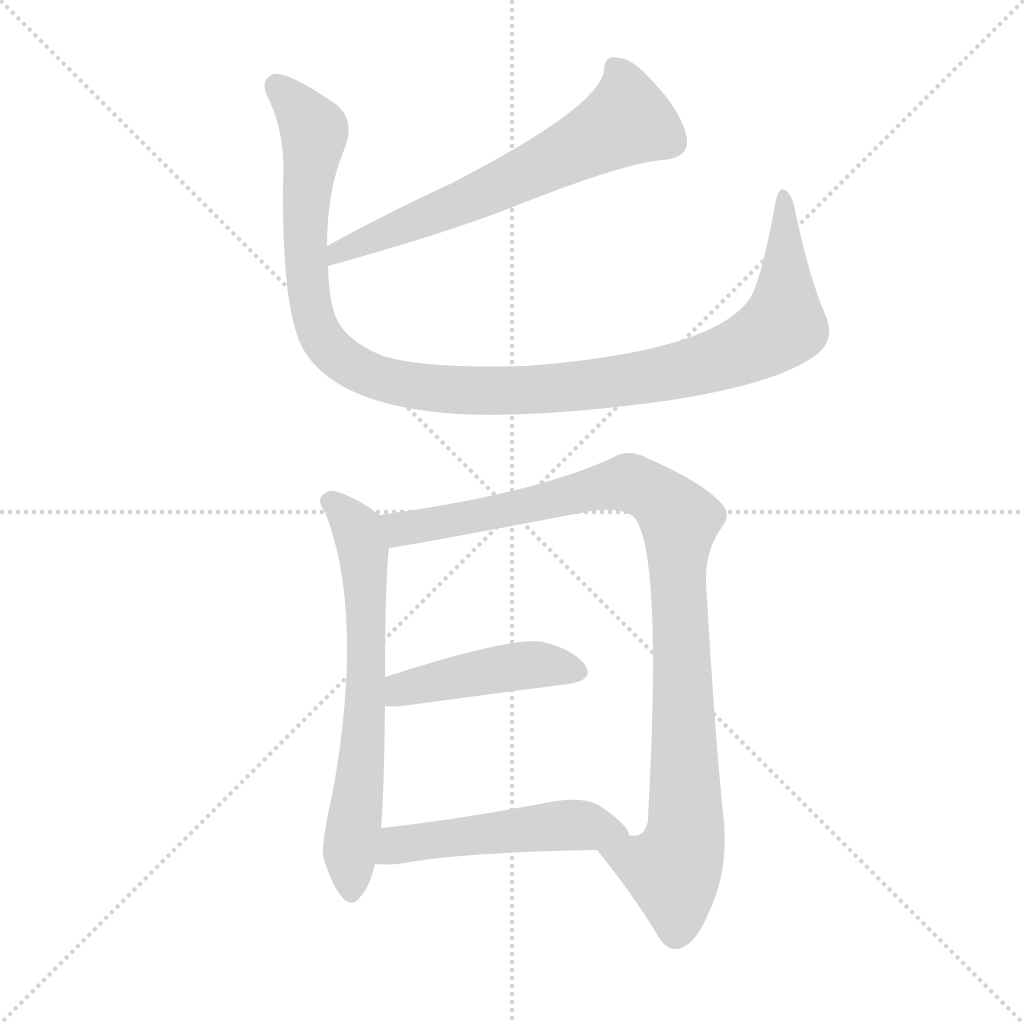
旨
Kangxi Dictionary Stroke Count: 6
Page 489, Entry 06
Ancient character form.
According to the Expanded Rhymes (Guangyun), pronounced zhi (rising tone).
According to the Collected Rhymes (Jiyun) and the Rhyme Compendium (Yunhui), pronounced zhi (rising tone).
From the Explanation of Characters (Shuowen), it means beautiful.
Book of Documents (Shangshu), in the Chapter on the Royal Decree: The King said, It is excellent.
The Commentary states: The term implies beauty.
Book of Odes (Shijing), in the Odes of Bei: I have delicious vegetables stored.
The Commentary states: The term implies beauty.
Furthermore, according to the Correct Character Guide (Zhengzitong), whenever the Emperor issues a proclamation to his subjects, it is called a decree, and when subordinates receive these commands, it is called receiving the imperial will.
Also, according to the Jade Compendium (Yupian), it means intention or will.
Book of Changes (Yijing), in the Appended Remarks: Its meaning is profound and far-reaching.
The Subcommentary states: The intention is profound and far-reaching.
Also, according to the Rhyme Supplement (Yunbu), it rhymes with the sound li (falling tone).
Zuo Si, Rhapsody on the Capital of Wei: It compares objects to arrange the language, describing the elegance and beauty of the clear capital. Although chosen words are used to illuminate, they repeat nine times yet leave behind the core meaning.