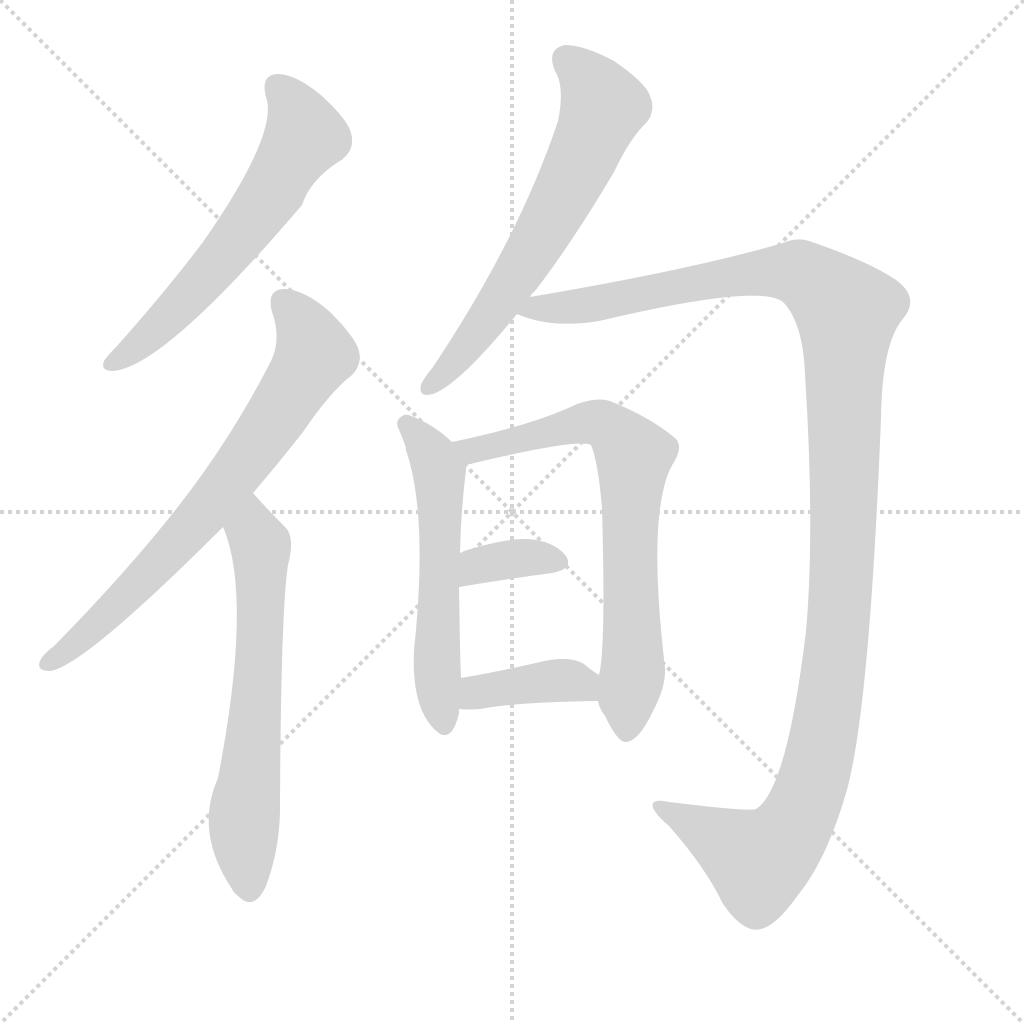
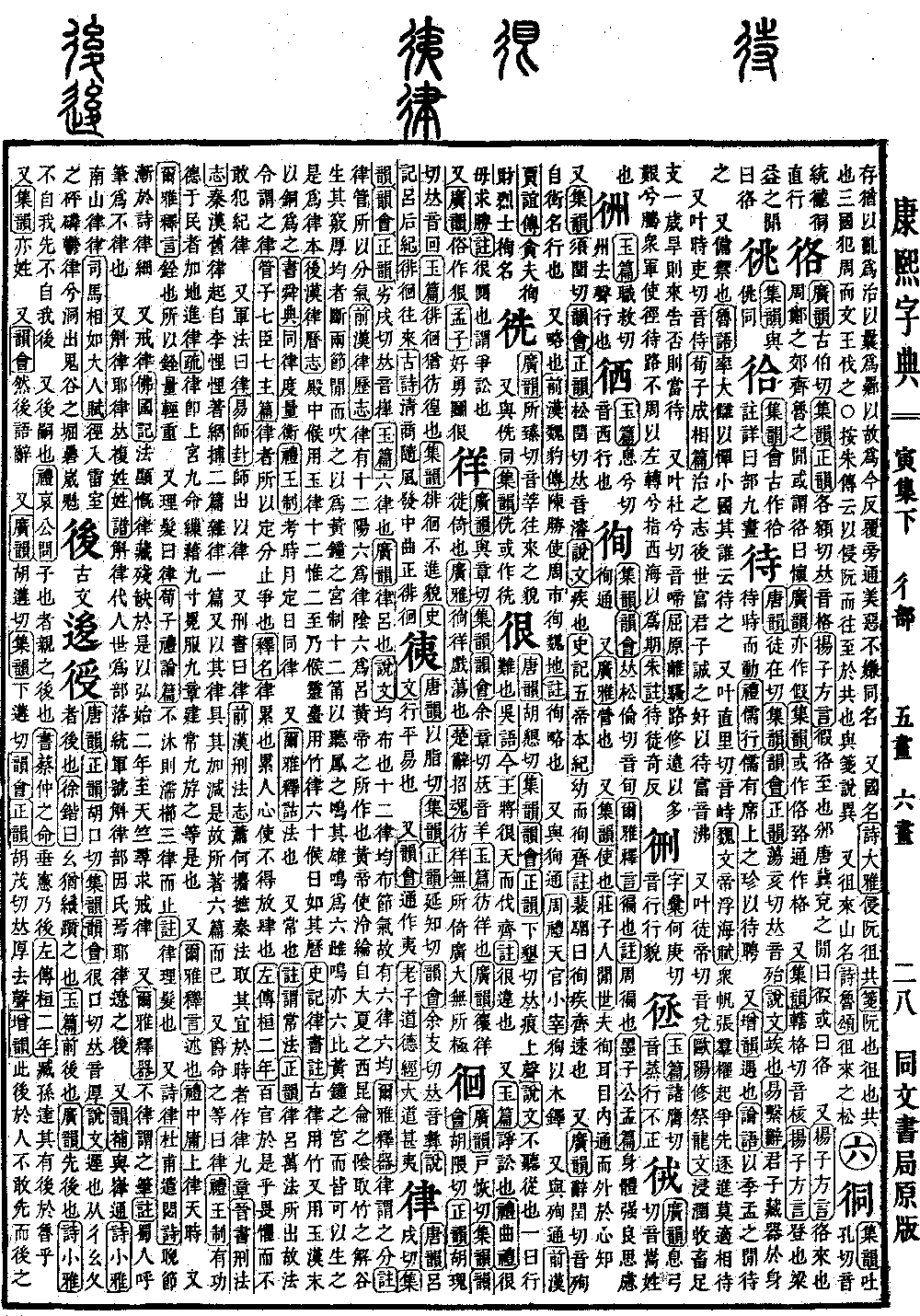
Yin Collection, Lower Volume
Radical: Step (chì)
9 strokes
Page 366, Entry 11
According to the Collection of Rhymes (Jiyun) and the Rhyme Assembly (Yunhui), it is pronounced xun.
From the Book of Erya (Erya), section on Explaining Words: To extend everywhere. The commentary states: To extend all around. In the Book of Mozi (Mozi), Gongmeng chapter: With a strong and good body, thoughts are thorough and clear. Also, from the Book of Guangya (Guangya): To manage. Also, from the Collection of Rhymes (Jiyun): To employ. In the Book of Zhuangzi (Zhuangzi), Human World chapter: To follow the ears and eyes, inwardly communicating while outwardly detached from mental knowledge.
Also, according to the Collection of Rhymes (Jiyun) it is pronounced jun; according to the Rhyme Assembly (Yunhui) and the Correct Rhymes (Zhengyun) it is pronounced jun.
From the Analytical Dictionary of Chinese Characters (Shuowen): To be fast. In the Records of the Grand Historian (Shiji), Basic Annals of the Five Emperors: As a child, he was quick and astute. The commentary by Pei Yin states: Xun means fast; qi means rapid.
Also, according to the Expanded Rhymes (Guangyun) it is pronounced xun. To show off one's own reputation and conduct. Also, to seize territory. In the History of the Former Han Dynasty (Qianhan shu), Biography of Wei Bao: Chen Sheng sent Zhou Shi to seize the territory of Wei. The commentary states: Xun means to seize.
Also written in a variant form (xun). In the Rites of Zhou (Zhouli), Heaven Officials, Lesser Administrator: To issue orders using a wooden bell.
Also written in a variant form (xun). In the History of the Former Han Dynasty (Qianhan shu), Biography of Jia Yi: The greedy man sacrifices his life for wealth, the righteous man sacrifices his life for reputation.