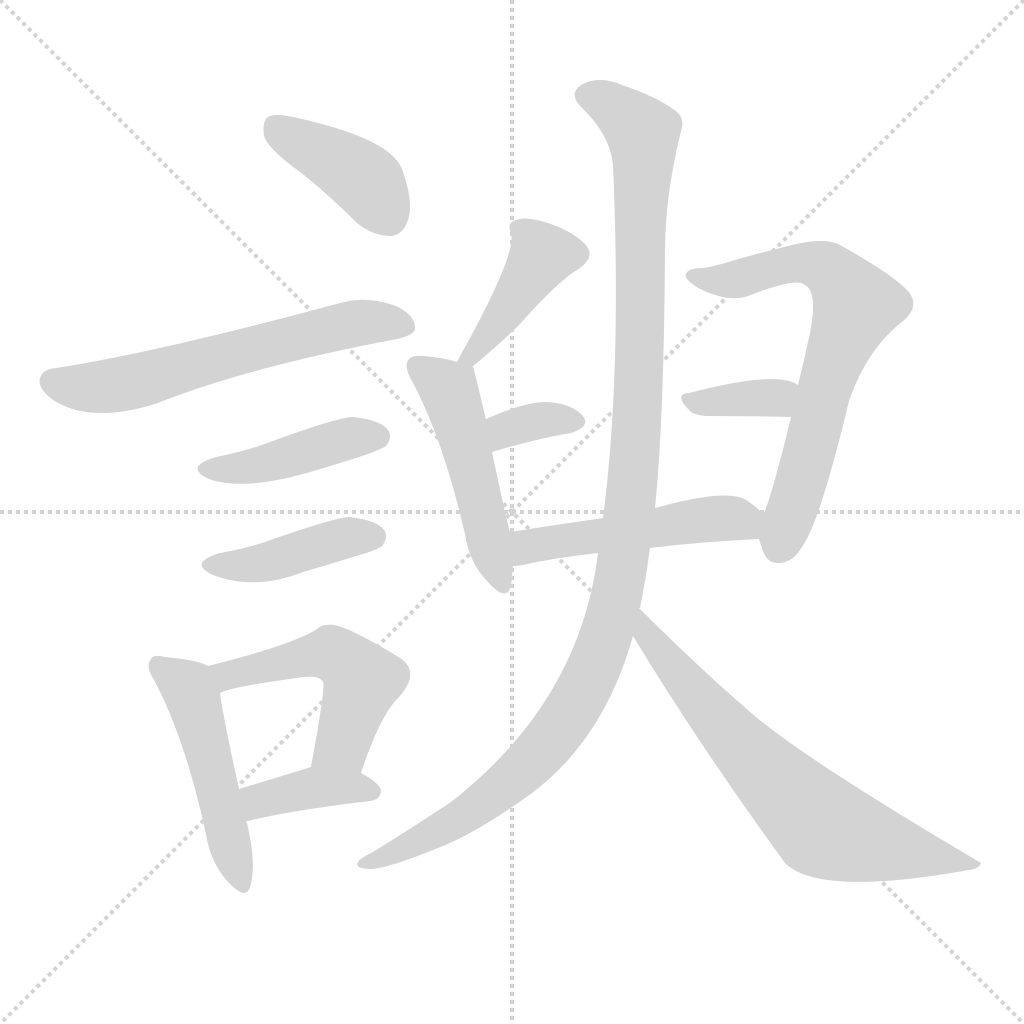
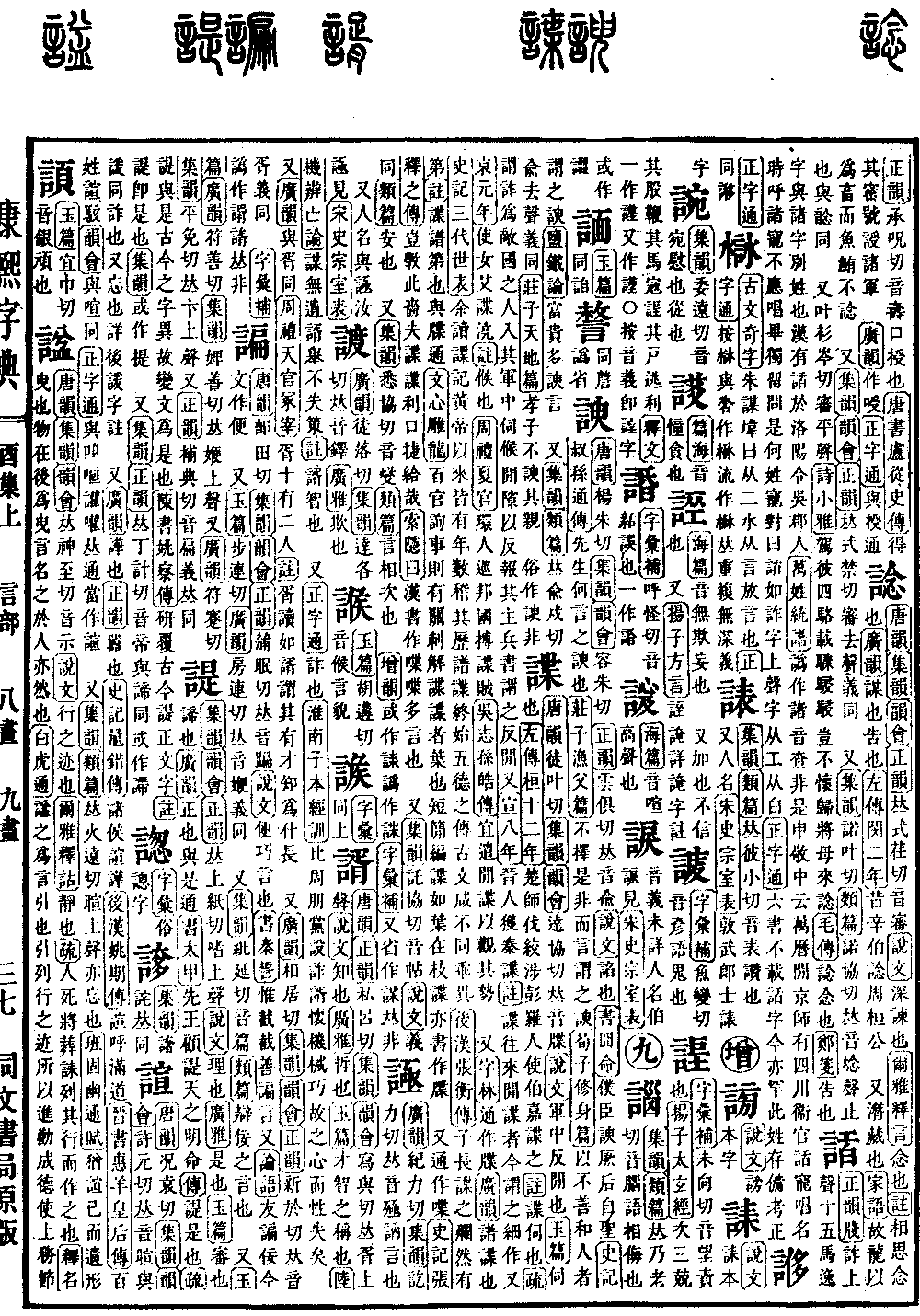
You Collection, Upper Volume
Radical: Speech (yán)
16 strokes
Page 1169, Entry 19
Pronounced yu.
According to the Explaining Graphs and Analyzing Characters (Shuowen Jiezi), it means to flatter.
In the Book of Documents (Shangshu), chapter Jiongming: If a minister is sycophantic, the ruler considers himself sage.
In the Records of the Grand Historian (Shiji), biography of Shusun Tong: Why do you speak with such flattery, sir?
In the Zhuangzi, chapter Fisherman: Not distinguishing right from wrong and merely speaking in agreement is called flattery.
In the Xunzi, chapter Self-Cultivation: Those who harmonize with others by supporting their wrongdoings are called flatterers.
In the Discourses on Salt and Iron (Yantielun): Wealth and nobility attract many flattering words.
Also, as recorded in the Collected Rhymes (Jiyun) and Classified Graphs (Leipian), pronounced yu (falling tone). The meaning is the same.
In the Zhuangzi, chapter Heaven and Earth: A filial son does not flatter his parents.
The common form is written as a variant, which is incorrect.