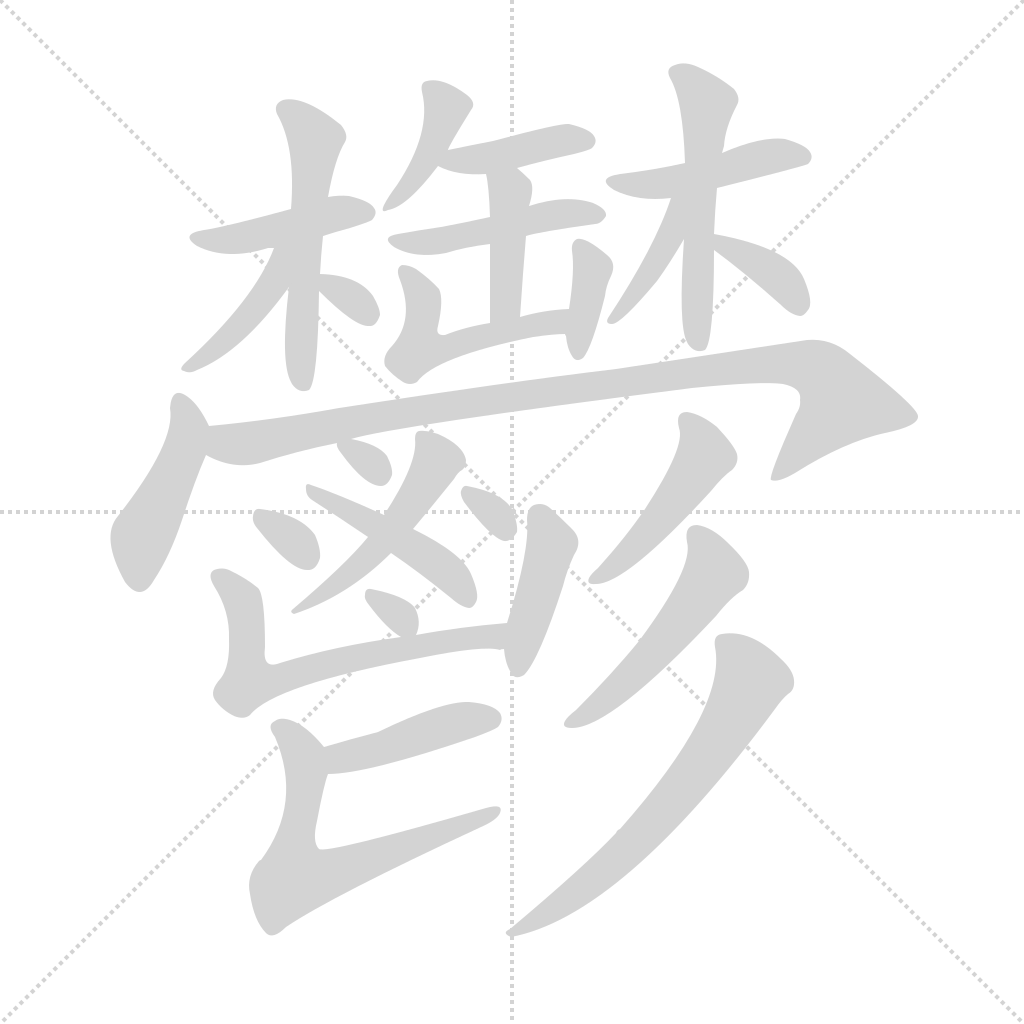
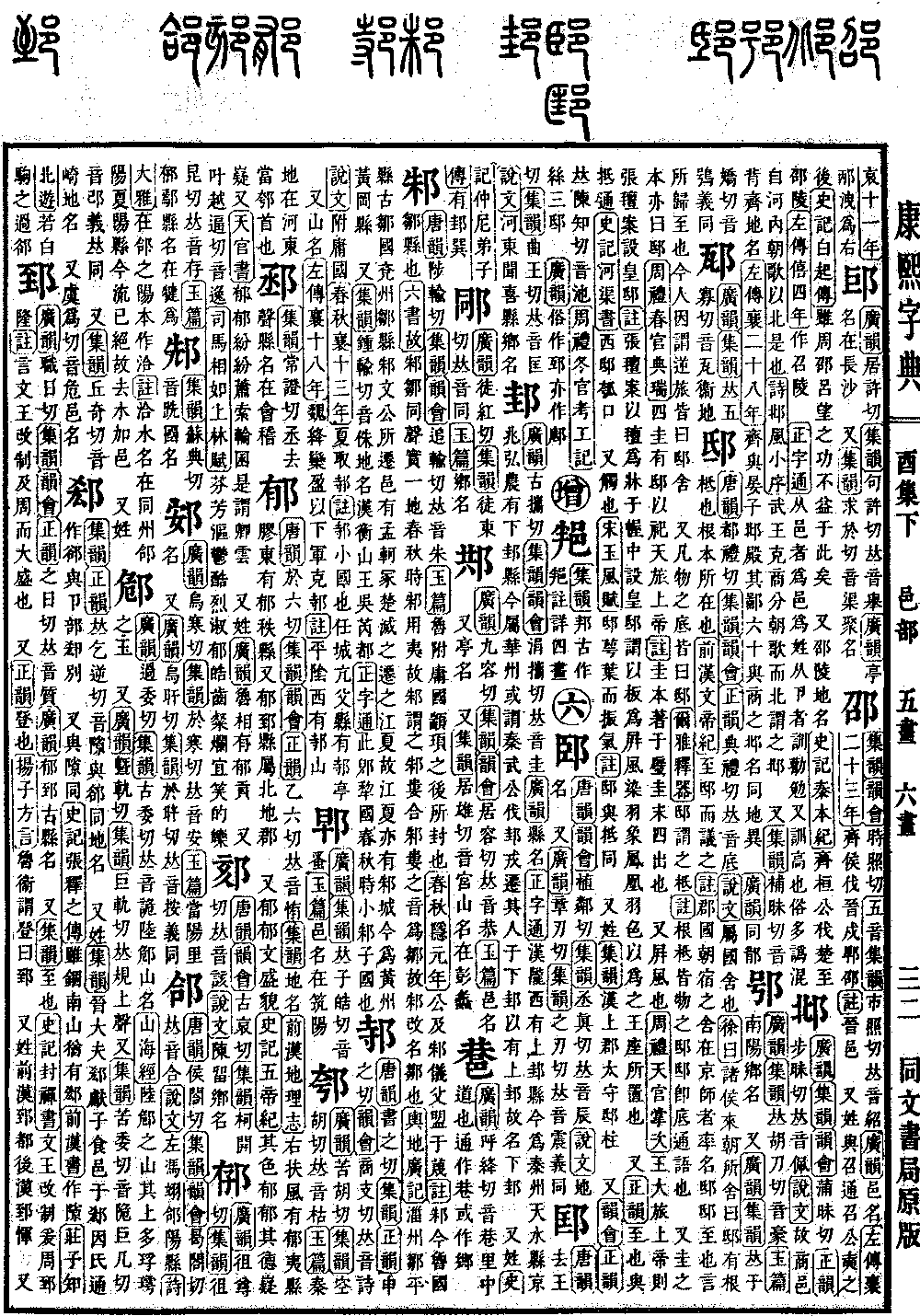
Hai Collection, Upper Volume
Radical: Fragrant Herb (chàng)
Kangxi Strokes: 29
Page 1270, Entry 01
According to the Tang Rhyme (Tangyun), Broad Rhyme (Guangyun), Collected Rhymes (Jiyun), Categorized Compilation (Leipian), and Rhyme Assembly (Yunhui), the pronunciation is yu (falling tone).
In the Explanation of Characters (Shuowen), it describes the appearance of a dense forest.
In the Book of Odes (Shijing), Qin Wind section: "Dense is that northern forest." The commentary states: "Dense means accumulated." The sub-commentary states: "Accumulated and flourishing."
Also in the Book of Odes (Shijing), Bin Wind section: "In the sixth month, eat the dense-fruit and the wild grape." The commentary identifies it as a type of bird cherry tree. Lu Ji's sub-commentary states: "The tree grows five or six feet tall, the fruit is the size of a plum, bright red in color, and sweet to eat."
In the Book of Documents (Shujing), Song of the Five Sons: "Sorrowful and pent-up in my heart." The sub-commentary states: "Sorrowful and pent-up refers to feelings of indignation, stagnation, and accumulation."
In the Rites of Zhou (Zhouli), Winter Offices, Record of Artificers: "If the bell is narrow, the sound is muffled." The commentary states: "The sound is not spread out or soaring."
In the Book of Rites (Liji), Inner Chapters: "If the bird's feathers are dull and the meat smells rotten." The commentary states: "Rotten refers to a putrid odor."
In the Zuo Tradition (Zuozhuan), 29th Year of Duke Zhao: "Obstructed and not flourishing." The commentary states: "Obstructed refers to being blocked or stagnant."
In the Erya, Explanations of Words: "Dense refers to vapor." The sub-commentary states: "Refers to sultry, rising steam."
In the Guangya, it states: "Dense means long."
In the Broad Rhyme (Guangyun), it means secluded, deep, or lingering thoughts.
Also a place name. In the History of the Former Han (Qianhan Shu), Geography Treatise: Yulin Commandery, originally Guilin Commandery of the Qin Dynasty, belonged to Wei Tuo.
Also a river name. In the Classic of Mountains and Seas (Shanhaijing): The Yu River originates in Xiang Commandery.
Also a surname. In the Broad Rhyme (Guangyun), it originates from the Garden of Surnames (Xingyuan).
In the Ganlu Character Book, the common variant is written as yu. It is also used interchangeably with another character (yu).
In the Rites of Zhou (Zhouli), Spring Offices: "The person in charge of fragrant wine mixes the aromatic herb, filling the sacrificial vessel to invoke the spirits." The commentary states: Zheng, the Director of Agriculture, explains: "The herb is named yu. Ten leaves form a bunch, one hundred and twenty bunches form a bundle, placed in a copper vessel to boil, and then stored before the altar. This herb resembles orchids."