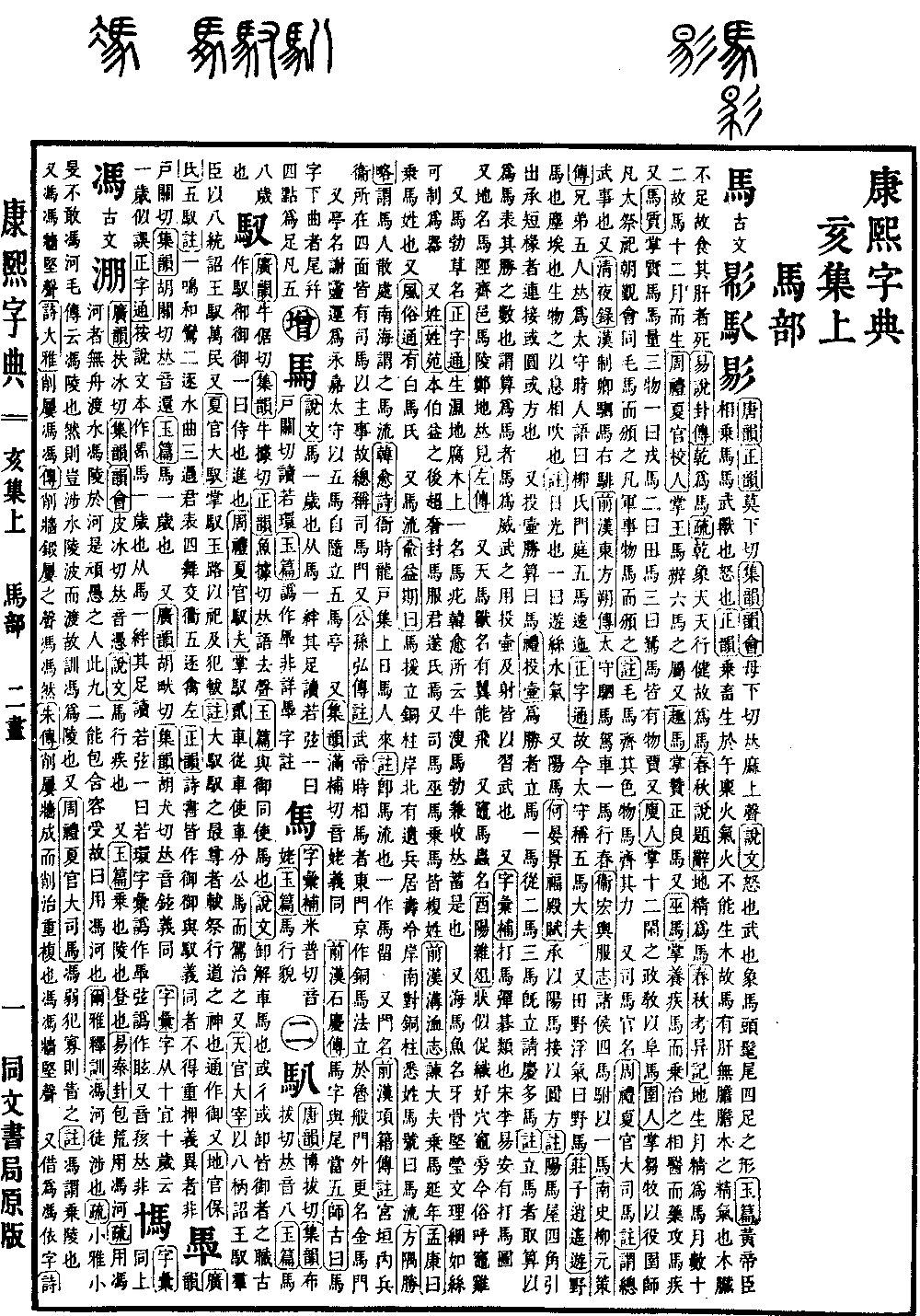
Hai Collection, Upper Volume
Radical: Horse (mǎ)
Kangxi Strokes: 12
Page 1433, Entry 08
Pronounced yu (falling tone).
In Jade Treatise (Yupian), it is the same as the character for govern (yù). It means to drive a horse.
Explaining Graphs and Analyzing Characters (Shuowen Jiezi) states that "xie" means to unhitch a carriage and horse. Whether using the radical for step (chì) or the form xie, both relate to the duties of a driver. In ancient times, it was written as either this character or as govern (yù). The character govern (yù) also carries the meaning of serving or presenting.
Rites of Zhou (Zhouli), Ministry of Summer, Drivers: Responsible for driving secondary carriages, escort carriages, and envoy carriages, as well as distributing government horses and overseeing their training and management.
Also, Ministry of Heaven, Grand Administrator: Using eight authorities to assist the ruler in controlling ministers, and eight principles to assist the ruler in governing the masses.
Also, Ministry of Summer, Great Driver: Responsible for driving the emperor's jade-adorned ceremonial carriage and performing the "ba" sacrifice ritual. Note: The Great Driver holds the highest status among all driving officials. "Ba" is a ritual to sacrifice to the god of the road. It is also commonly used interchangeably with the character for govern (yù).
Also, Ministry of Earth, Master Protector: Records five techniques of driving. Note: First, ensuring the carriage bells ring in harmony; second, driving along winding paths by the water; third, bowing when passing the ruler's markers; fourth, maneuvering the carriage in circles at intersections; fifth, driving to intercept game from the left side.
Standard Dictionary of Rhymes (Zhengyun): In Book of Odes (Shijing) and Book of Documents (Shangshu), it is written as govern (yù). When the meanings of govern (yù) and this character are the same, they cannot be used to rhyme repeatedly; when the meanings are different, this restriction does not apply.