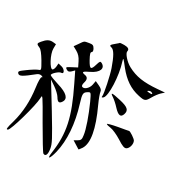
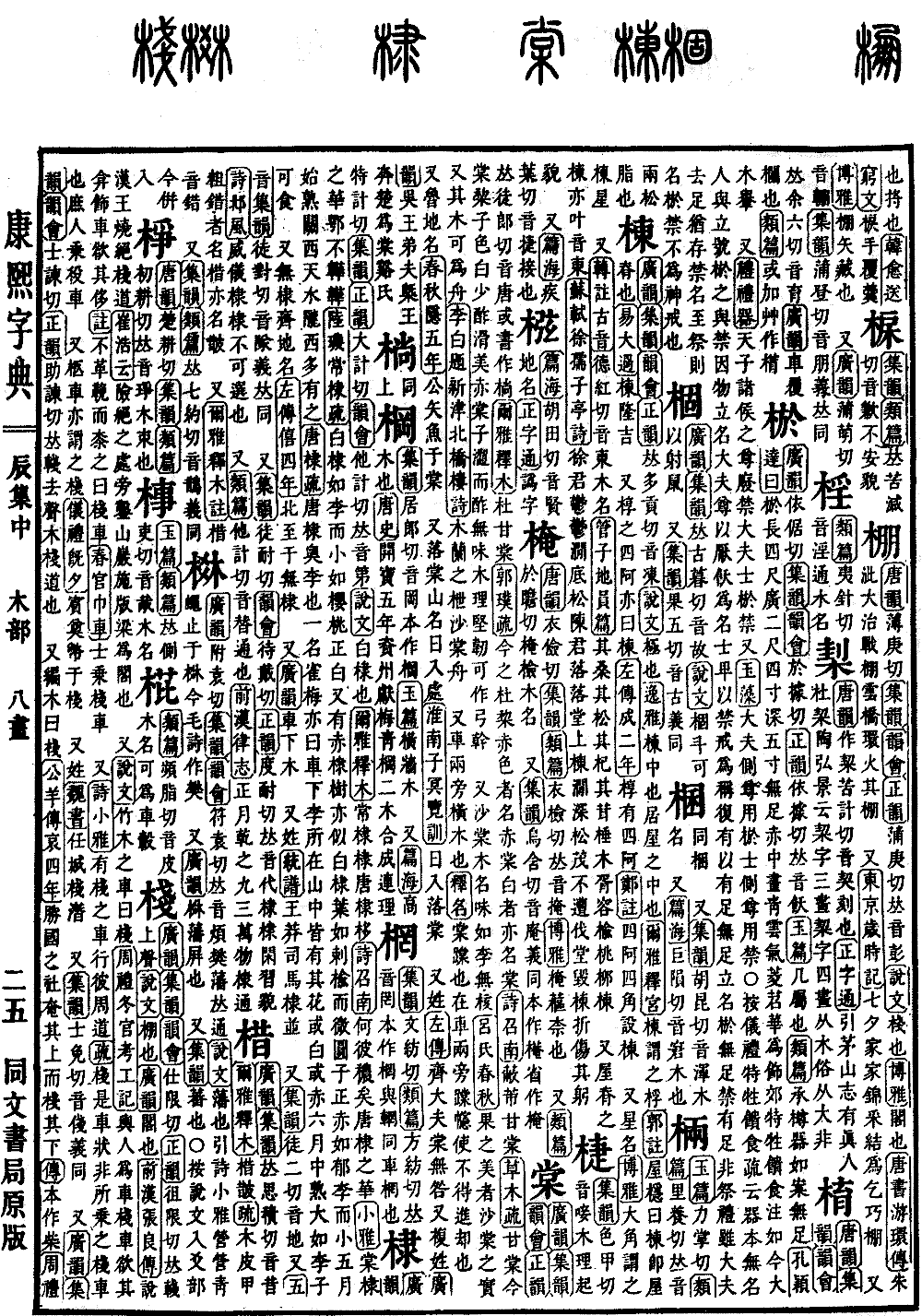
Chen Collection, Middle Volume
Radical: Tree (mù)
Kangxi Strokes: 12
Page 533, Entry 06
Pronounced yu (falling tone).
Yu (yū): A type of table or small stand.
Lei Pian (Categorized Dictionary): A vessel for supporting wine jars, resembling a table but without legs.
Kong Yingda commentary: A yu is four feet long, two feet four inches wide, and five inches deep; it has no legs, is lacquered red in the center, and is decorated with paintings of blue clouds, water chestnuts, and vine flowers. The commentary on the Jiao Te Sheng section of the Book of Rites (Liji) notes that it resembles a large wooden carriage of the present day.
Book of Rites (Liji), Ritual Vessels (Liqi): For the wine jars of the Emperor and the feudal lords, the jin (a type of stand) is not used; ministers and scholars use the yu and the jin.
Book of Rites (Liji), Jade Precepts (Yuzao): Ministers place their wine jars on a yu; scholars place their wine jars on a jin.
According to the sub-commentary on the Etiquette and Ceremonial (Yili), regarding the offering of food to sacrificial animals: Objects originally have no names; people assign names to them. The terms yu and jin are named based on the characteristics of the vessels. The wine stand of a minister is named for the concept of satiation, while the wine stand of a scholar is named for the concept of prohibition. They are also distinguished by whether or not they have legs; the yu has no legs, whereas the jin has legs. Outside of sacrificial rites, even if a minister removes the legs from a jin, it still retains the name jin. When the time for sacrifice arrives, it is referred to as a yu, and the name jin is not used when making offerings to the spirits.