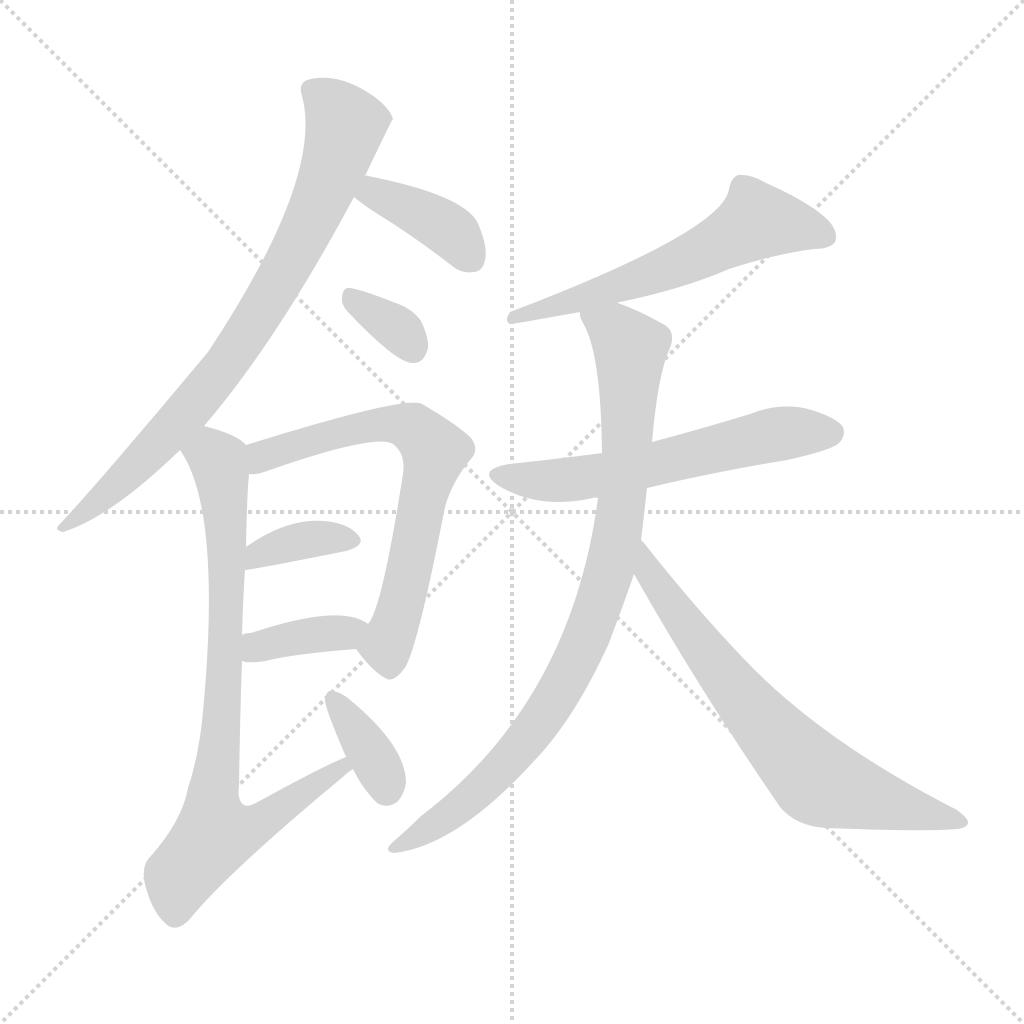
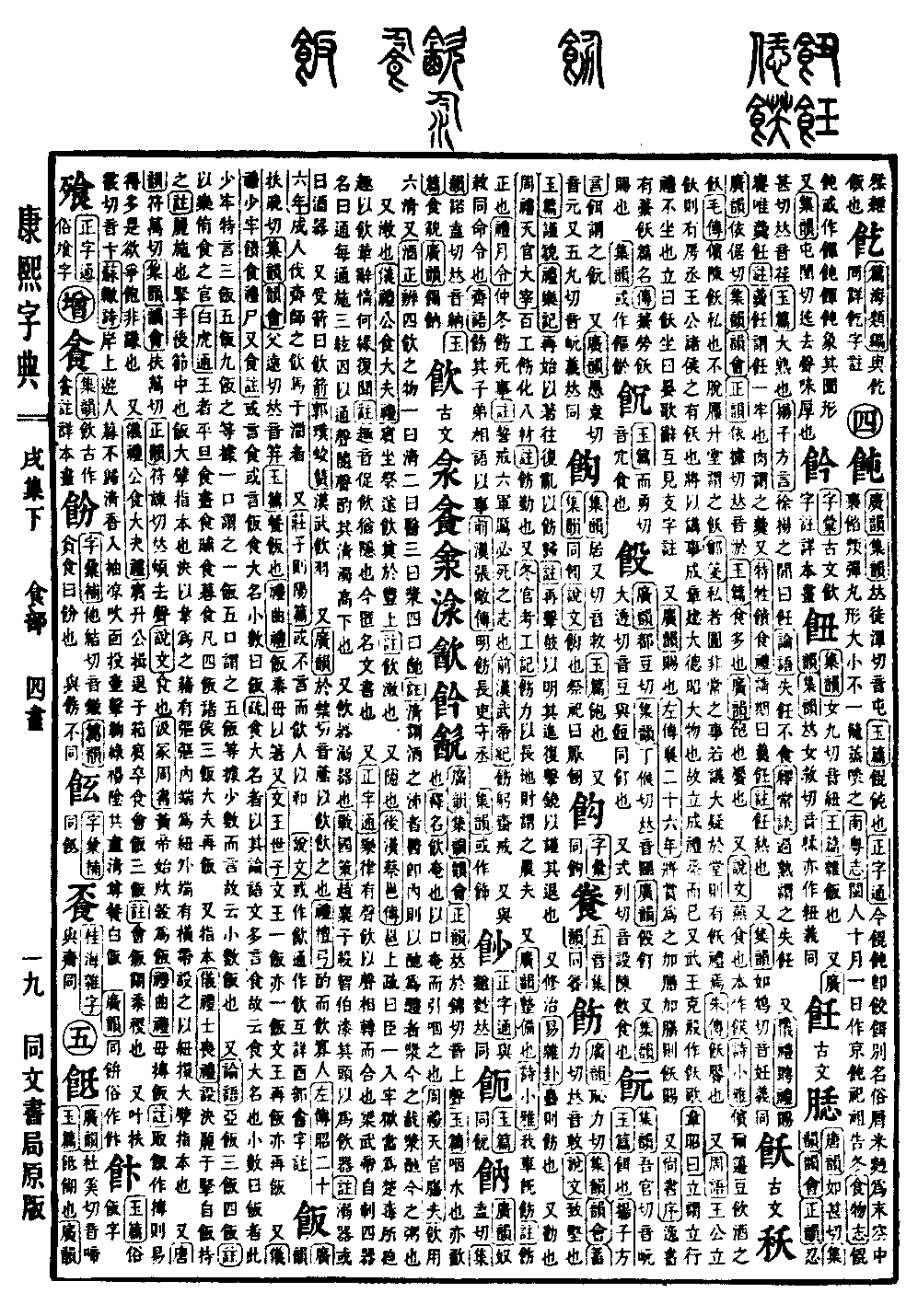
Xu Collection, Lower Volume
Radical: Food (shí)
Yu
Kangxi strokes: 13
Page 1417, Entry 07
Ancient script variant form (hé)
Broad Rimes (Guangyun): Pronounced yu
Collected Rimes (Jiyun), Rime Collection (Yunhui), Correct Rimes (Zhengyun): Pronounced yu
Jade Chapters (Yupian): To eat much.
Broad Rimes (Guangyun): To be full, to be satiated.
Also, Explaining Graphs and Analyzing Characters (Shuowen Jiezi): A feast or banquet. Originally written as a variant form.
Book of Odes (Shijing), Lesser Odes (Xiao Ya): Presenting your bamboo and wooden containers, drinking wine to satiation.
Mao Commentary (Mao Zhuan): Presenting, to offer. Satiation, a private feast. Ascending the hall without removing one's shoes is called a feast.
Zheng Commentary (Zheng Jian): Private matters refer to planning unusual affairs. If discussing great doubts in the hall, then there is the ritual of the feast.
Zhu Commentary (Zhu Zhuan): Satiation, to be satisfied.
Also, Discourses of the States (Guoyu): When the king and dukes hold a standing feast, there is steamed food in the side rooms; the kings and dukes holding feasts are for discussing affairs, completing protocols, establishing great virtues, and illuminating great principles, thus establishing completed rituals, and that is all.
Also, when King Wu conquered the Shang dynasty, he composed the feast songs.
Wei Zhao comments: Standing means to perform the ritual without sitting. Standing is called a feast, sitting is called a banquet. The song lyrics are cross-referenced in the note for the character zhi.
Also, Broad Rimes (Guangyun): To bestow.
Zuo Commentary (Zuo Zhuan), 26th Year of Duke Xiang: About to reward, for this reason extra food is added; when extra food is added, it is a bestowed feast.
Also, Preface to the Book of Documents (Shangshu Xu): The lost sections of the Book of Documents include a chapter named Yu.
Commentary: To soothe. Feast, to bestow.
Collected Rimes (Jiyun): Sometimes also written in a variant form (yu).
Textual research: In Discourses of the States, the phrase regarding the king and dukes holding a standing feast contains the term fang cheng; according to the original text, this has been corrected to fang zheng.