Chen Collection, Lower Volume
Radical: Lack (qiàn)
Kangxi Strokes: 13
Page 570, Entry 17
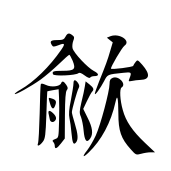
According to the Tang Rhymes (Tangyun), it is pronounced yu. According to the Collection of Rhymes (Jiyun) and the Meeting of Rhymes (Yunhui), it is pronounced rong-zhu, which is the same as yu. Bayu is the name of a type of song. It was originally written as yu. The Historical Records (Shiji) commentary states: The area around the Yu River is where the Liao people resided. The people there were strong and courageous and fond of dancing; the Han Emperor Gaozu recruited them to pacify the Three Qin regions. Later, the Music Bureau was ordered to learn this song and dance, which is why it was named the Bayu Dance. Additionally, songs from the Wu region are also called yu. The Songs of Chu (Chuci), in the section Summoning the Soul (Zhaohun), writes: The songs of Wu and the ballads of Cai, playing in the Dalu musical scale. The commentary explains: Yu and ou both mean songs. Yu Xin in the Lament for the South (Aijiangnanfu) mentions: The songs of Wu and the chants of Yue, the beautiful melodies of Jing and the dances of Chu. There is also xieyu, referring to dancing and gesturing while teasing and joking with one another. It is sometimes written as xieyu. The Book of the Later Han (Houhanshu), in the Biography of Wang Ba, records: People in the streets all laughed loudly, raising their hands in xieyu gestures. The commentary explains: yu is pronounced as yu, or as you. Additionally, according to the Extensive Rhymes (Guangyun), it is pronounced du-hou. According to the Collection of Rhymes (Jiyun), it is pronounced tu-hou, which is the same as tou. The meaning is the same.