Wu Collection, Middle Volume
Radical: Eye (mù)
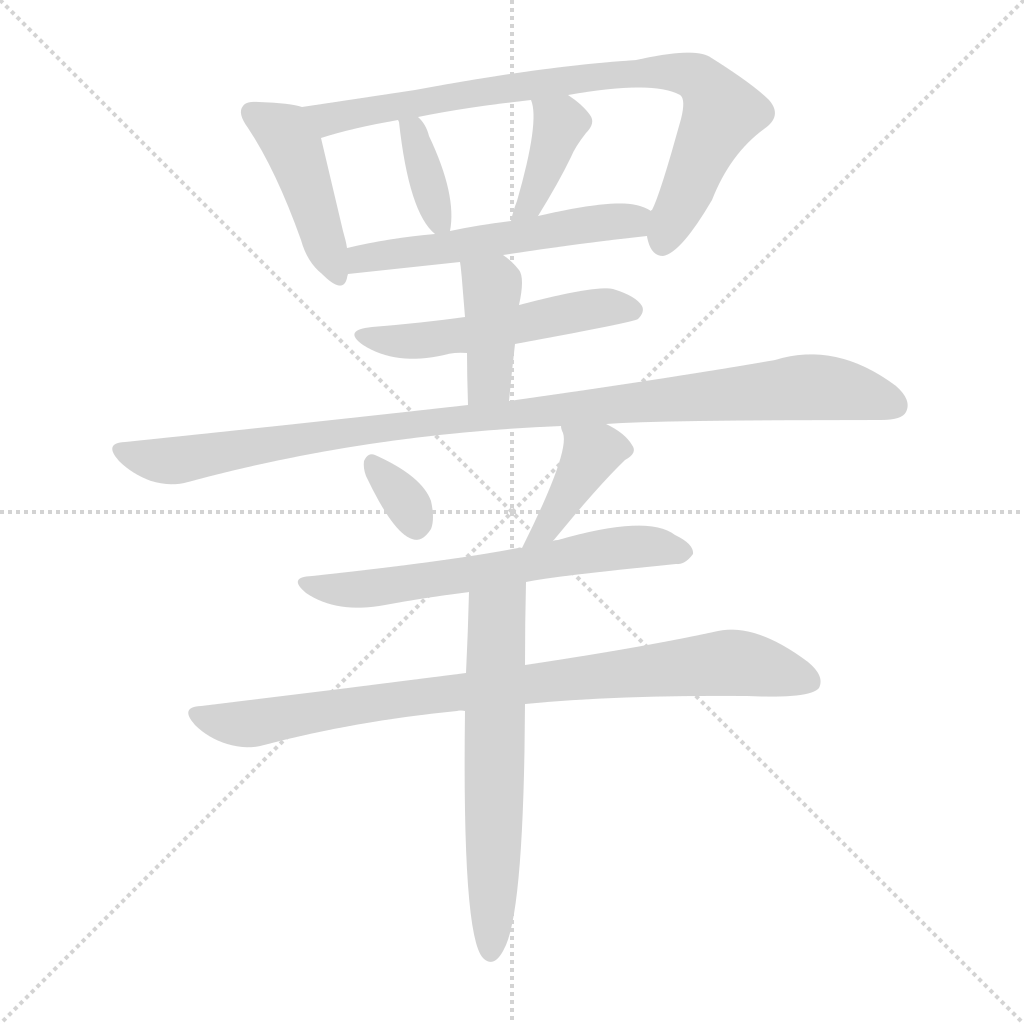
Character: Gao
Kangxi strokes: 13
Page 811, Entry 10
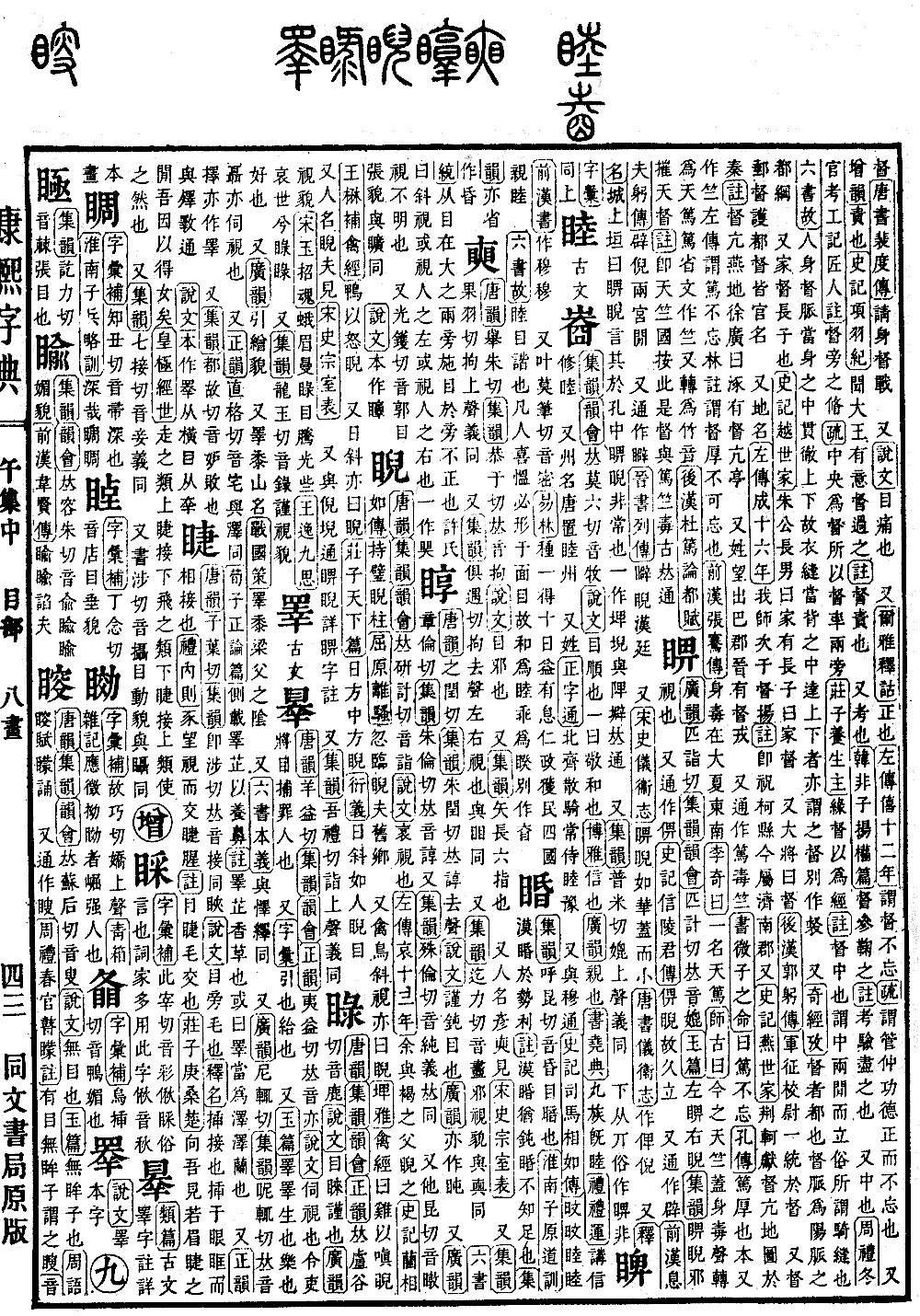
Ancient textual records: According to the Tang Rhymes (Tangyun), pronounced yi. According to the Collected Rhymes (Jiyun), Rhyme Gathering (Yunhui), and Orthodox Rhymes (Zhengyun), pronounced yi; the pronunciation is the same as yi. The Explaining Graphs and Analyzing Characters (Shuowen Jiezi) defines this as observing in secret. It refers to ordering officials to lead informants to capture criminals. Furthermore, the Compilation of Characters (Zihui) defines this as to lead or to supply. According to the Jade Chapters (Yupian), it describes a vibrant, joyful, and beautiful appearance. Also, the Broad Rhymes (Guangyun) describes it as the appearance of pulling or drawing decorations. It also refers to Gaoshu, the name of a mountain. The Strategies of the Warring States (Zhanguo Ce) records: Gaoshu Mountain is located to the north of Mount Liangfu. According to the Original Meanings of the Six Writings (Liushu Benyi), it is interchangeable with the characters yi and yi. Furthermore, according to the Broad Rhymes (Guangyun), pronounced nie. According to the Collected Rhymes (Jiyun), pronounced nie; the pronunciation is the same as nie. It also means to observe in secret. According to the Orthodox Rhymes (Zhengyun), pronounced zhai; the pronunciation is the same as ze. It is interchangeable with the character ze. The Xunzi, Rectification of Names (Zheng lun pian) records: Placing gaozhi nearby to nourish the nose. Note: Gaozhi is a type of fragrant herb. Some say the character gao should be the character ze, referring to marsh orchid. According to the Orthodox Rhymes (Zhengyun), the character ze is also written as gao. According to the Collected Rhymes (Jiyun), pronounced du; the pronunciation is the same as du. It means to corrupt or ruin. It is interchangeable with the characters du and yi. The Explaining Graphs and Analyzing Characters (Shuowen Jiezi) originally wrote the character as a combination of a horizontal eye and the character xing. The original form of the character du was derived from the radical for bad or evil.