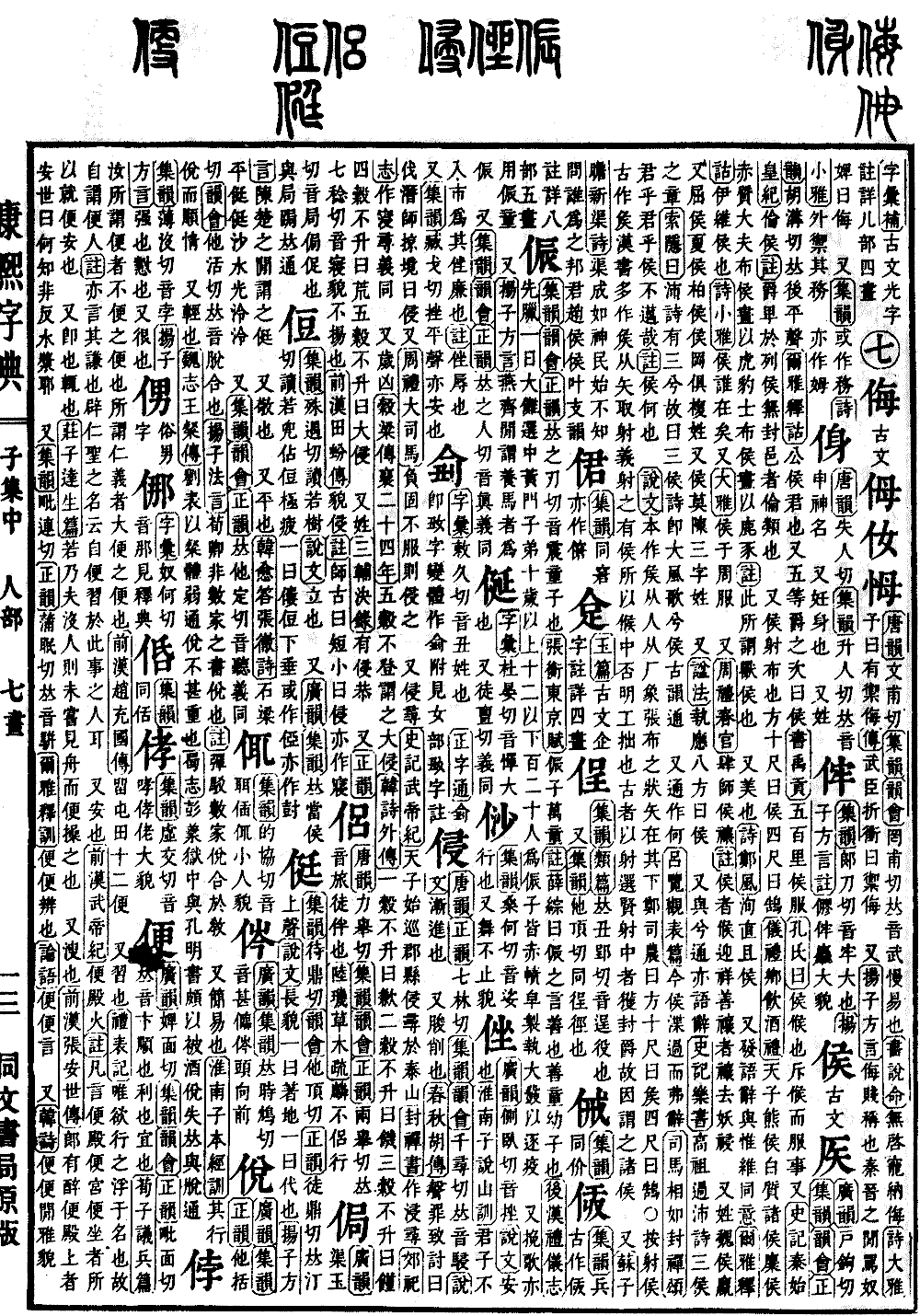
Zi Collection, Middle Volume. Radical: Person (rén). wǔ. Kangxi Stroke Count: 9. Page 103, Number 01. Ancient form. Tang Rhymes (Tangyun): initial wén and final fǔ. Collected Rhymes (Jiyun) and Rhyme Assembly (Yunhui): initial wǎng and final fǔ. Pronounced similarly to wǔ. To treat with contempt or lack of respect. Do not invite contempt by relying on favor — Book of Documents (Shujing). I say there are military officers to resist foreign insults — Classic of Poetry (Shijing). Commentary: A military official resisting enemies is called one who resists insults (yùmǔ). Also, according to Yang Zi's Dialects (Fangyan): The term wǔ is a lowly form of address. In the regions of Qin and Jin, it was used as a derogatory term for servants. Also, according to the Collected Rhymes (Jiyun), it is sometimes written as the variant wù. To resist those insults from the outside — Classic of Poetry (Shijing). It is also written as the variant mǔ.