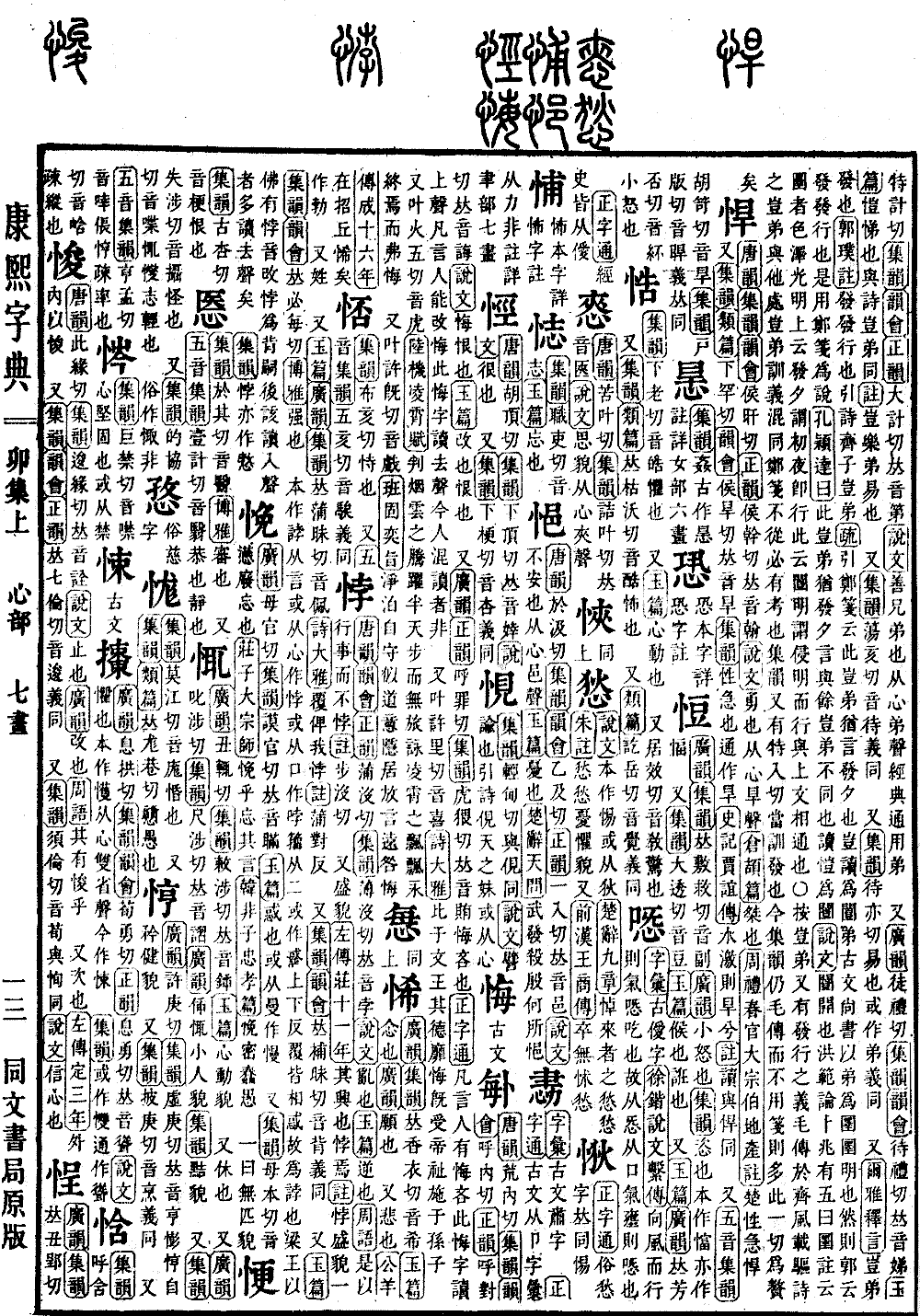
Mao Collection, Upper Volume
Radical: Heart (xīn)
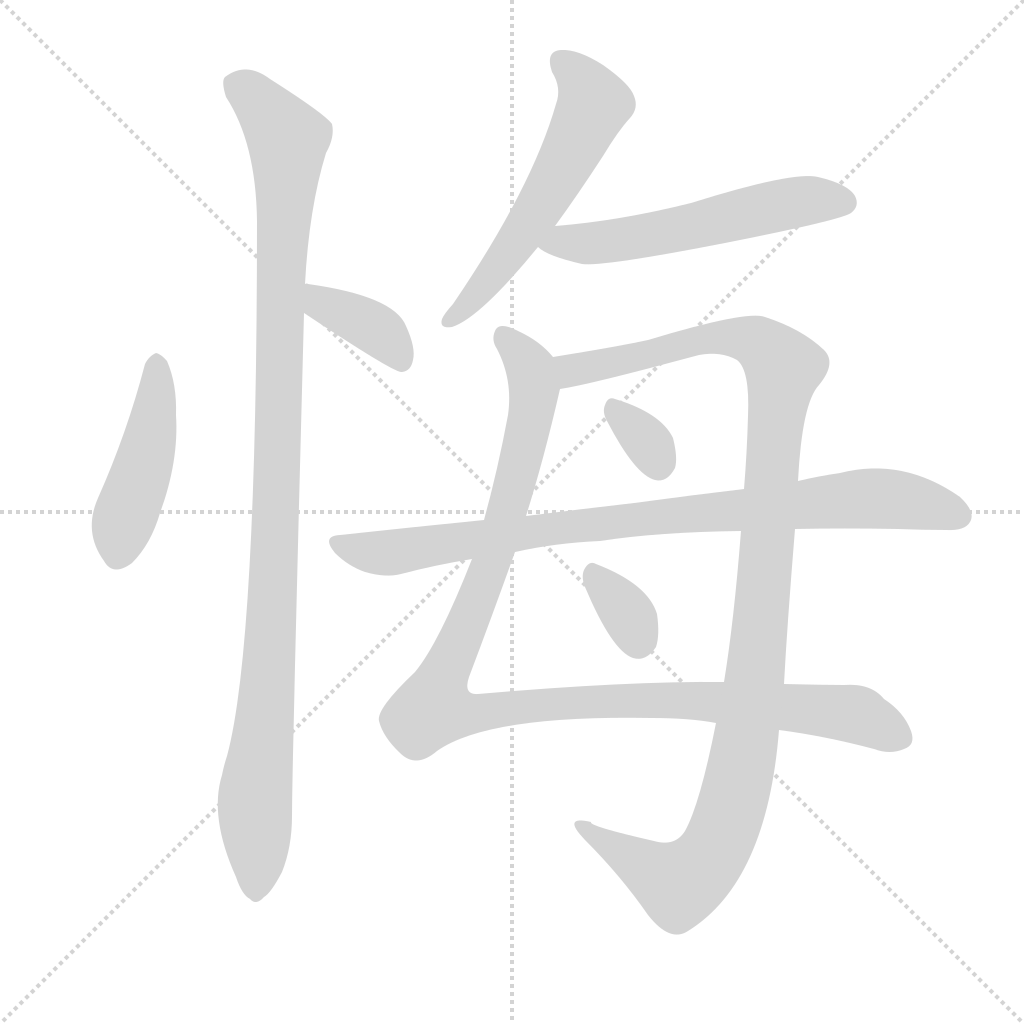
悔
Kangxi stroke count: 11
Page 387, Entry 17
Ancient script form
Pronounced hui (falling tone)
Shuowen Jiezi (Dictionary of Explanations of Graphs and Analysis of Characters): Regret; to hate.
Yupian (Jade Chapters): To change; to hate.
Also pronounced hui (falling tone)
Regret and shame.
Zhengzitong (Comprehensive Compilation of Correct Characters): Whenever speaking of a person having regret and shame, this character is read in the rising tone. Whenever speaking of a person being able to repent and reform, this character is read in the falling tone. Modern people conflate these readings, which is incorrect.
Also pronounced xi (rising tone)
Book of Odes (Shijing): Comparing to King Wen, his virtue had no regrets. Having received the blessings of the Emperor, they are bestowed upon his grandsons.
Also pronounced hu (rising tone)
Lu Ji, Lingxiao Fu (Rhapsody on Soaring to the Sky): Separating the leaping of smoke and clouds, halfway through the celestial journey with no companions. Singing of the soaring flight, forever ending therein without regret.
Also pronounced xi (falling tone)
Ban Gu, Yi Zhi (Essay on Board Games): Pure and tranquil, self-guarded, resembling the intent of the Dao, living in seclusion and setting aside words to avoid blame and regret.