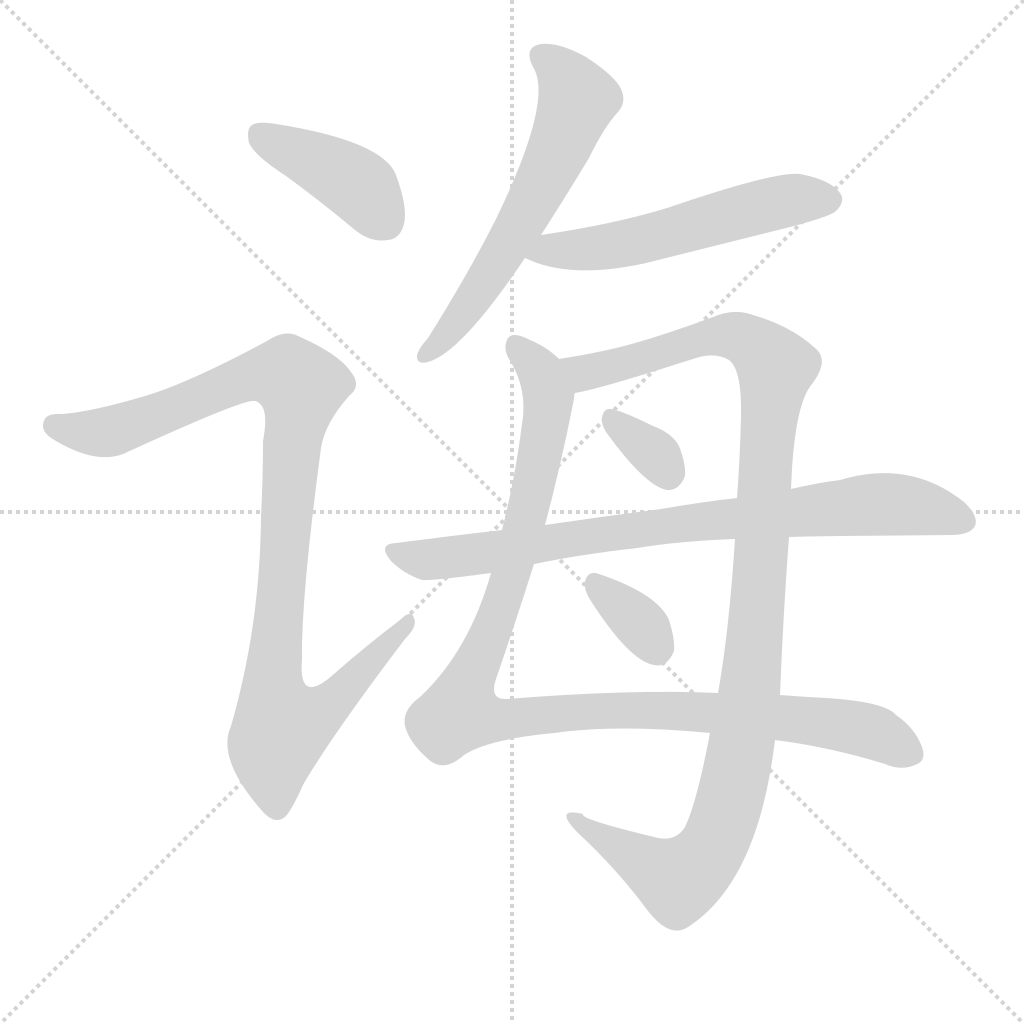
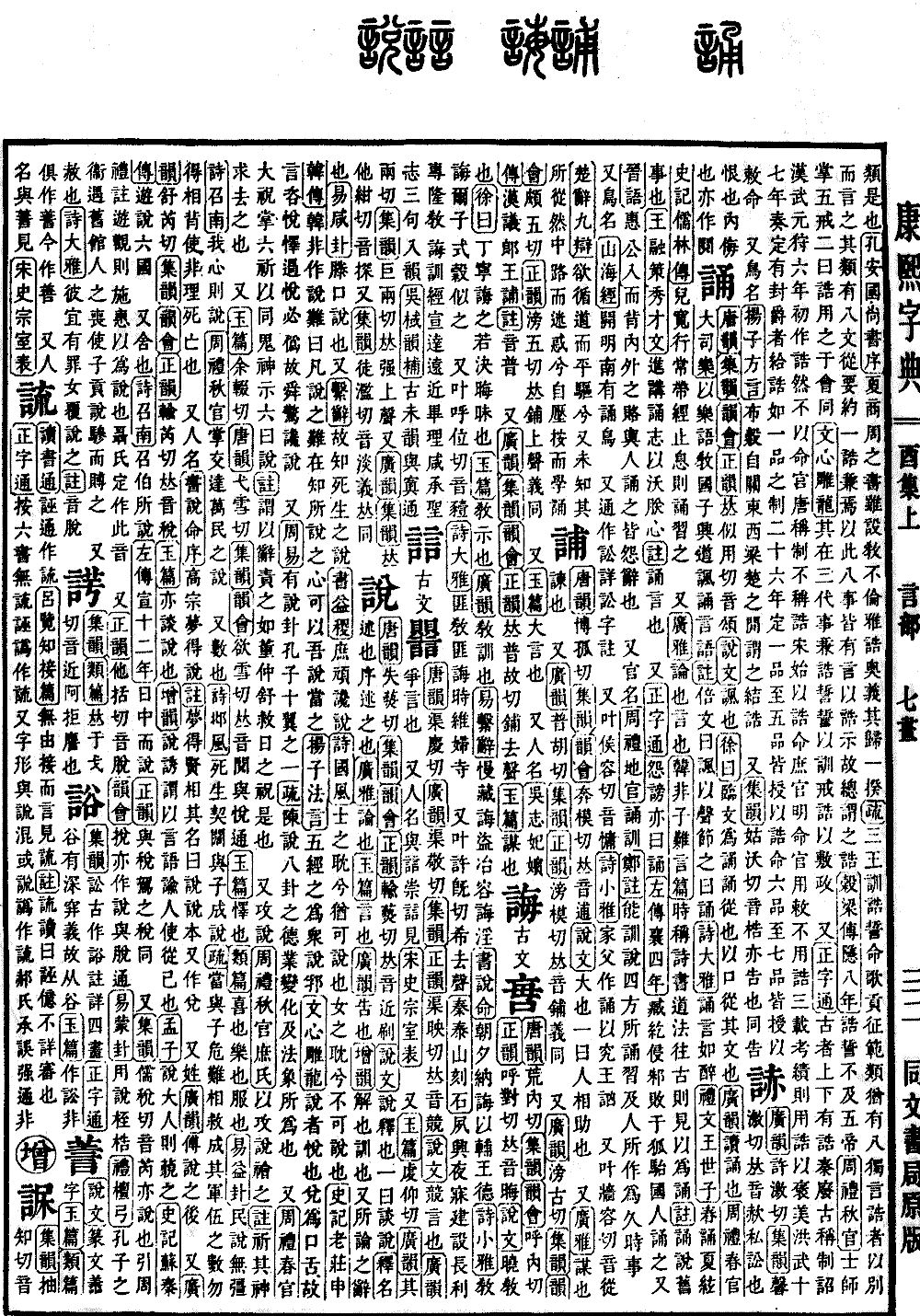
You Collection, Upper Volume
Radical: Speech (yán)
14 strokes
Page 1164, Entry 01
Archaic script form. Pronounced hui.
According to the Shuo Wen Jiezi (Shuo Wen), it means to enlighten and teach.
Xu states: To instruct with earnestness, as if dispelling darkness and ignorance.
According to the Yu Pian, it means to teach and demonstrate.
According to the Guang Yun, it means to educate and admonish.
Book of Changes (Yijing), Commentary on the Appended Phrases: Negligence in storing things invites theft, and an alluring appearance invites lewdness.
Book of Documents (Shangshu), Charge to Yue: Submit admonitions morning and night to assist my virtue.
Book of Odes (Shijing), Xiaoya: Teach and instruct your children, so they may be good and resemble you.
Also pronounced hui (falling tone).
Book of Odes (Shijing), Daya: Not teaching, not instructing; these are the ways of women and eunuchs.
Also pronounced xi (falling tone).
Qin, Mount Tai Inscription: Rise early and retire late, establishing long-term benefits, focusing on elevating education and instruction. Clarifying the classics and disseminating them, all near and far are brought to order, all inheriting the sage’s will. (These three lines form a rhyme).
Wu Yu, Rhyme Supplement (Yunbu): In ancient times, the wei rhyme group corresponded with the zhi rhyme group.
Textual Research: Book of Documents (Shangshu), Charge to Yue: Submit admonitions morning and night to assist the king's virtue. We have corrected king's virtue to my virtue according to the original text.