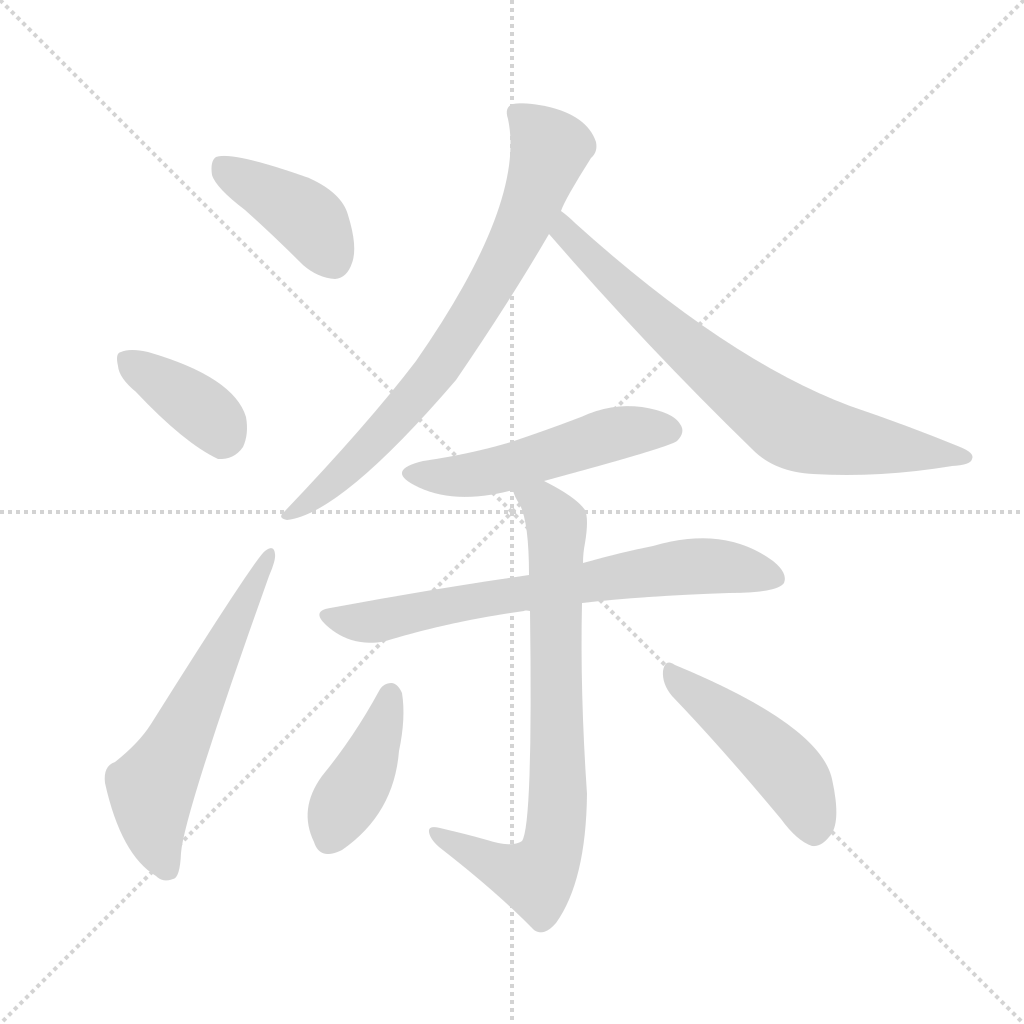
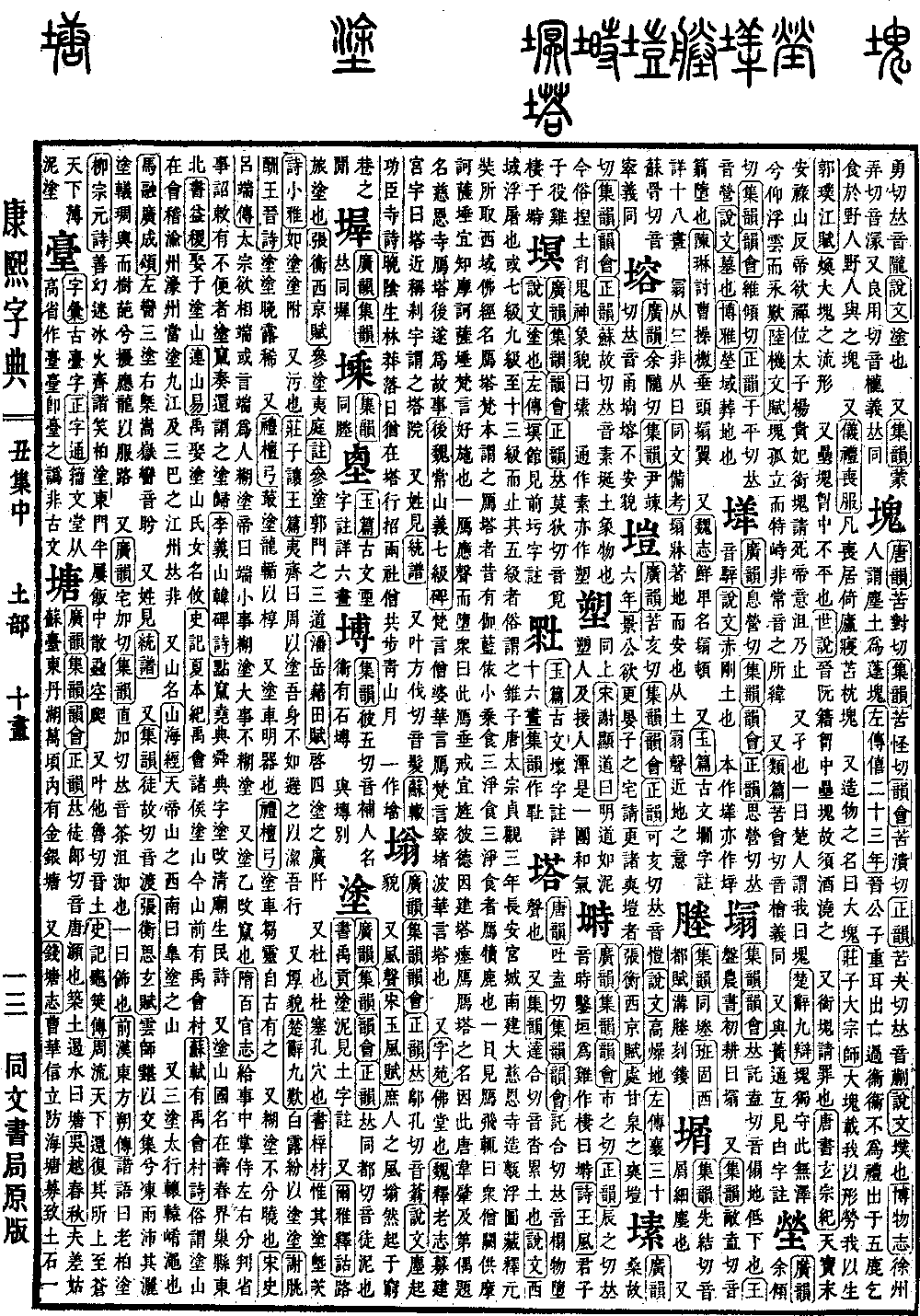
Si Collection, Upper Volume
Radical: Water (shuǐ)
Kangxi Strokes: 13
Page 235, Entry 01
Pronounced tú. The name of a river. According to the Explaining Graphs and Analyzing Characters (Shuowen), the river originates from the Mumi southern mountains in Yizhou and flows northwest into the Mian River.
Also the name of a river. According to the Commentary on the Water Classic (Shuijingzhu), the Tu River originates from the Great Yan Mountain, northeast of Yangyi.
Also a path or ditch. According to the Rites of Zhou (Zhouli), Earth Office, Sui Official: for every one hundred men there is a sluice, and above the sluice there is a path. The commentary states that the path is wide enough for a carriage track.
Also the same as road. According to the Rites of Zhou (Zhouli), Summer Office, Si Xian Official: establish the five ditches and five roads of the state. The commentary notes that the five roads are narrow paths. Tu means road.
Also the path before a hall. According to the Erya, Explaining Palaces: the path before a hall is called a chen. According to the Rites of Zhou (Zhouli), Winter Office, Artificer's Record (Kaogongji): the path before the hall is twelve parts wide. The commentary explains this refers to the area in front of the stairs, like modern brick-paved paths. The sub-commentary notes that brick refers to earthen tiles, and the path refers to a brick-paved walkway.
Also in the Jade Encyclopedia (Yupian): tu-tu describes the thickness of dew.
Also according to the Erya, Explaining Heaven: the twelfth month is called the Tu month.
Also a type of stone. According to the Classic of Mountains and Seas (Shanhaijing): the Jiwei Mountain has many Tu stones.
Pronounced chú. The name of a river. The same as the Chu River. According to the Book of Jin (Jinshu), Biography of Emperor Xuan: Wang Ling falsely claimed that the Wu people had blocked the Tu River. The Tu River is the Chu River.
Pronounced chá. Marshy or boggy land. Another meaning is to decorate.
Pronounced yé. Zhuotu, the name of a mountain, found in the Records of the Grand Historian (Shiji), Account of the Xiongnu.
Also the same as yu. Tuwu, the name of a river. According to the commentary on the Classic of Mountains and Seas (Shanhaijing): in the second year of the Yuanshou era of the Han dynasty, horses emerged from the Tuwu River.