Chou Collection, Upper Volume
Radical: Enclosure (wéi)
Kangxi Strokes: 14
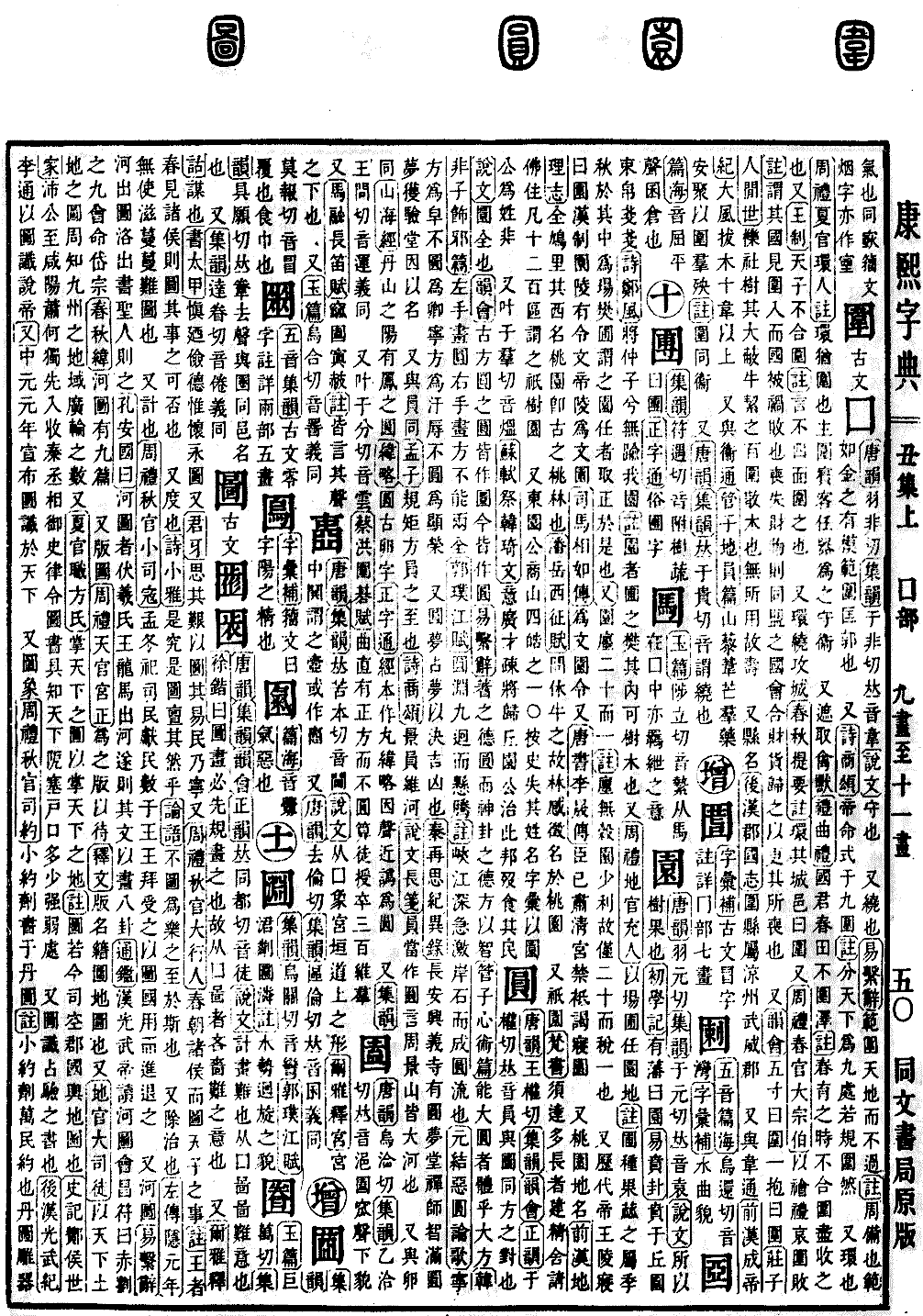
Page 220, Entry 02
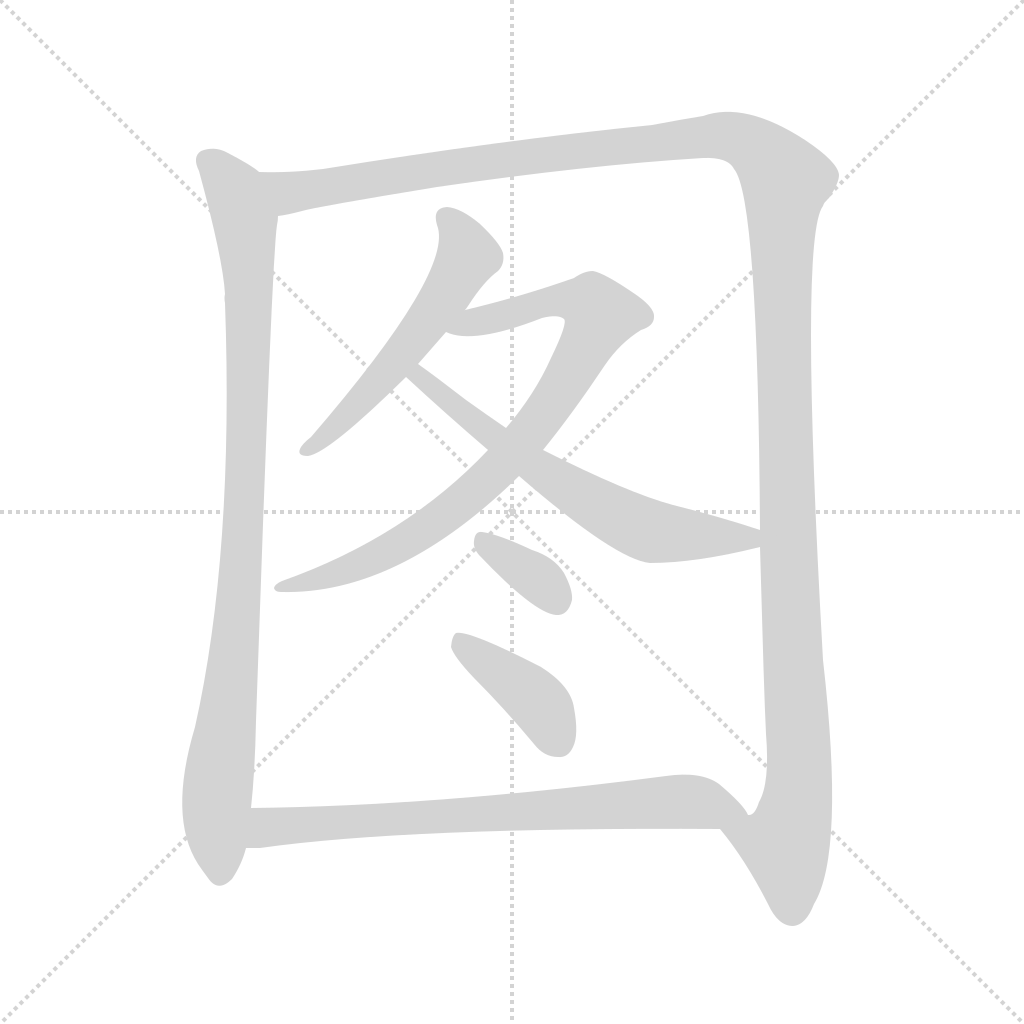
Ancient form. Pronounced tu. According to the Shuowen Jiezi (Explanation of Graphs and Analysis of Characters), it means to plan with difficulty. It is composed of the radical for enclosure and the character meaning to plan or be stingy. Xu Kai states that to draw or plan requires first defining the boundaries, hence it is written with the enclosure radical. The component representing to plan also implies the meaning of stinginess or difficulty.
Also defined in the Erya (Approaching Elegance) as to scheme. From the Book of Documents (Shujing): Be cautious of your frugal virtue, and always contemplate long-term planning. Also in the Junya chapter: Reflect on the difficulties, and plan for the ease, then the people will be at peace.
From the Rites of Zhou (Zhouli), Autumn Office, Great Envoy: In the spring, the feudal lords attend court to discuss the affairs of the Son of Heaven. Commentary: When the king meets the feudal lords in the spring, he discusses whether their affairs are appropriate.
Also means to measure. From the Book of Odes (Shijing): Investigate this and plan this, is it truly so? From the Analects (Lunyu): I did not expect that the appreciation of music could reach such a level.
Also means to manage or eradicate. From the Zuo Tradition (Zuozhuan), First Year of Duke Yin: Do not let it spread. If it spreads, it will be difficult to manage.
Also means to calculate. From the Rites of Zhou (Zhouli), Autumn Office, Minister of Justice: In the first month of winter, he performs a sacrifice to the Minister of the People, presents the census data to the King, and the King receives it to calculate national expenditure and manage officials.
Also refers to the River Map (Hetu). From the Book of Changes (Yijing), Appended Remarks: The Yellow River produced the Map, the Luo River produced the Book, and the Sages followed them. Kong Anguo states: The River Map appeared during the reign of Fuxi, when a dragon-horse emerged from the river; he observed its patterns to draw the Eight Trigrams. The Comprehensive Mirror in Aid of Governance (Tongjian) notes that Emperor Guangwu of the Han dynasty read the River Map and the prophecy of prosperity, stating: The nine of the red Liu lineage shall meet the mandate at Mount Tai. The Spring and Autumn Prophetic Records (Chunqiu Wei) states there are nine chapters of the River Map.
Also refers to registers and maps. From the Rites of Zhou (Zhouli), Office of Heaven: Prepare registers for it. Commentary: Registers refer to name lists. Maps refer to geographical charts. Also, from the Office of Earth, Great Minister of Instruction: By using the maps of the empire's land, he fully understands the dimensions of the Nine Provinces. Also, from the Office of Summer, Bureau of Military Geography: He manages the maps of the empire to oversee its lands. Commentary: These maps are like the maps of commanderies and states used by the Minister of Works today. From the Records of the Grand Historian (Shiji), Biography of the Marquis of Zan: When the Prince of Pei reached Xianyang, Xiao He was the first to enter, securing the laws, legal statutes, and maps of the Qin Prime Minister and Censors, thereby gaining full knowledge of the empire's strategic passes and population figures.
Also refers to prophetic texts (tuchen), books of divination. From the History of the Later Han (Hou Hanshu), Annals of Guangwu: Li Tong used prophetic texts to persuade the Emperor. Also: In the first year of the Zhongyuan era, he promulgated prophetic texts throughout the empire.
Also refers to images. From the Rites of Zhou (Zhouli), Autumn Office, Minister of Covenants: Minor contracts are written on red tablets. Commentary: These are contracts for the ten thousand people. Red tablets refer to vessels like the fu and gui that bear images. In the Rhapsody on the Jingfu Hall by He Yan: Images serve as warnings and reflections of ancient times. In the Rhapsody on the Lingguang Hall of Lu by Wang Yanshou: Paintings depict the heavens and earth, and the various categories of living things.
Also refers to Buddhism, known as futu. Pagodas are also called futu. Du Fu wrote a poem on visiting the futu at Cien Temple with Gao Shi. Also from the Wang Junyu Guolao Tanyuan: Li Yunze, while guarding Xiongzhou, used treasury funds to build a futu. Supervisory officials impeached him, but Emperor Zhenzong secretly pardoned him. Yunze replied: I am not favoring Buddhism, but rather building an observation tower for the border region. In the epitaph for Wang Zhongshu by Han Yu: He prohibited monks and Daoists from building futu within the territory, as they use them to deceive, beg, and fish for profit, stealing the property of the common people.
Also pronounced tu. From the Book of Odes (Shijing): I weigh and plan it, and only Zhong Shanfu can promote it. From the Yilin (Forest of Changes): Planned by the underlings, and ranked with the common masses.