You Collection, Upper Volume
Radical: Speech (yán)
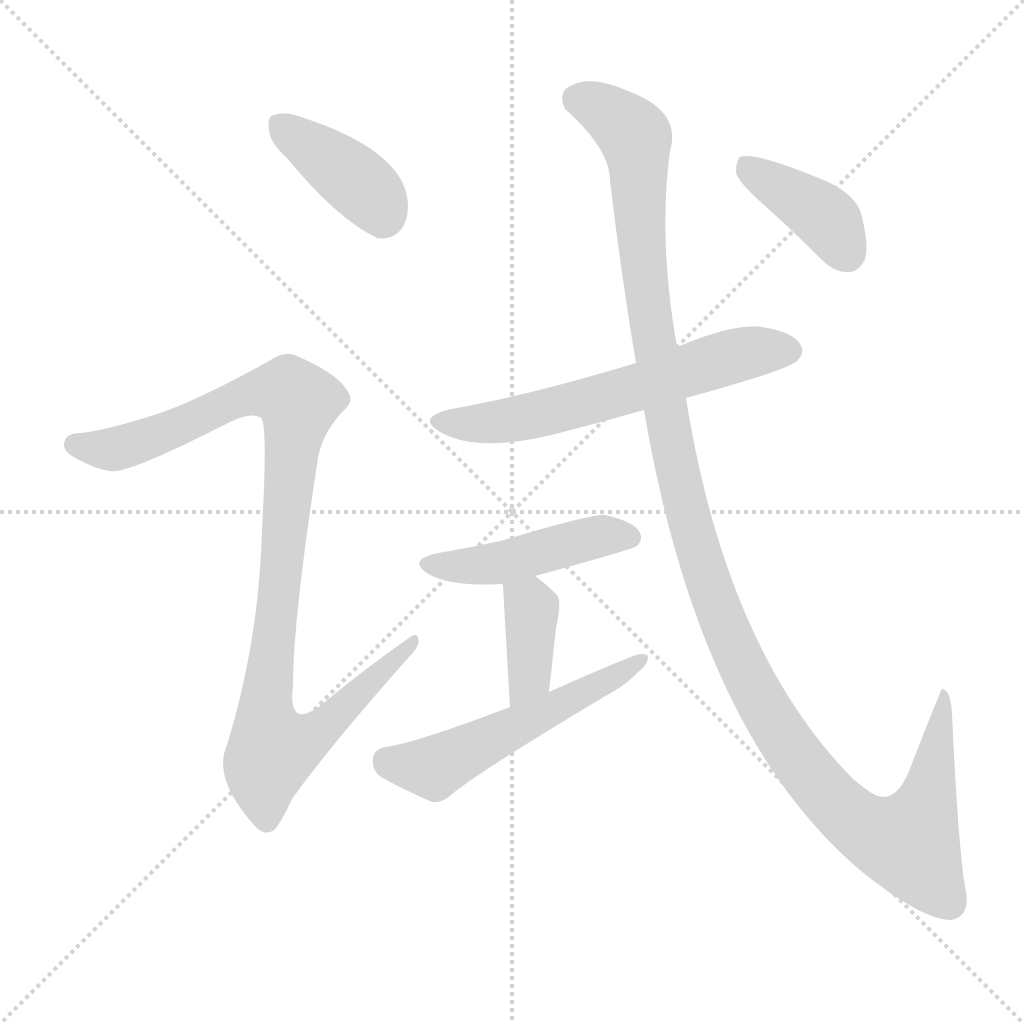
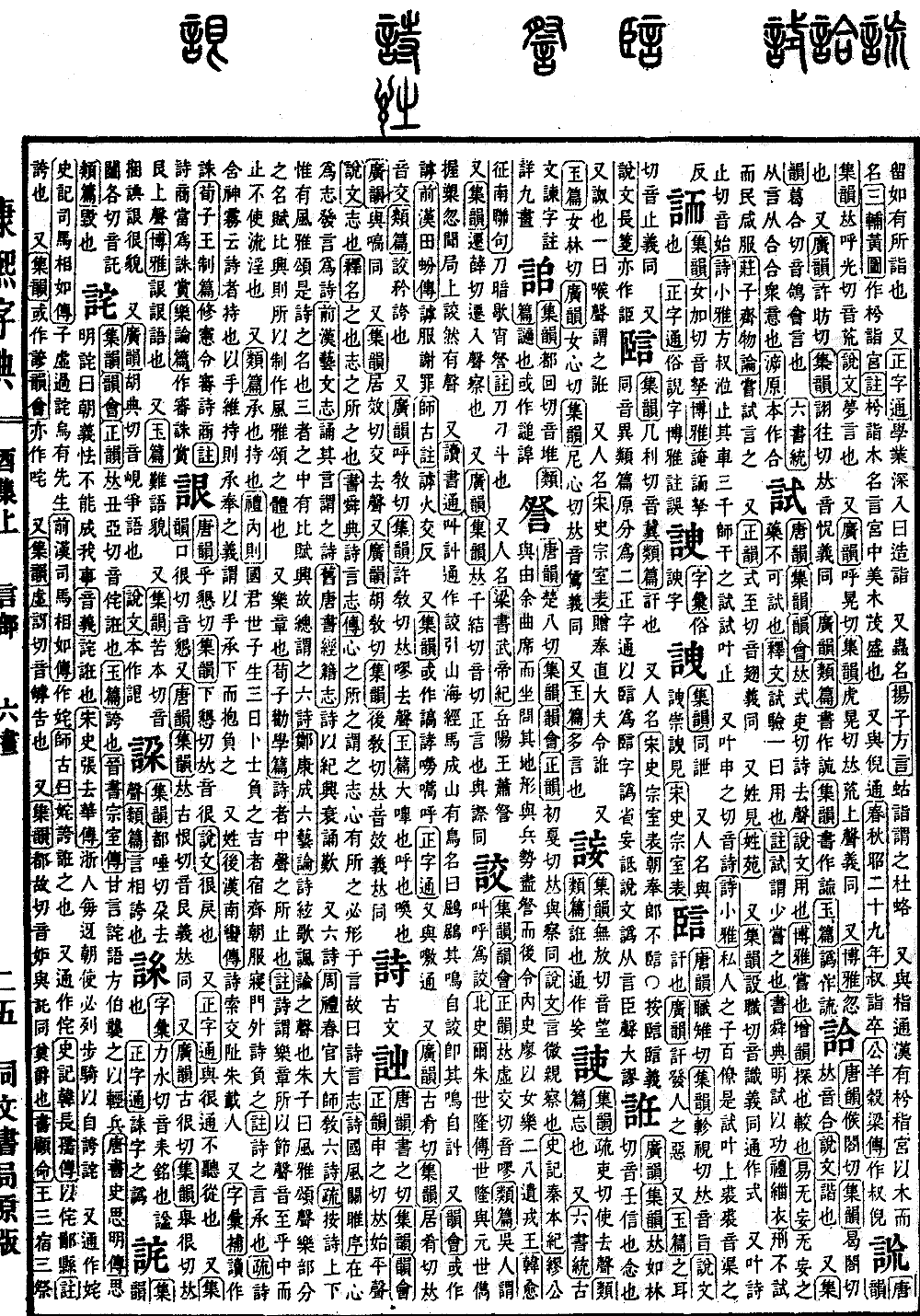
Try (shì); Kangxi strokes: 13; Page 1157
Pronounced shì (falling tone).
In the Shuowen Jiezi (Shuowen), it means to use. In the Guangya (Boya), it means to attempt or test. In the Zengyun, it means to investigate or compare. In the Book of Changes (Yijing), it says, The medicine of the unexpected should not be tried. In the Explanation of Text (Shiwen), it says it means to test; another theory suggests it means to use. The commentary notes that it refers to tasting a small amount. In the Book of Documents (Shangshu), it says, Clearly test them by their achievements. In the Book of Rites (Liji), it says, Without testing, the people are all submissive. In the Zhuangzi, it says, Attempt to speak of it.
Also pronounced chì (falling tone). The meaning is the same. It is also a surname, found in the Encyclopedia of Surnames (Xingyuan).
Also pronounced shì (entering tone). The meaning is the same. It is used interchangeably with the character meaning pattern or model.
Also pronounced shǐ (rising tone). In the Book of Odes (Shijing), it says, Fang Shu arrives, his chariots are three thousand, the officers of the army are tested. Here it rhymes with the word for stop.
Also pronounced shì (falling tone). In the Book of Odes (Shijing), it says, The son of a private person, the hundred officials are all tested. This rhymes with the word for fur coat, which is pronounced in the manner of the character for canal.