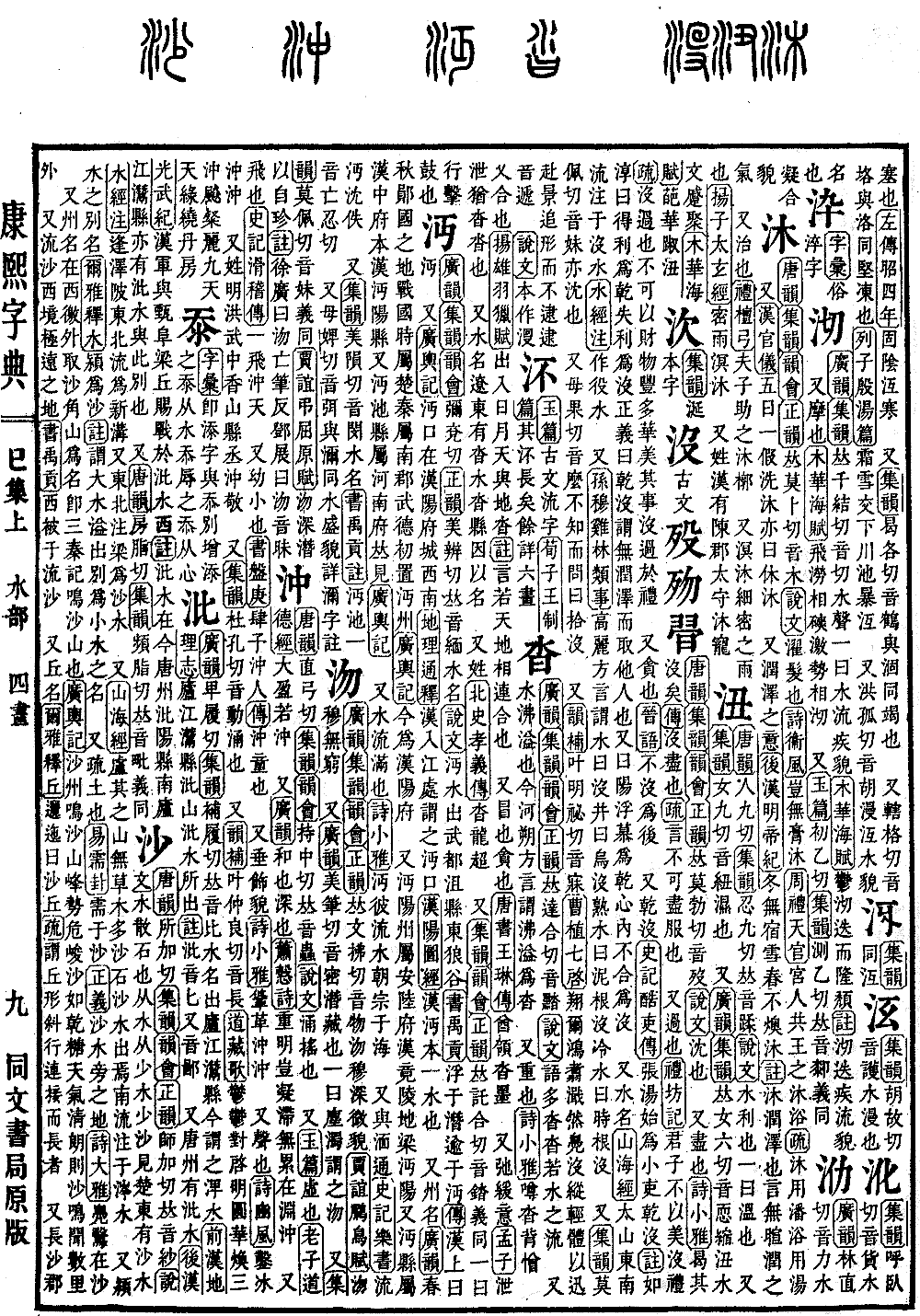
Si Collection, Upper Volume
Radical: Water (shuǐ)
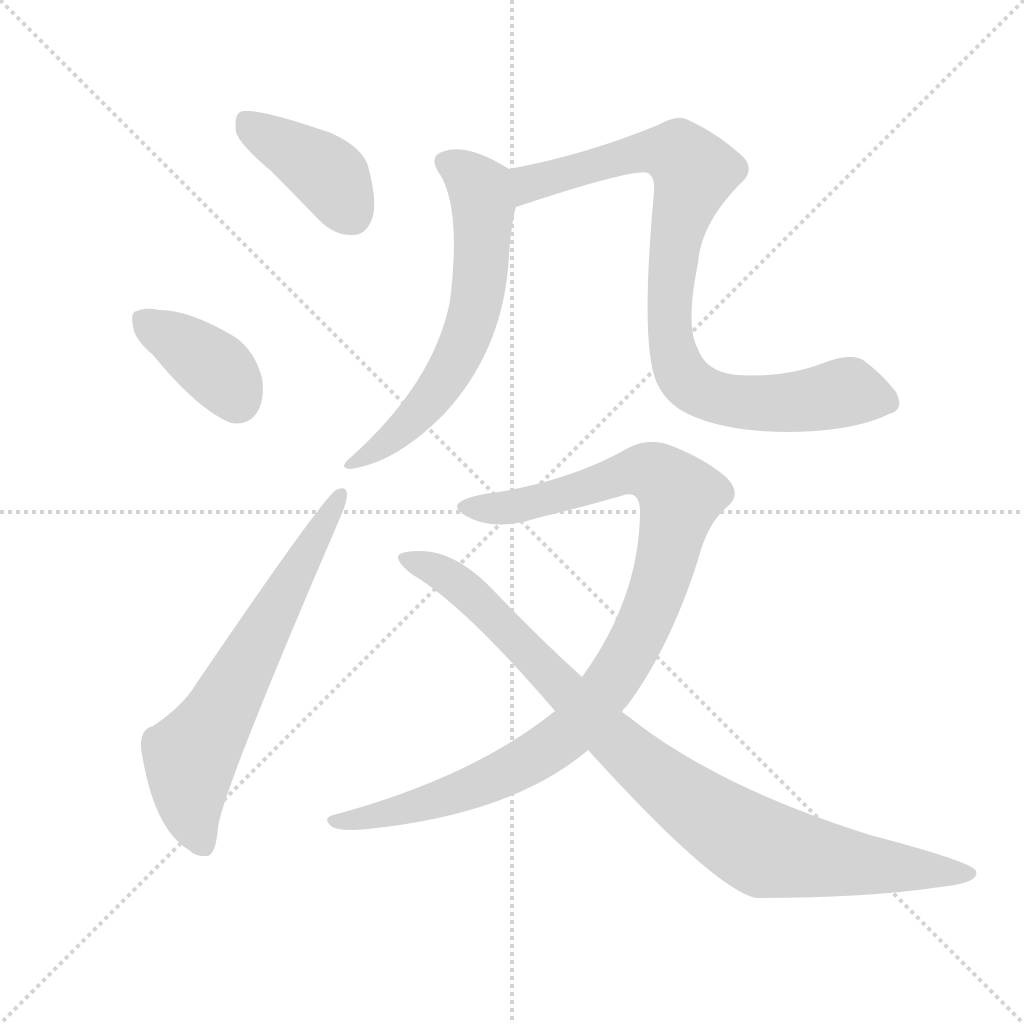
Entry: mò
Kangxi stroke count: 8
Page 611, Entry 06
Ancient forms include mò and mò.
According to Tang Rhymes (Tangyun), Collection Rhymes (Jiyun), Rhyme Meetings (Yunhui), and Correct Rhymes (Zhengyun), it is pronounced mò.
According to the Explaining Graphs and Analyzing Characters (Shuowen), it means to sink. It also means to end.
Book of Odes (Shijing), Lesser Odes (Xiao Ya): When will it end?
Commentary: Mò means to end.
Sub-commentary: The meaning is that it cannot be completely subjugated.
It also means to exceed.
Book of Rites (Liji), Record on Regulation (Fangji): A superior man does not exceed ritual regulations because of the abundance of his wealth.
Sub-commentary: Mò means to exceed. One should not allow affairs to become overly ostentatious due to wealth, thereby exceeding the rules of ritual.
It also means to covet.
Discourses of the States (Jinyu): Do not covet being the successor.
It also refers to the term gan-mo.
Records of the Grand Historian (Shiji), Biographies of Harsh Officials: When Zhang Tang was first a minor official, he engaged in gan-mo.
Note: Ru Chun says: To gain profit is called gan, to lose profit is called mo.
Sub-commentary: Gan-mo refers to seizing the property of others without any legitimate benefit. Others say: To admire on the surface is called gan, and to not identify with it internally is called mo.
It also refers to the name of a river.
Classic of Mountains and Seas (Shanhaijing): The Tai River flows southeast and enters the Mo River.
Commentary on the Water Classic (Shuijingzhu): Written as Yi River.
According to Sun Jilin's Classified Matters (Sun Jilin Leishi): In the Goryeo dialect, water is called mo, a well is called wu-mo, hot water is called ni-gen-mo, and cold water is called shi-gen-mo.
According to Collection Rhymes (Jiyun), it is pronounced mèi. It also means to sink.
It is also pronounced me. Not knowing and asking is called shi-mo.
According to Rhyme Supplements (Yunbu), it is pronounced mèi.
Cao Zhi, Seven Exhortations (Qi Qi): Soaring high like a swan, and sinking like a wild duck. One flings the body with agility and speed, light and shadow chase the form, but cannot catch up. Dai is pronounced dì.
The original form of the character is depicted.
Editorial Correction: In the Classic of Mountains and Seas (Shanhaijing), the text reads Tai River flows southeast, entering the Mo River. We have corrected Tai Mountain to Tai River per the original text.