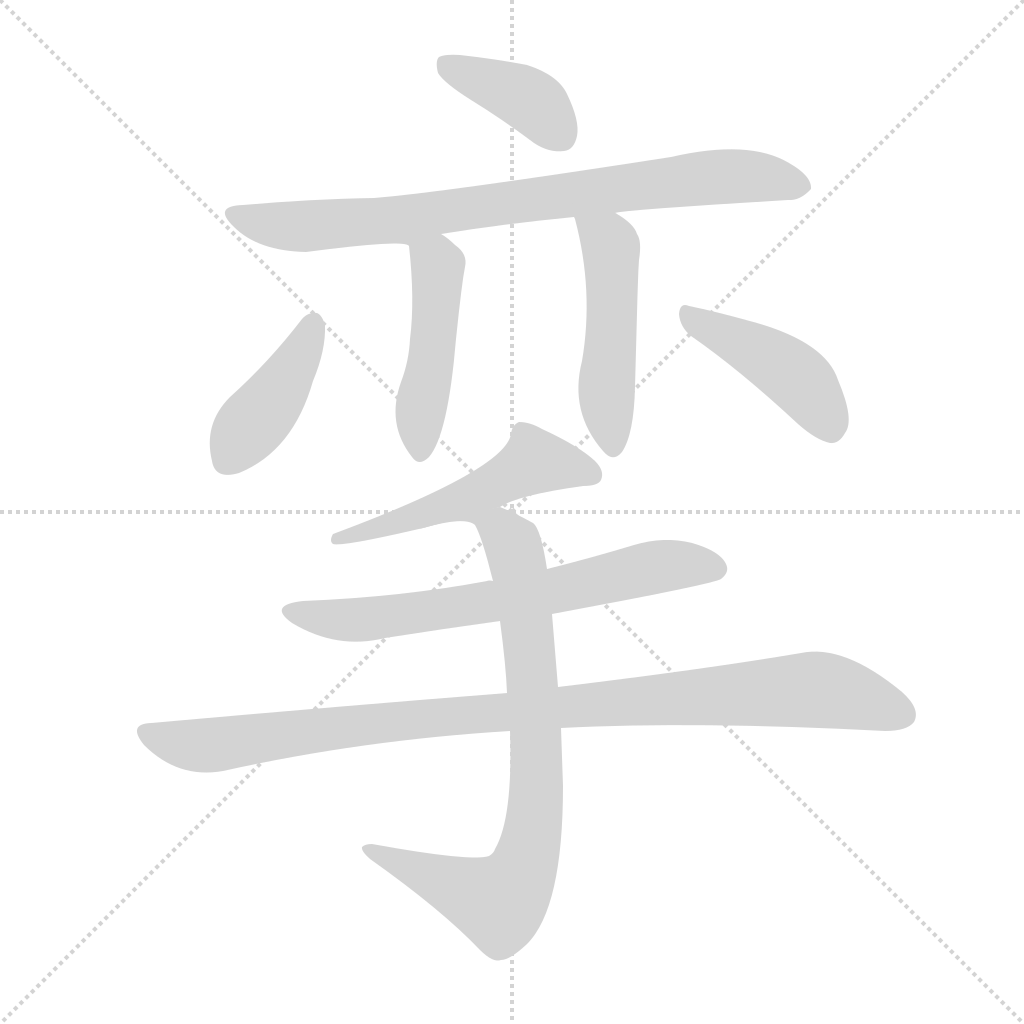
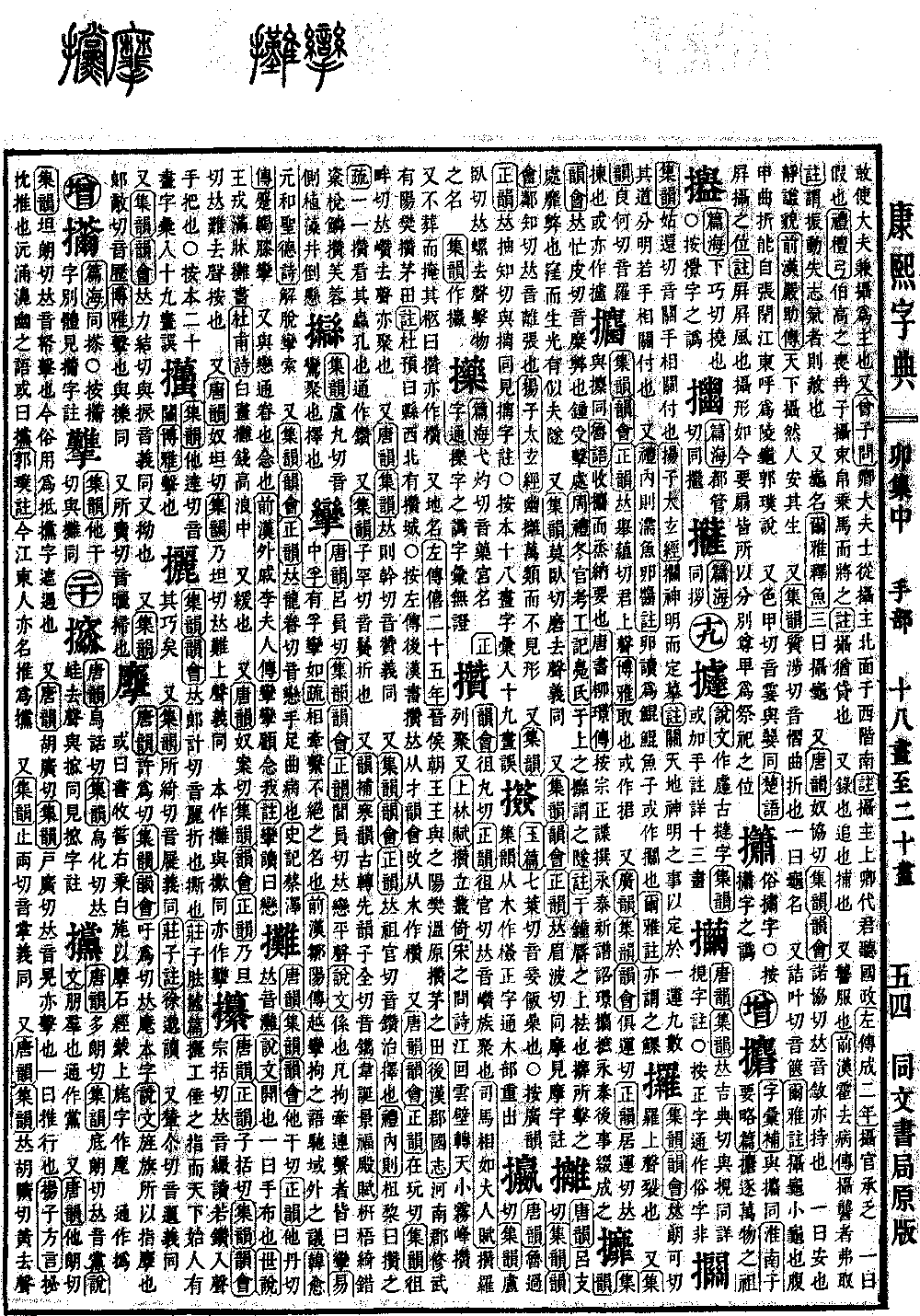
Mao Collection, Middle Volume. Radical: Hand (shǒu). Kangxi strokes: 23. Page 464, Entry 14.
According to the Tang Rhyme (Tangyun), the collected rhymes (Jiyun), the rhyme treasury (Yunhui), and the standard rhymes (Zhengyun), it is pronounced luan (level tone). According to the Explaining Graphs and Analyzing Characters (Shuowen), it means to bind. Everything that is restricted, pulled, or connected is called luan. Book of Changes (Yijing), section on Central Sincerity: Possessing sincerity like a bond. The commentary states: This is a name for being tied together without end. In the History of the Former Han (Qianhan Shu), Biography of Zou Yang: Transcend the language of restriction and engage in discourse beyond the borders. Han Yu, Poem on the Virtues of the Yuanhe Era: Untie the shackles and bindings. Also, according to the collected rhymes (Jiyun), the rhyme treasury (Yunhui), and the standard rhymes (Zhengyun), it is pronounced luan (falling tone). It refers to a condition where the hands and feet are bent and diseased. Records of the Grand Historian (Shiji), Biography of Cai Ze: With a sunken nose and bent knees. It is also interchangeable with luan (falling tone), meaning to cherish or to think of someone. History of the Former Han (Qianhan Shu), Biography of Lady Li, an imperial relative: Constantly thinking and looking back at me. The annotation states: Luan is read as luan (falling tone).