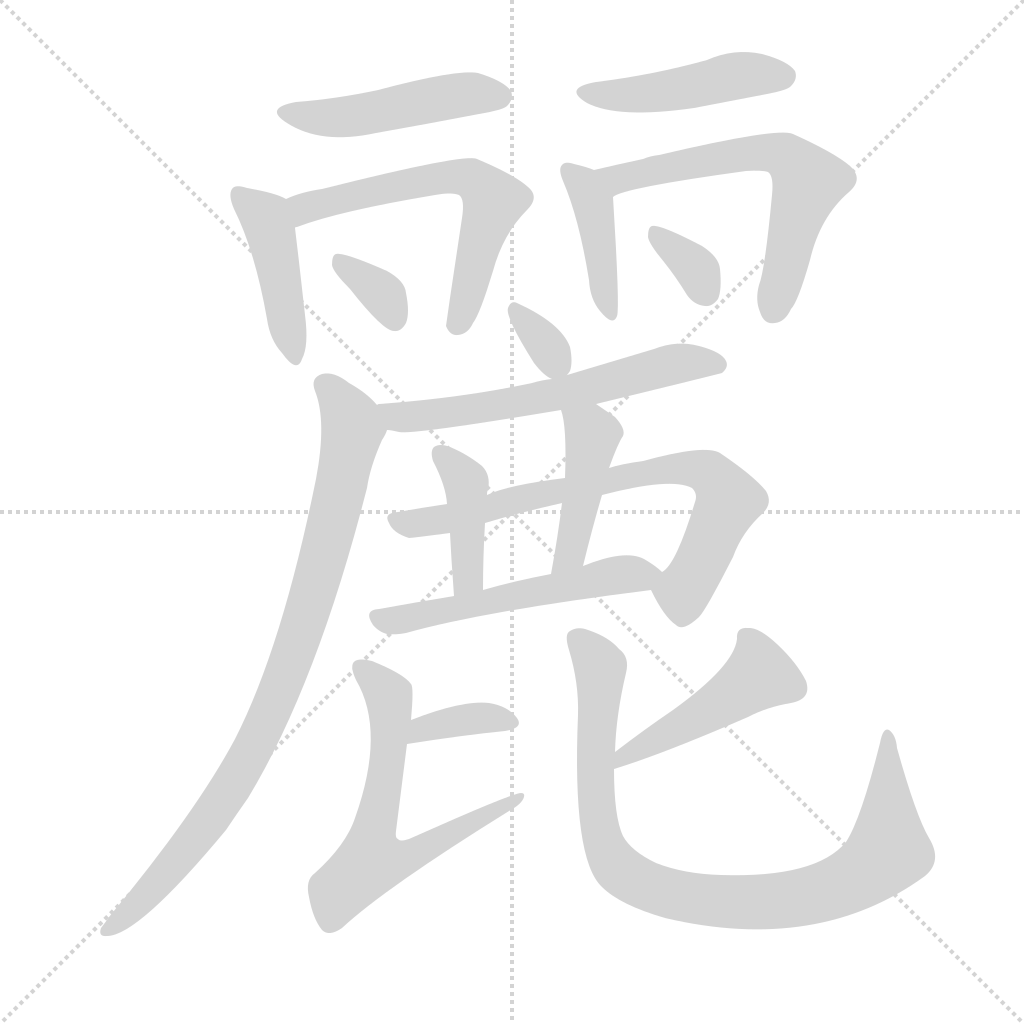
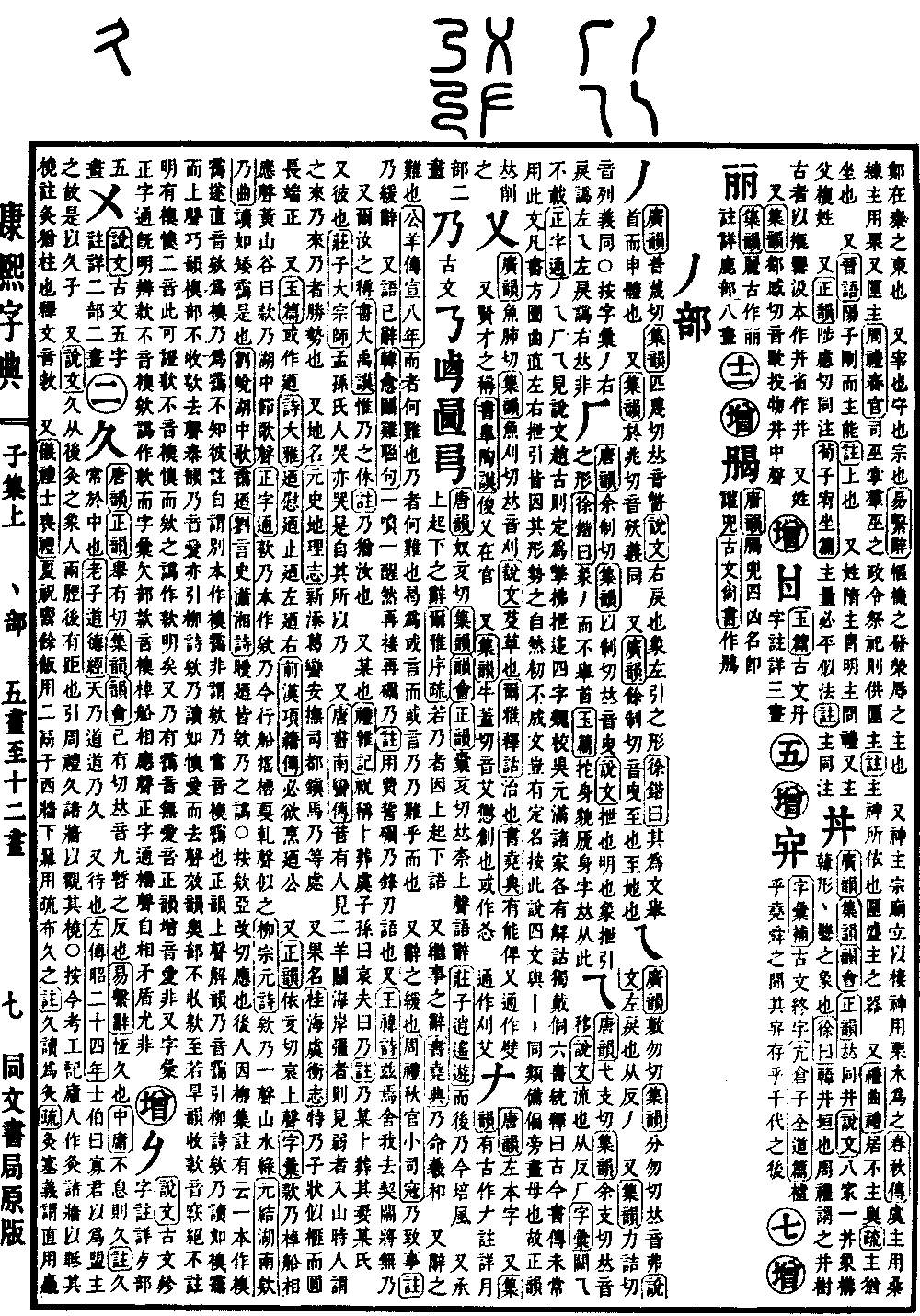
Hai Collection, Lower Volume
Radical: Deer (lù)
Page 810, Entry 01
Ancient form of the character. Pronounced li (falling tone). As recorded in Tang Rhyme (Tangyun), Collection Rhyme (Jiyun), and Rhyme Compendium (Yunhui). Pronounced li (falling tone). As recorded in Correct Rhymes (Zhengyun). According to Explaining Graphs and Analyzing Characters (Shuowen): to travel in a group. It is a characteristic of deer that when they are anxious for food, they will certainly travel in groups.
Also: In Great Man Rhapsody (Daren Fu) by Sima Xiangru: Driving a dragon-pulled carriage, moving gracefully and beautifully. Commentary by Shigu: Describes the manner of walking, advancing, and retreating.
Also: Per Jade Encyclopedia (Yupian): Means to be a pair or to match. In Book of Changes (Yijing), Hexagram Dui: The beauty of the marsh is Joy. Commentary: Beautiful here means to connect.
In Rites of Zhou (Zhouli), Ministry of Summer, Official of Horses: One team of horses constitutes a stable unit. Commentary: Refers to two horses. Also: A bundle of silk and a pair of skins. Commentary: Refers to two skins. In Records of History (Shi Shiji): Taihao began establishing marriage etiquette, using two deer skins as betrothal gifts. Interpretation: Refers to a pair or numerical pairing.
Also: Per Jade Encyclopedia (Yupian): Means beautiful. Per Broad Rhyme (Guangyun): Means lovely. In Songs of Chu (Chuci), Summoning the Soul: Clad in patterned embroidery, wearing fine and magnificent clothing without appearing strange. Also: In History of the Former Han (Qianhan), Biography of Dongfang Shuo: Taking morality as beauty.
Also: Per Jade Encyclopedia (Yupian): Means a count or number. In Book of Odes (Shijing), Greater Odes: The descendants of the Shang dynasty, their number exceeds billions.
Also: Per Broad Rhyme (Guangyun): Means to adhere or to strike a target. In Zuo Commentary (Zuozhuan), 12th year of Duke Xuan: Shooting at elk, the arrow struck the middle of the back. Commentary: Means to be attached.
Also: Per Correct Rhymes (Zhengyun): Means to depend on. In Book of Changes (Yijing), Hexagram Li: Li means attachment. The sun and moon are attached to the sky; all grains and trees are attached to the earth.
Also: In Book of Rites (Liji), Royal Regulations: Punishments for offenses should be attached to specific circumstances. Commentary: Means to adhere. Judging a person's faults and punishments should each attach to the specific deed he committed; one cannot use other matters as a pretext to act based on personal anger or joy.
Also: Means to bind or tether. In Book of Rites (Liji), Meaning of Sacrifices: On the day of the sacrifice, the ruler leads the sacrificial animal into the temple gate and tethers it to the stone monument or pillar. Commentary: Means to bind.
Also: Per Jade Encyclopedia (Yupian): Means magnificent and elegant. Per Correct Rhymes (Zhengyun): Means splendid. In Book of Documents (Shujing), Bi Ming: Corrupt customs prize luxury and splendor, persisting for generations. In Han Family Sayings (Han Shi Waizhuan): Yuan Xian said to Zigong: To hide one's humanity and righteousness while pursuing the splendor of fine furs and robes, I, Yuan Xian, cannot bear to do.
Also: Per Jade Encyclopedia (Yupian): Means to bestow or apply. In Book of Documents (Shujing), Many Regions: Cannot bestow guidance upon the people. Commentary: Cannot apply political and moral education to the people. Means to bestow. Refers to a state of ignorance.
Also: Per Correct Rhymes (Zhengyun): Means bright.
Also: Place name. In Zuo Commentary (Zuozhuan), 13th year of Duke Cheng: The Jin army crossed the Jing River, reached Houli, and returned. Commentary: Houli is land of the Qin state. Also: In History of the Former Han (Qianhan), Geography Treatise: Huali County, Lelang Commandery.
Also: Identical to the character (li) for a house beam. In Liezi, The Power of Fate: When living, the beams are connected.
Also: (li qiao), refers to a high building. In Zhuangzi, Xu Wugui: You must not arrange your grand army between the high towers. In History of the Former Han (Qianhan), Commentary on the Biography of Chen She: A tower is also called a qiao, so a beautiful tower is called a liqiao.
Also: (liang li), refers to a type of carriage. In Zhuangzi, Autumn Floods: The li (heavy beam or carriage) can be used to ram city walls, but cannot be used to block a small hole, illustrating that tools have different purposes.
Also: (yu li), a tactical formation. In Zuo Commentary (Zuozhuan), 5th year of Duke Huan: Gao Qumi led the central army to guard the ruler, forming the yu li formation.
Also: Per Correct Rhymes (Zhengyun): Means a small boat. Also a surname, found in Genealogy of Surnames (Xingyuan). Also a compound surname. In Zuo Commentary (Zuozhuan), 17th year of Duke Cheng: Duke Li of Jin went to visit the Jiangli clan.
Also: Pronounced li. As recorded in Broad Rhyme (Guangyun), Collection Rhyme (Jiyun), and Rhyme Compendium (Yunhui). Per Explaining Names (Shiming): Li means separation. It means one eye looks to heaven, the other to earth; the eyes are bright but the lines of sight are separated, so what is seen is different.
Also: Goguryeo (Gao li), a country name. In Records of Wei (Weizhi): Goguryeo is to the east of Liaodong. In Book of the Former Han (Qianhan shu): Written as Gaogouli.
Also: Mountain name. In Records of the Grand Historian (Shiji), Biography of Ying Bu: Ying Bu was originally a convict at Lishan (Mount Li). Sometimes written as (li).
Also: Identical to the character (li) for oriole. In Zhang Heng, Western Capital Rhapsody (Xijing Fu): The golden oriole (lihuang) chirps twitteringly. Commentary: The character li is interchangeable with the character for oriole in ancient times.
Also: Per Collection Rhyme (Jiyun): Pronounced li. Same meaning.
Also: Per Collection Rhyme (Jiyun): Pronounced li. According to Xiao Gai, Pengli is the name of a lake. Anciently written as Pengli.
Also: Pronounced li. Means beautiful.
Also: Per Category Compendium (Leipian): Pronounced shi. Means the same.
Also: Per Collection Rhyme (Jiyun): Pronounced li. A county name. The character is formed from (li); the common form written with two sun characters is incorrect. In Six Writings Corrected (Liushu Zhenge): Li is the ancient form of the character. It represents the shape of things attaching to each other, borrowed to represent the li in couple (kang li). The common form is written as (li).
Textual research: In Songs of Chu (Chuci), Summoning the Soul: Clad in patterned embroidery without appearing strange. Following the original text, added the character for clothing to the character for thin silk. In Zuo Commentary (Zuozhuan), 5th year of Duke Huan: Gao Qumi used the central army to support the ruler in a fish-scale formation. Following the original text, changed formation to array.