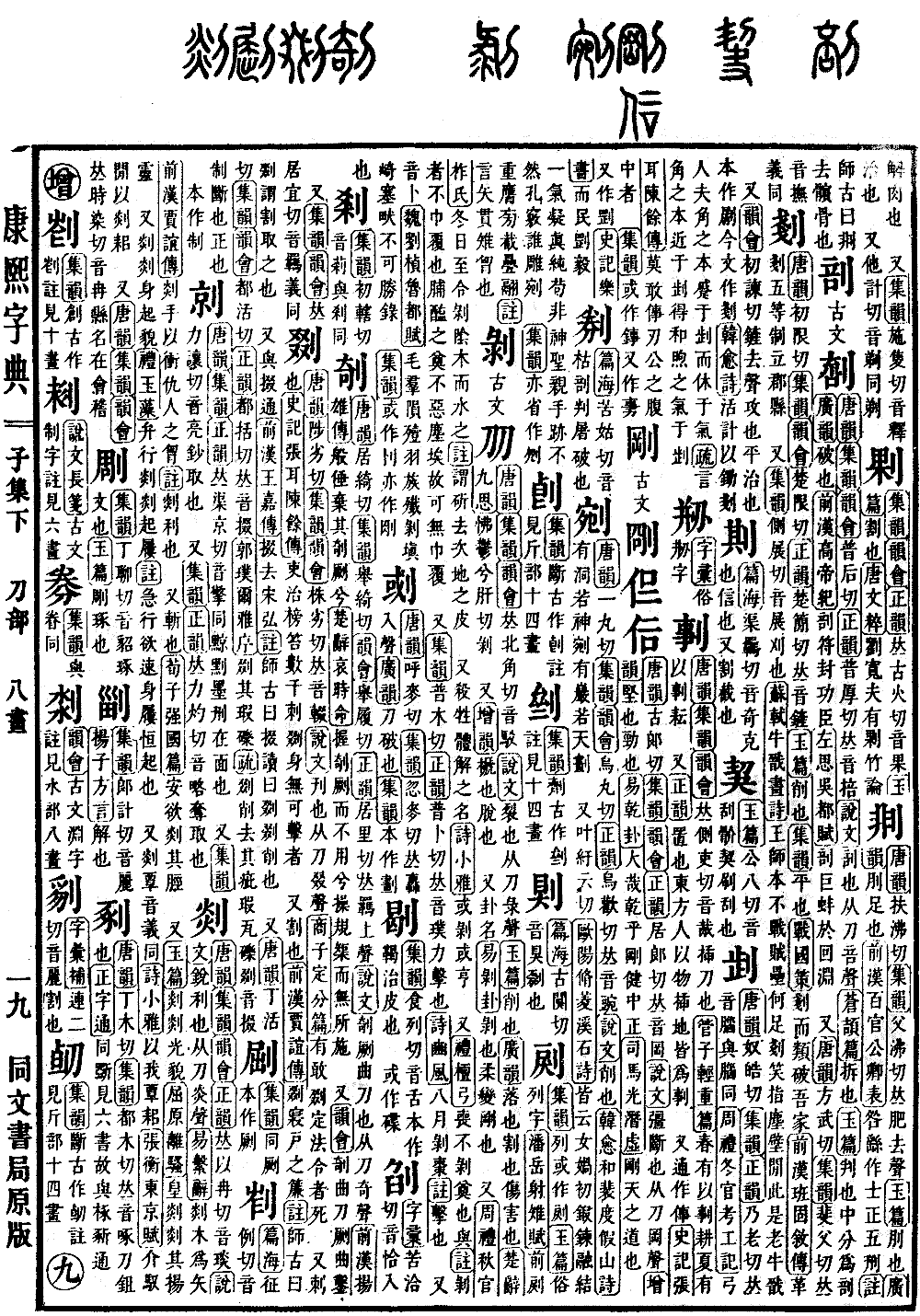
Zi Collection, Page Position: Lower
Radical: Knife (dāo)
Pronounced jī
Kangxi Dictionary Strokes: 10 strokes
Page 141, Entry 27
Pronounced jū qǐ (falling tone) — "Tang Yun"
Pronounced jǔ qǐ (falling tone) — "Ji Yun"
Pronounced jǔ lǚ (falling tone) — "Yun Hui"
Pronounced jū lǐ (falling tone), pronounced "jī" with a rising tone — "Zheng Yun"
"Shuowen Jiezi" explains it as "jī jué", a type of curved knife. The character's structure is based on "dāo", with "qí" as the phonetic component.
"Former Han Dynasty - Biography of Yang Xiong" example sentence: Bān Chuí abandoned his jī jué (The craftsman Ban Chuí discarded his curved knives).
"Songs of Chu - Lament for the Times" example sentence: Holding jī jué but not using them, grasping the compass and square but having nowhere to apply them (Holding curved knives but not using them, grasping compass and square rulers but having no place to apply them).
Also, "Yun Hui" supplements: "jī" refers to a curved knife; "jué" refers to a curved chisel.
Also, pronounced jū yí (rising tone) — "Ji Yun", "Yun Hui", same pronunciation as "jī". The meaning is the same.