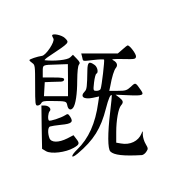
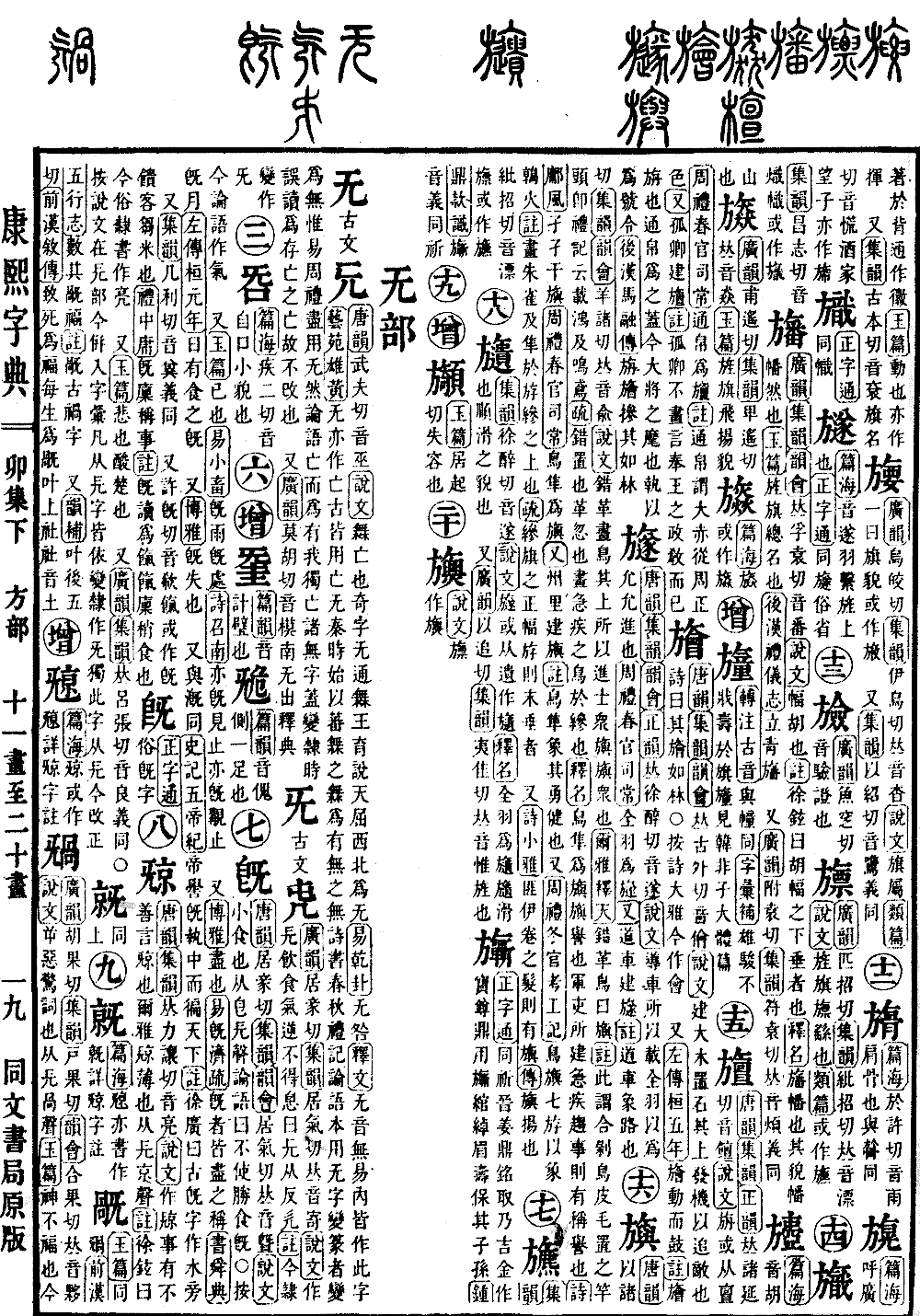
Mao Collection, Lower Volume
Radical: None (wú)
Kangxi Strokes: 11
Page 485, Entry 30
Pronounced ji (falling tone).
According to the Explaining Graphs and Analyzing Characters (Shuowen Jiezi), it refers to a small meal. Formed from the grain radical and a phonetic component. The Analects of Confucius (Lunyu) states: Do not let the food exceed being enough. Note: In current versions of the Analects of Confucius (Lunyu), it is written as qi.
Also, per the Jade Chapters (Yupian), it means already.
Book of Changes (Yijing), Small Restraint hexagram: Already rained, already settled.
Book of Odes (Shijing), Shao Nan section: Already have seen him, already have met him.
Also, per the Broad Elegant (Boya), it means complete.
Book of Changes (Yijing), Commentary on After Completion: The term used for reaching the end.
Book of Documents (Shujing), Canon of Shun: The month is complete.
Zuo Tradition (Zuo Zhuan), First Year of Duke Huan: The sun suffered a total eclipse.
Also, per the Broad Elegant (Boya), it means to lose.
Also, synonymous with irrigation.
Records of the Grand Historian (Shiji), Annals of the Five Emperors: Emperor Ku already held the middle path and reached across the world.
Annotation: Xu Guang says: In ancient times, the character for already was written with a water radical.
Also, in the Collected Rhymes (Jiyun), pronounced ji (falling tone). The meaning is the same.
Also, pronounced xi (high level tone). A variant form of food provisions. Refers to providing fodder and grain to guests.
Book of Rites (Liji), Doctrine of the Mean: Provide grain and measure according to circumstances.
Annotation: Here, read as the word for food provisions. Food provisions are rations.
Orthography Investigation (Zhengzitong): This is a vulgar form of the character. In the center of the character, the spoon component is written as a vertical line and two dots.