You Collection, Upper Volume
Radical: Speech (yán)
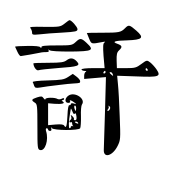
Jie
Kangxi strokes: 10
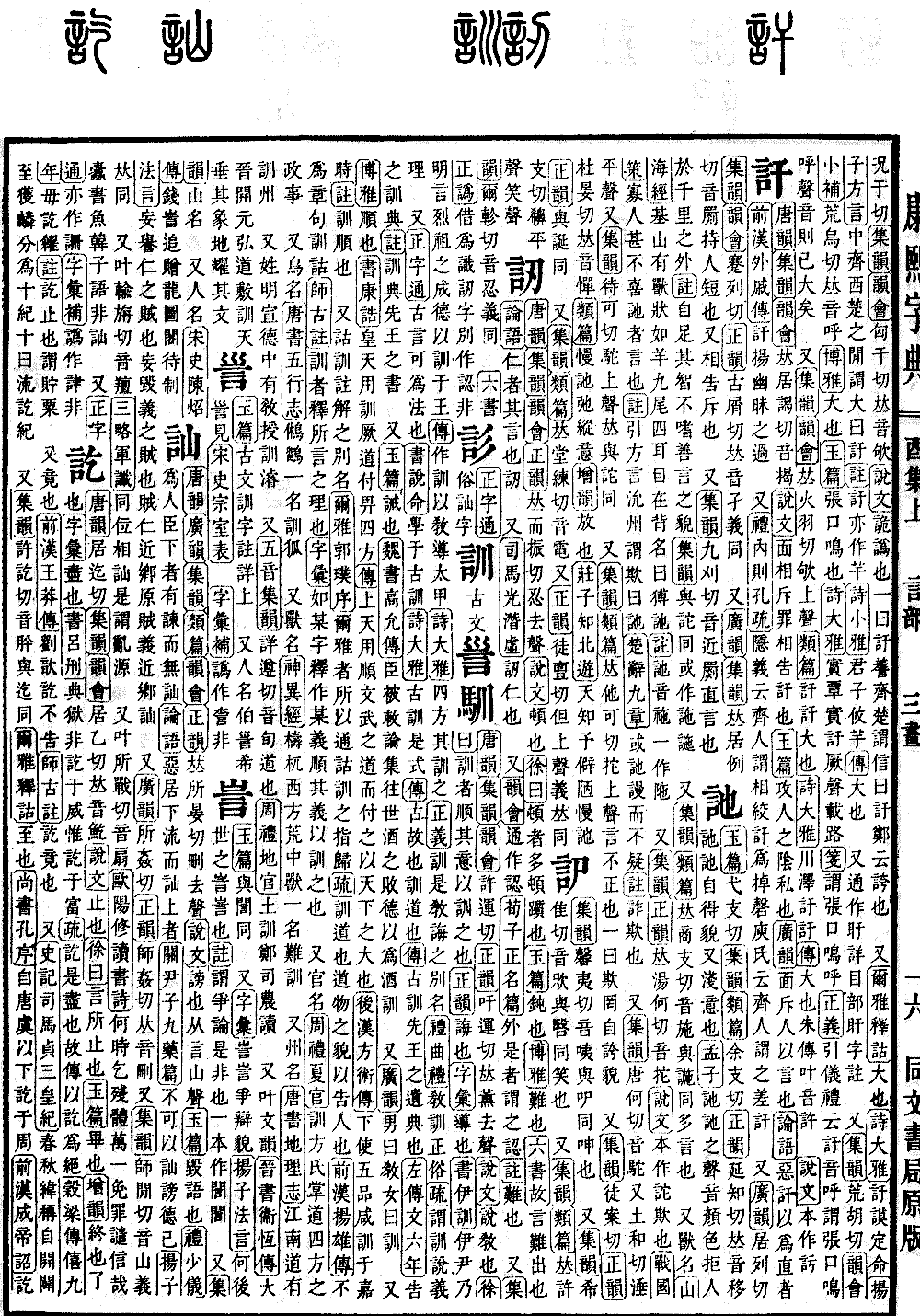
Page 1148, Entry 01
Tang Rhymes (Tangyun), Collected Rhymes (Jiyun), and Rhyme Meeting (Yunhui) define it as pronounced jie.
Shuowen Jiezi states: To denounce someone's faults to their face, or to accuse and attack one another.
Yupian states: To attack the private matters of others.
Guangyun states: To rebuke someone to their face with words.
Analects (Lunyu): To detest those who consider exposing the private matters of others as a form of uprightness.
History of the Former Han (Qianhan Shu), Biography of Imperial Relatives: To expose and proclaim hidden and unclear errors.
Also, Book of Rites (Liji), Inner Chapters, Commentary by Kong Yingda: Hidden meanings suggest that people in the Qi region refer to mutual accusation and attack as diaoqing. Master Yu suggests that people in the Qi region call it chajie.
Also, Guangyun states pronunciation is lie, Jiyun and Yunhui state pronunciation is jianlie, Zheng Yun states pronunciation is guexie; pronounced jie. The meaning is the same.
Also, Guangyun and Jiyun state pronounced ji. To grasp at the shortcomings of others. Also, to mutually accuse and rebuke.
Also, Jiyun states pronounced jiu, with a sound near ji. To speak frankly and without reservation.