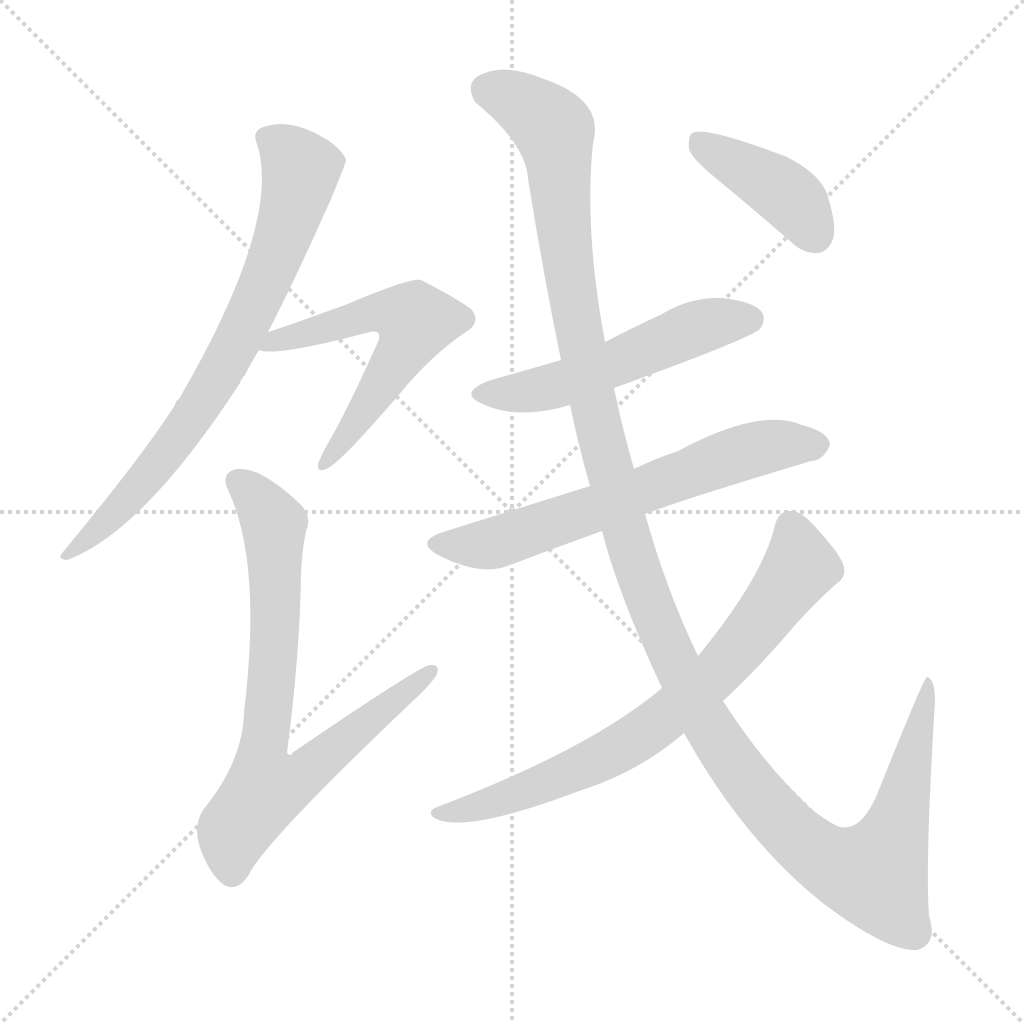
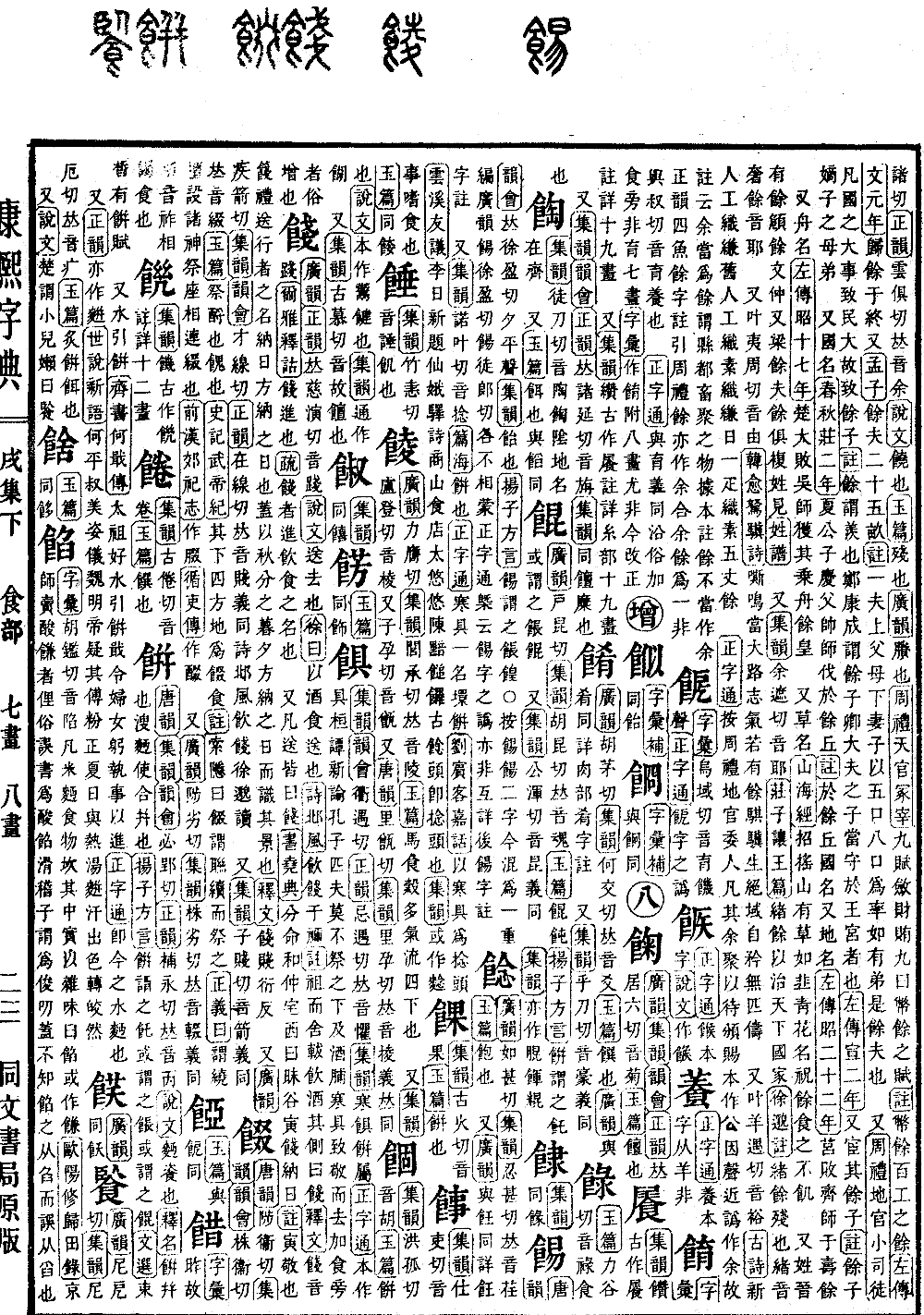
Xu Collection, Lower Volume
Radical: Food (shí)
Kangxi strokes: 17
Page 1421, Entry 01
According to the Extensive Rhymes (Guangyun) and Correct Rhymes (Zhengyun), it is pronounced jian (falling tone).
According to the Explanation of Characters (Shuowen), it means to send someone away. Xu says it refers to sending someone away with food and drink.
In the Book of Odes (Shijing), it is written: Drinking at a farewell feast at the ancestral temple. The commentary states: Before setting out on a journey, one makes a sacrifice and drinks beside the altar; this is called jian. The Explication of Text (Shiwen) notes: jian is pronounced jian (falling tone).
According to the Er Ya (Erya), a dictionary of classical terms, jian means to present. The commentary states: jian is the name for presenting food and drink. Furthermore, any act of seeing someone off is called jian.
In the Book of Documents (Shangshu), it is written: He commanded He Zhong to reside at the Western Valley, to respectfully send off the setting sun. The commentary states: Yin means respect, and jian is the name of the ritual for sending off a traveler. Sending off the sun means observing it as it sets. This refers to the evening of the autumn equinox, when one observes the sun as it sets in order to record its shadow. The Explication of Text (Shiwen) notes: jian is pronounced jian (falling tone).
According to the Extensive Rhymes (Guangyun), it is also pronounced jian (falling tone). According to the Collection of Rhymes (Jiyun) and the Rhyme Compilation (Yunhui), it is also pronounced jian (falling tone). According to the Correct Rhymes (Zhengyun), it is also pronounced jian (falling tone). The meaning is the same. In the Book of Odes (Shijing), concerning the drinking at a farewell feast, Xu Miao reads it thus.
According to the Collection of Rhymes (Jiyun), it is also pronounced jian (falling tone). The meaning is the same.