Wei Collection, Upper Volume
Radical: Bamboo (zhú)
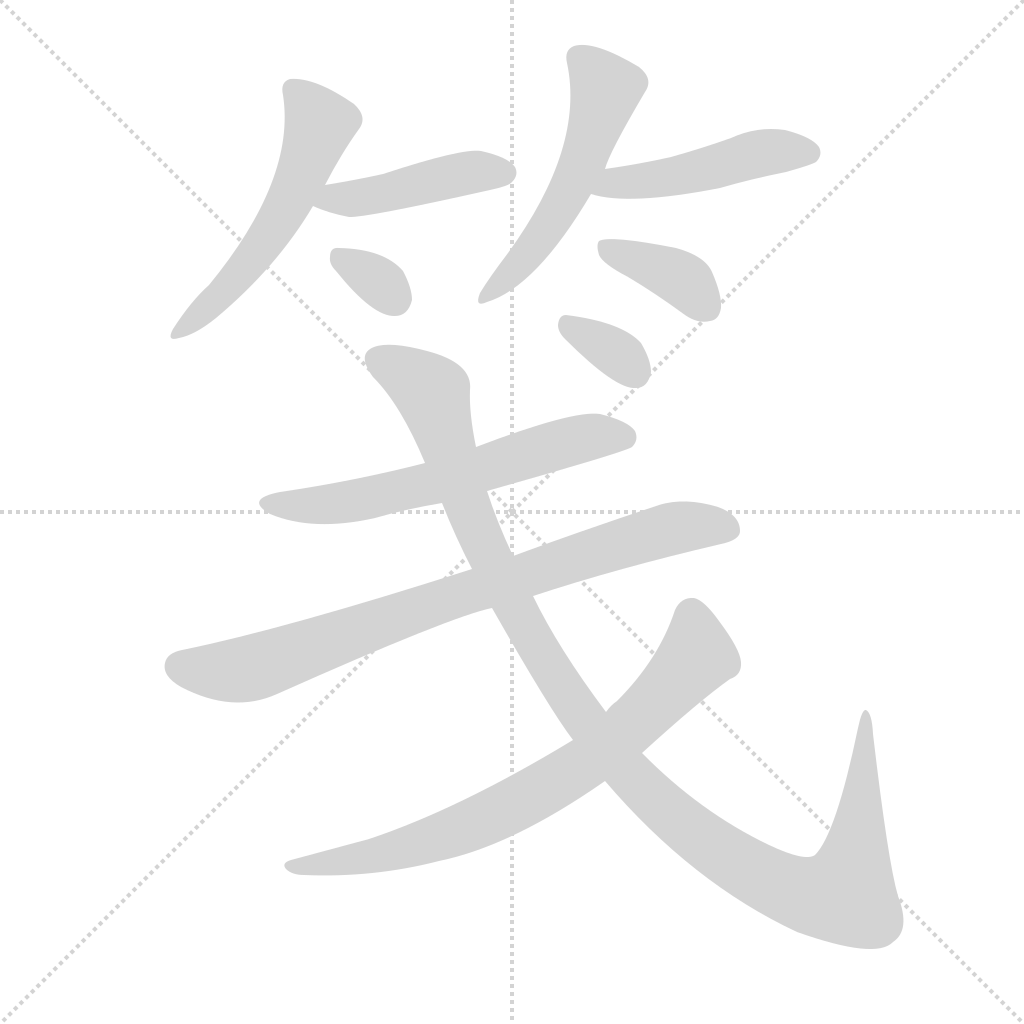
箋
Kangxi Stroke Count: 14
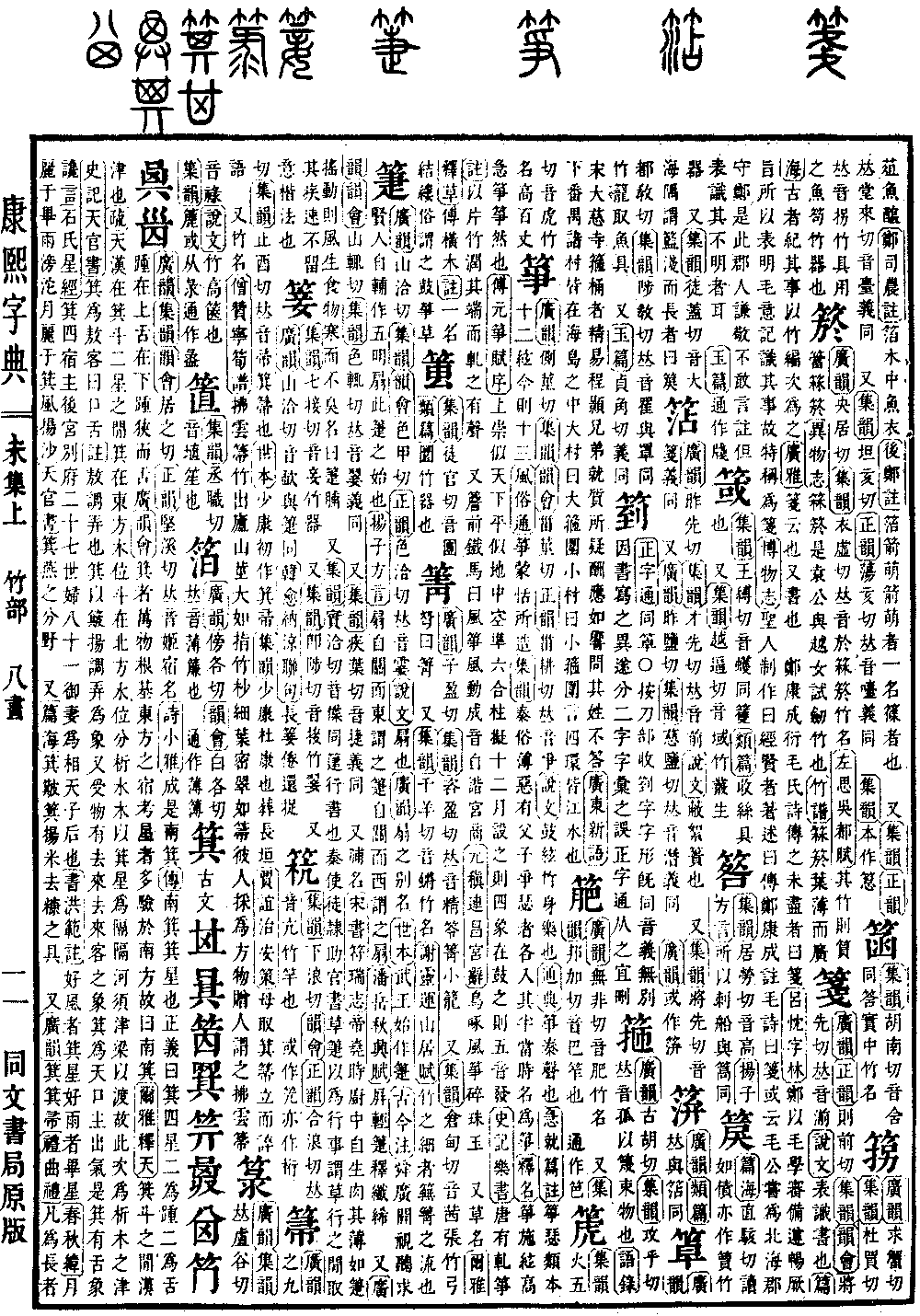
Page 887, Entry 01
Pronounced jian.
According to the Explaining Graphs and Analyzing Characters (Shuowen Jiezi), it refers to a label or mark on a book.
The Pianhai dictionary notes that in ancient times, records of events were compiled using woven bamboo strips.
According to the Guangya dictionary, jian means to explain; it also refers to the act of writing. When Zheng Kangcheng expanded upon the scholarship of the Mao School of Poetry, he referred to his supplementary explanations of the Mao Commentary as jian.
According to the Zilin by Lu Chen, Zheng Xuan believed the scholarship of Lord Mao was prudent and complete. He followed and clarified its intent to reveal the meaning of Lord Mao and to record and label the contents, which is why it is specifically called jian.
According to the Record of General Investigations (Bowuzhi), that which is created by sages is called a classic, and that which is elaborated upon by the virtuous is called a commentary; Zheng Kangcheng's annotation of the Mao Poetry is called a jian. Some say that Lord Mao once served as the Administrator of Beihai, and since Zheng Xuan was a native of that same commandery, he was too humble and respectful to claim he was writing an annotation, so he merely labeled the points that were unclear.
According to the Yupian dictionary, it is also commonly written as a variant form (jian).