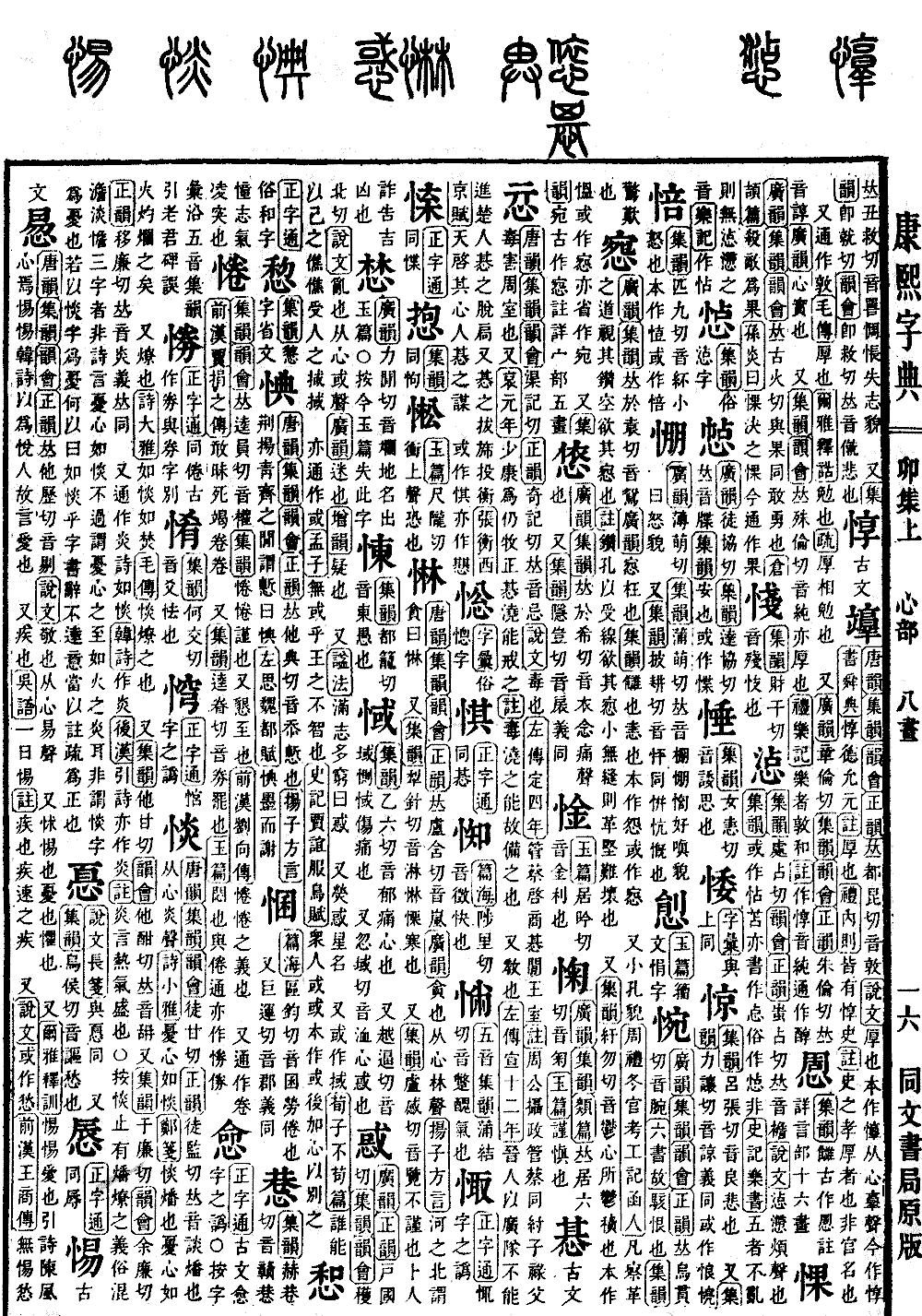
Mao Collection, Upper Volume
Radical: Heart (xīn)
Kangxi strokes: 23
Page 390, Entry 11
According to the Collection of Rhymes (Jiyun), pronounced liang. It means to be sad. Also, according to the Collection of Rhymes (Jiyun), pronounced liang. The meaning is the same. Sometimes written in a variant form (liang).
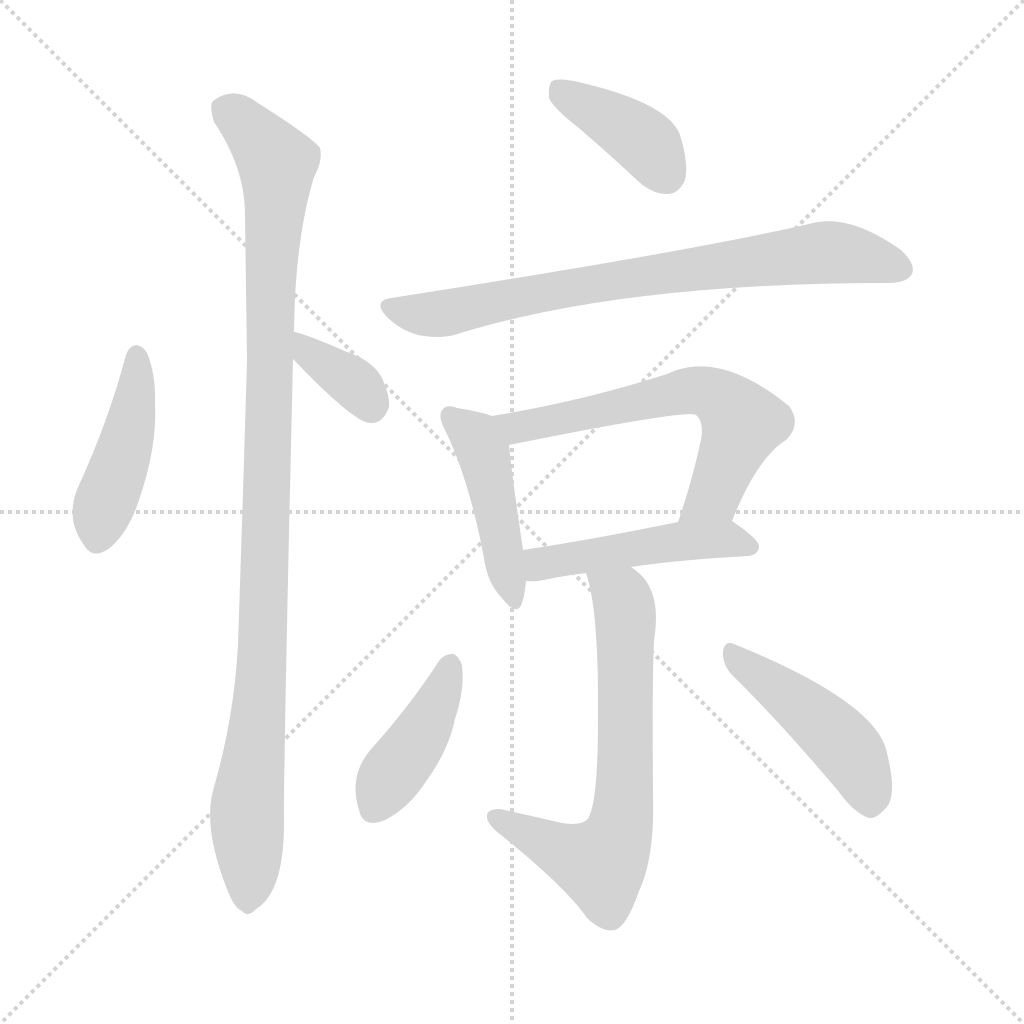
Jing
According to the Tang Rhymes (Tangyun) and the Collection of Rhymes (Jiyun), pronounced jing. According to the Correct Rhymes (Zhengyun), pronounced jing.
According to the Explaining Graphs and Analyzing Characters (Shuowen Jiezi), it refers to a horse becoming frightened. According to the Jade Chapter (Yupian), it means to frighten.
In the Book of Changes (Yijing), section on the Thunder Hexagram (Zhen Gua): It shakes and frightens people for a hundred li.
In the Book of Odes (Shijing), section on the Greater Odes (Daya): It shakes and frightens the Xu region.
In the Laozi (Daodejing): To gain it is to be favored, to lose it is to be humiliated; this is what is meant by favor and humiliation being like being frightened.
Also pronounced jiang. In the poem by Zhang Ji mourning Han Yu: Ascending the high bank under the moon, the Milky Way hangs down its light. Casting a long line from the fishing cart, when there is a catch, all rejoice and are startled.