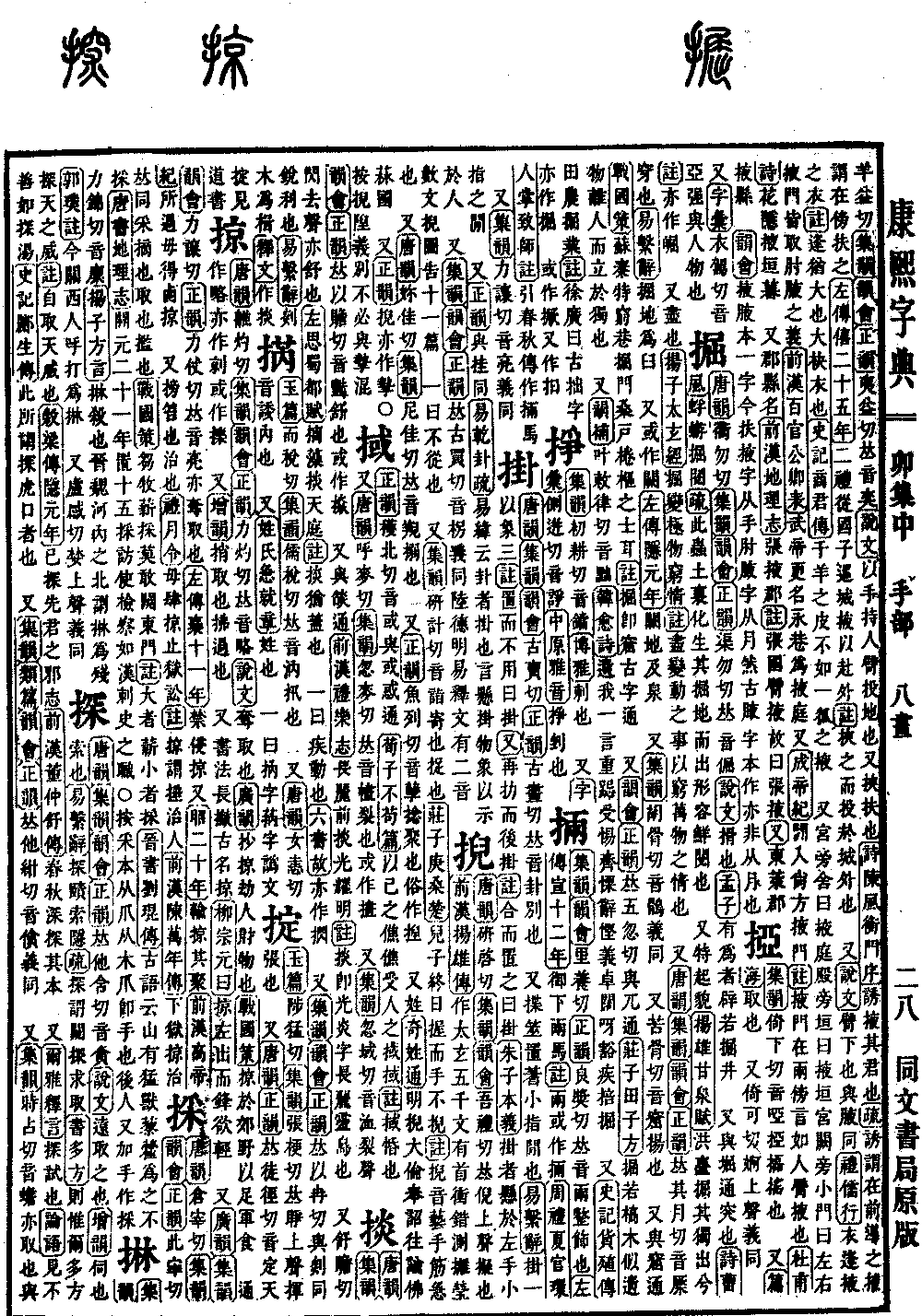
Mao Collection, Middle Volume. Radical: Hand (shǒu). Kangxi strokes: 12. Page 438, Entry 11.
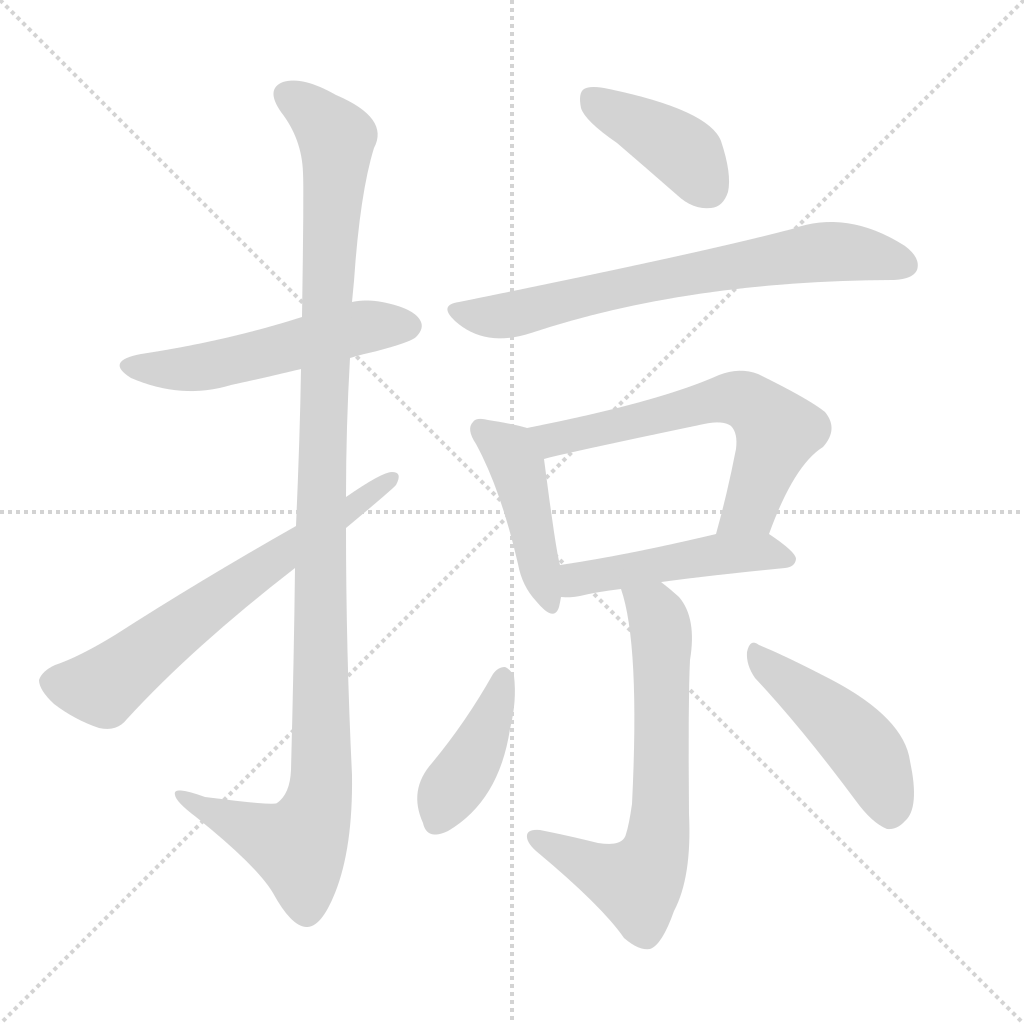
Pronounced lue. According to the Shuo Wen Jie Zi, it means to seize or take by force. According to the Guang Yun, it means to plunder or rob someone of their property. According to the Strategies of the Warring States (Zhan Guo Ce), it refers to seizing goods in the countryside to supply the army with provisions. It is interchangeably written as lue. It is also written as jing. It is sometimes written in a variant form (yue). According to the Zeng Yun, it also means to scrape or take, or to brush past. In calligraphy, a long left-slanting stroke is traditionally called lue. Liu Zongyuan said that in a lue stroke, the brush should move toward the left and the tip should be light.
Pronounced liang. It also means to seize. According to the Zuo Zhuan, Year 11 of Duke Xiang, it refers to prohibiting encroachment and plunder. According to the Zuo Zhuan, Year 20 of Duke Zhao, it refers to seizing their accumulated wealth. According to the Book of Han (Hanshu), Annals of Emperor Gao, it refers to places passed through where looting and plunder were prohibited. It also refers to the act of torture or punishment. According to the Book of Rites (Liji), Monthly Ordinances (Yueling), do not torture or punish at will, and stop legal cases. The commentary states that lue refers to torturing or punishing people. According to the Book of Han (Hanshu), Biography of Wannian, it refers to being thrown into prison to be tortured and punished.