Zi Collection, Middle Volume
Radical: Person (rén)
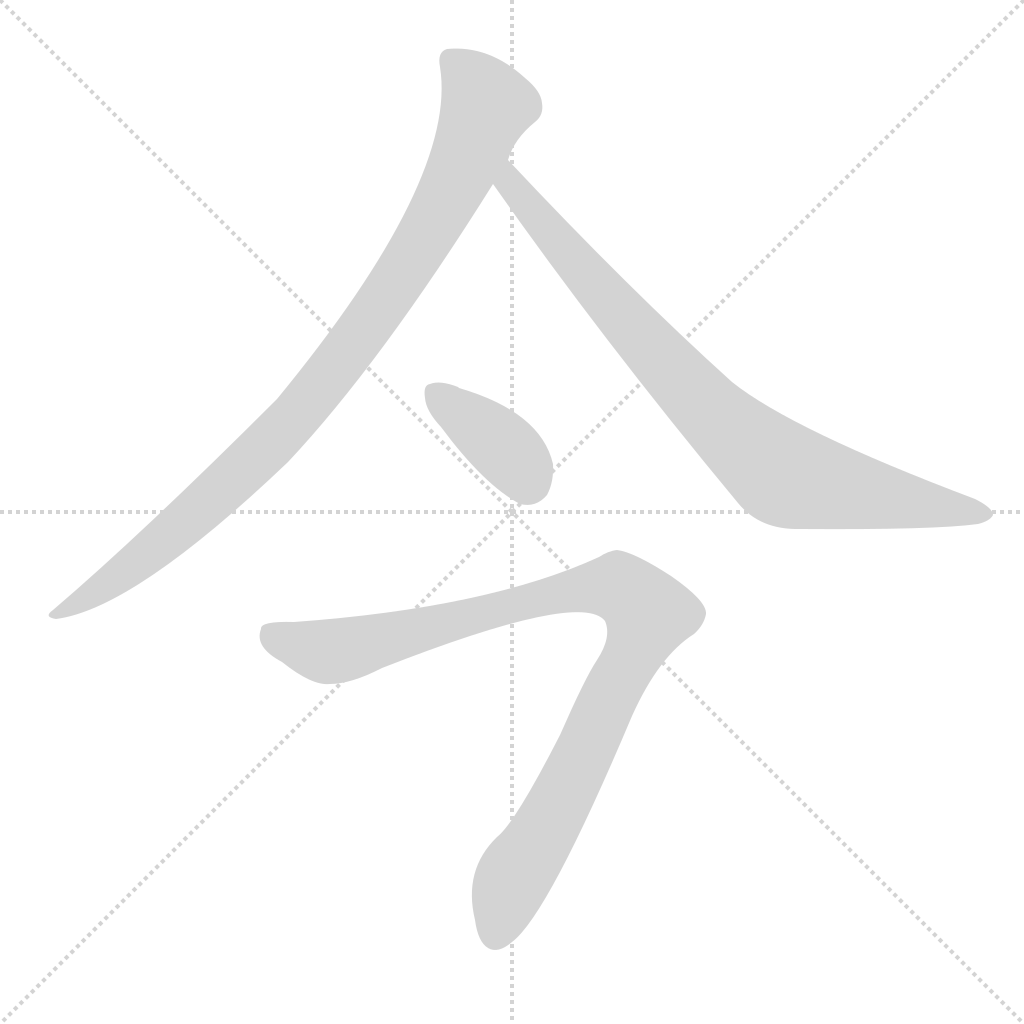
jīn
Kangxi stroke count: 4; Page 91, entry 18
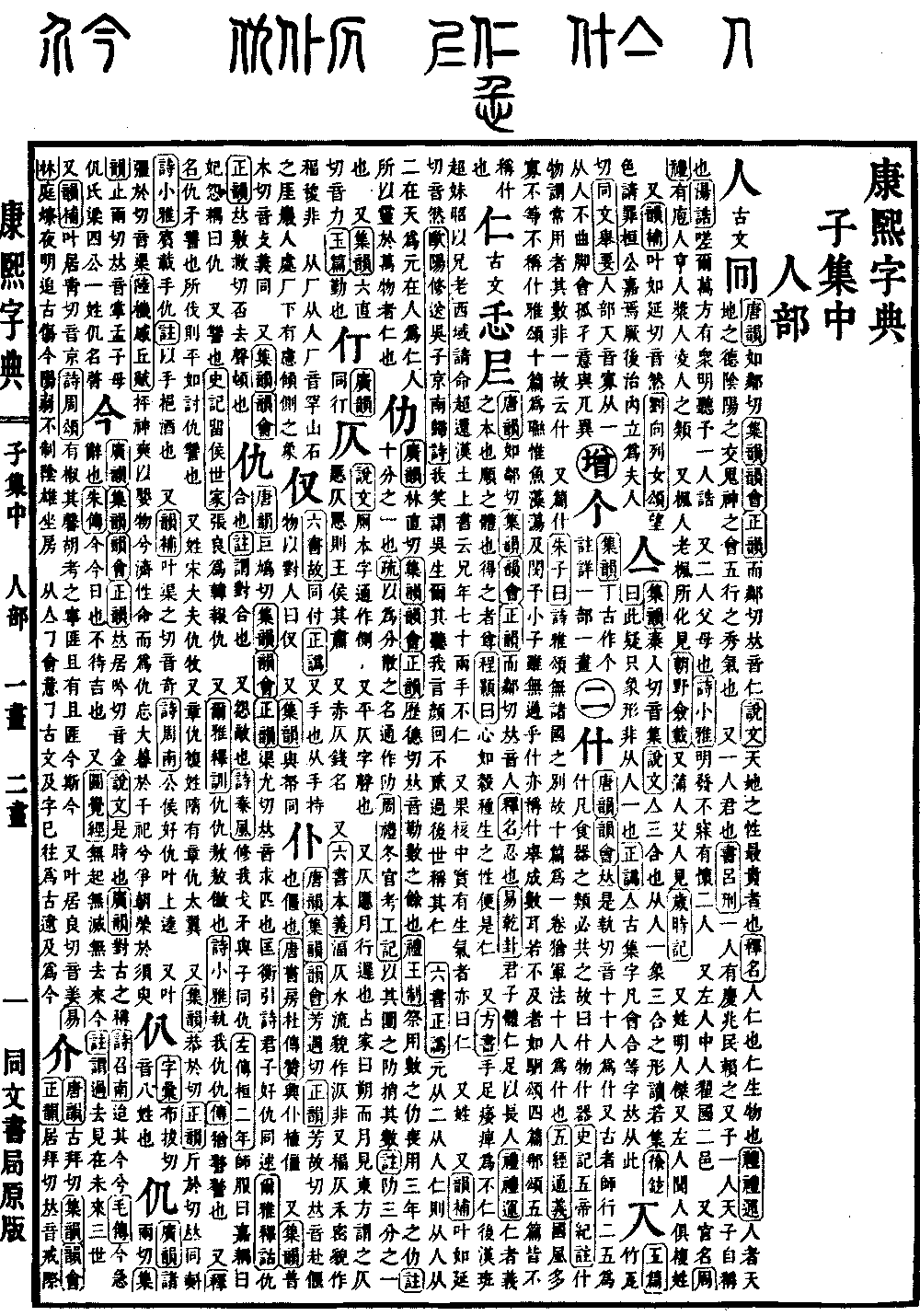
According to Guangyun, Jiyun, Yunhui, and Zhengyun, the character is pronounced jūyīn qiè, sound jīn. Shuowen says: "This time." Guangyun says: "Refers to the opposite of ancient." "Reaching its present" — Book of Odes (Shijing), Zhao Nan. Mao Commentary: "jīn is an urgent term." Zhu Commentary: "jīn means 'today.' It does not await an auspicious day." Also, in the Sutra of Perfect Enlightenment (Yuanjuejing): "No arising, no ceasing, no coming, no going, no present." Commentary: "Refers to the three ages: past, present, and future." Also, according to Yunbu, it rhymes with jūqīng qiè, sound jīng. "With fragrant peppers, how long will they rest? Not merely possessing, not merely this present." — Book of Odes (Shijing), Zhou Song. Also, it rhymes with jūliáng qiè, sound jiāng. "The courtyard torch brightens the night, pursuing the ancient, grieving the present. Yang is weak and not controlled, yin's hero sits in the chamber." — Yilin. From the radical jí, forming a compound meaning. The character is an ancient form of jí. What has passed is ancient, what is reached is present.