Wei Collection, Lower Volume
Radical: Meat (ròu)
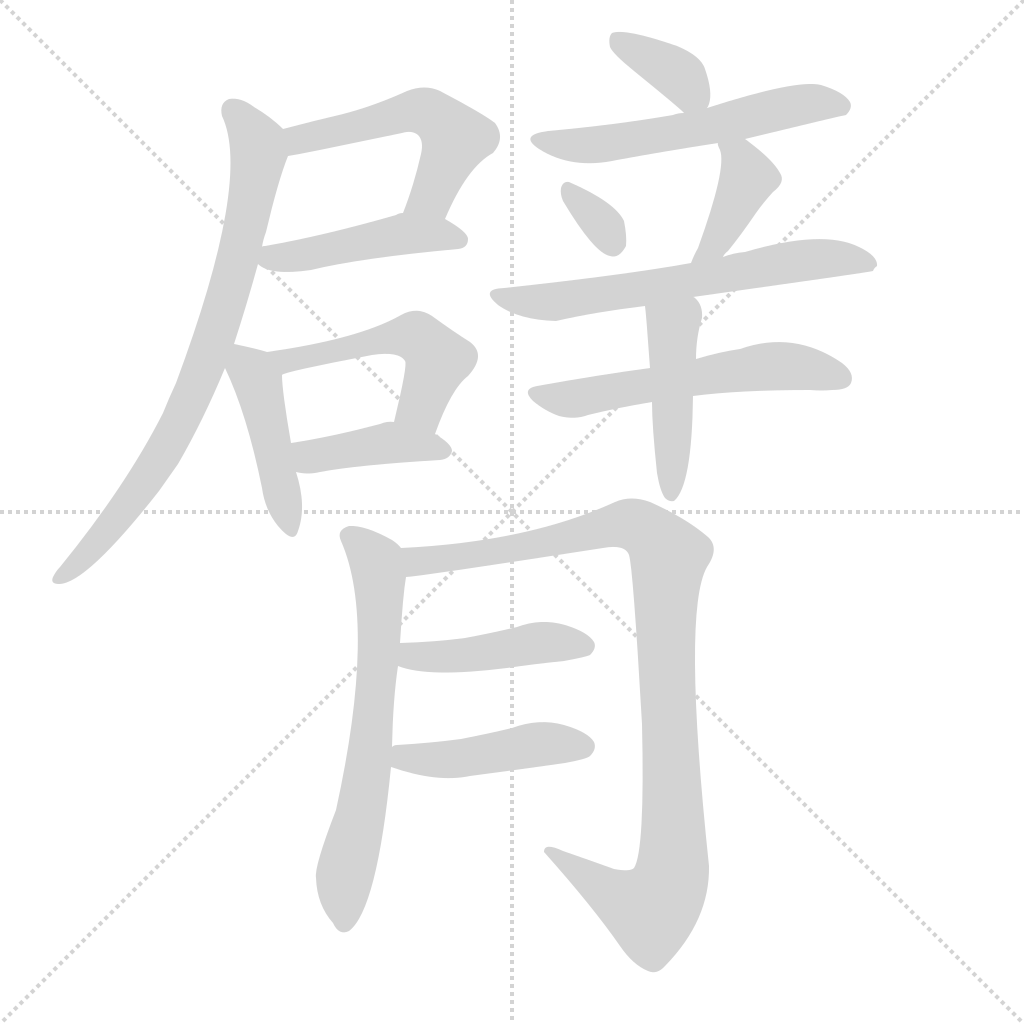
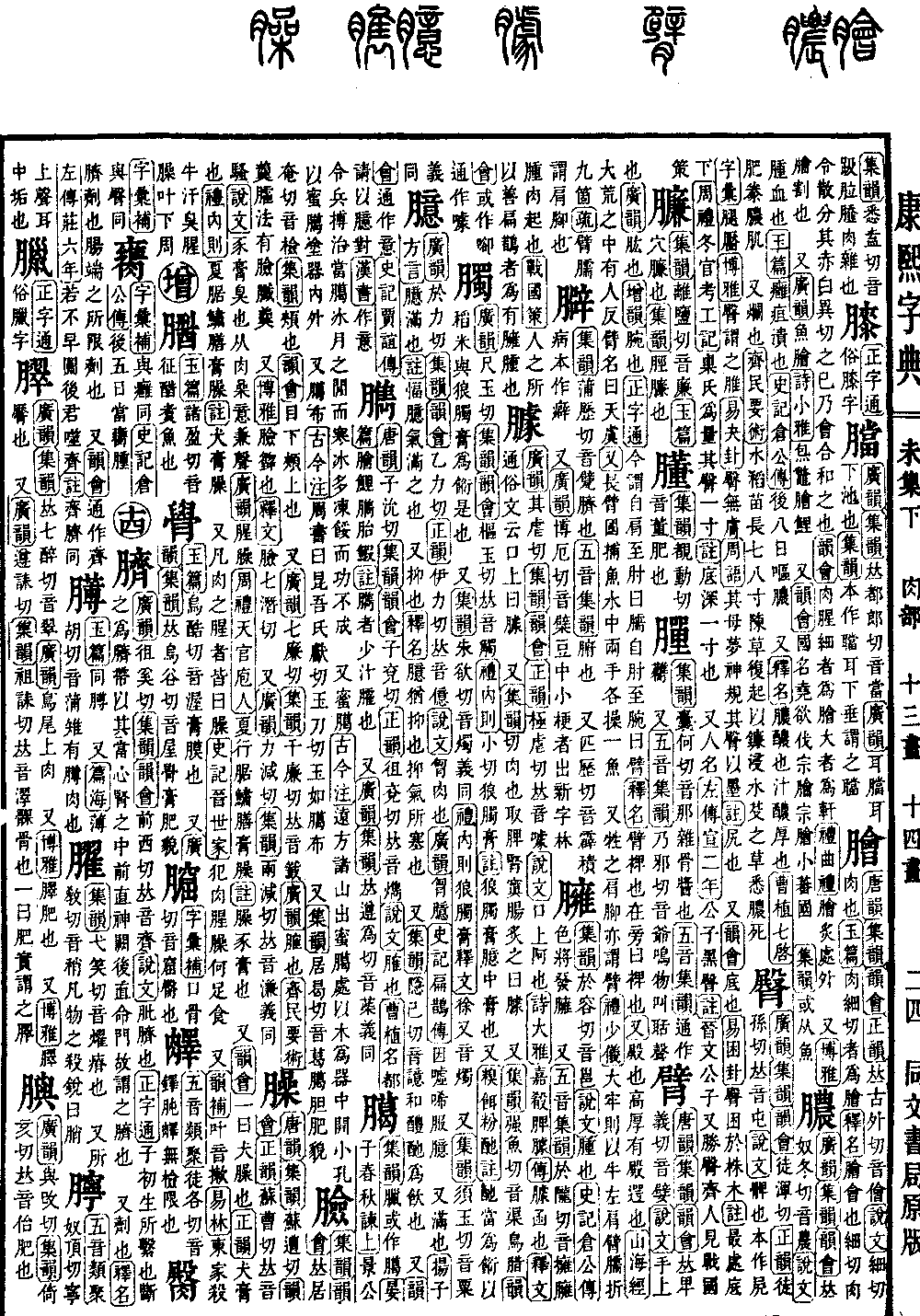
臂
Kangxi strokes: 19
Page 996, Entry 09
Tang Rhymes (Tangyun), Collected Rhymes (Jiyun), and Rhyme Compendium (Yunhui) define it as pronounced bi (falling tone).
Shuowen Jiezi states it is the upper part of the hand.
Guangyun states it is the humerus.
Zengyun states it is the wrist.
Zhengzitong states that nowadays, the part from the shoulder to the elbow is called the humerus, and the part from the elbow to the wrist is called the arm.
Shiming states that the arm is that which assists, acting as an aid from the side.
It also signifies that which follows behind, being large, thick, and solid, having the appearance of a rearguard.
Classic of Mountains and Seas (Shanhaijing): Within the Great Wilderness, there is a person whose arms grow in reverse; they are named Tianyu.
Also, the people of the Long-Arm Kingdom catch fish in the water, holding one fish in each hand.
Additionally, the shoulder and leg of a sacrificial animal are also called the arm.
Book of Rites (Liji), Section on Minor Ceremonies (Shaoyi): For the sacrifice of a grand feast, the left shoulder and arm of the ox are used, divided into nine pieces.
Commentary: The arm and humerus refer to the shoulder and leg.