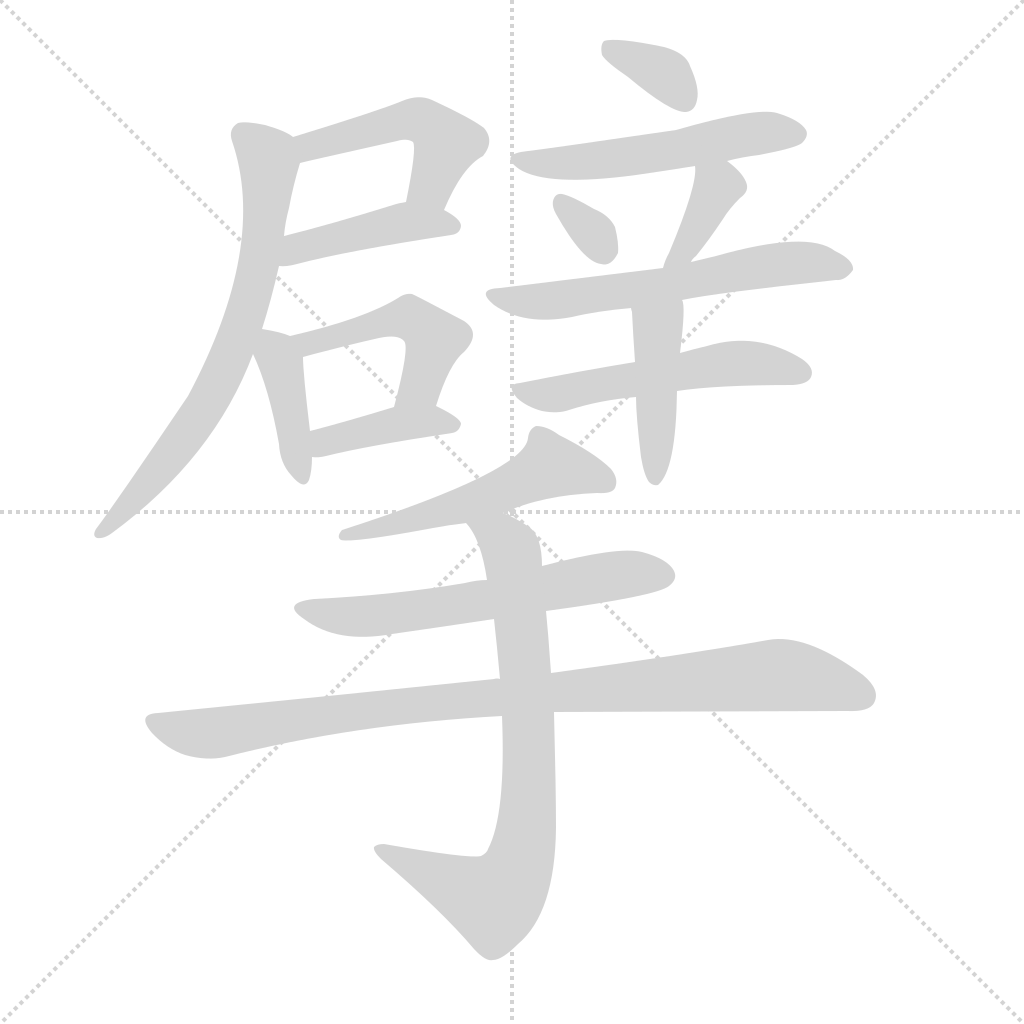
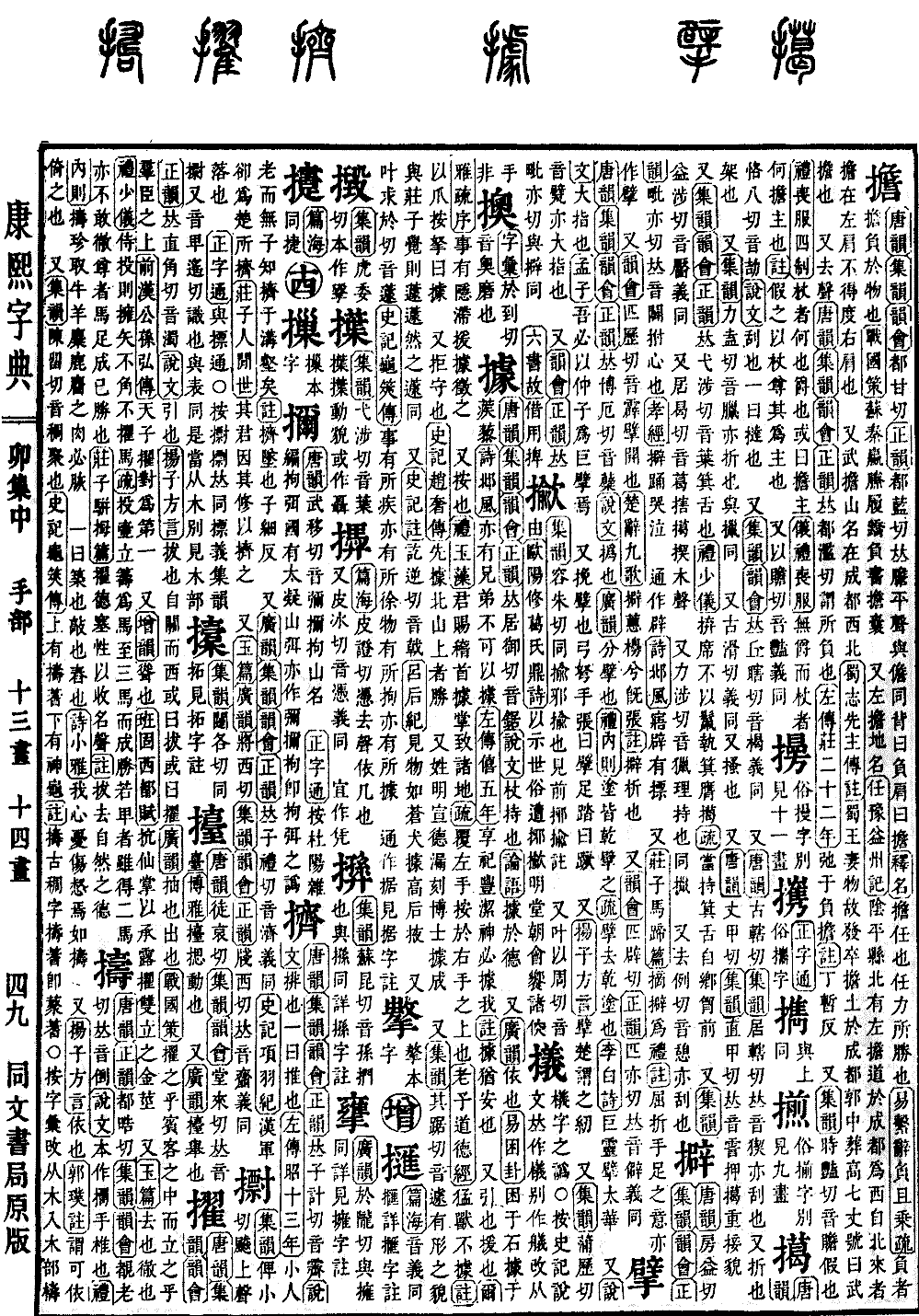
Mao Collection, Middle Volume. Radical: Hand (shǒu). Kangxi strokes: 17. Page 459, Entry 08.
Tang Dynasty Rhyme (Tangyun), Collection of Rhymes (Jiyun), Rhyme Meetings (Yunhui), and Correct Rhymes (Zhengyun) state it is pronounced bo.
According to the Explaining Graphs and Analyzing Characters (Shuowen Jiezi), it means to gesture. According to the Broad Rhyme (Guangyun), it means to divide or to break apart. In the Book of Rites (Liji), Inner Principles (Neize) section, it says: When the mortar is dry, break it apart. The commentary explains: Bo means to remove, and gan refers to the mortar. In the poetry of Li Bai, it says: The giant spirit split Mount Hua.
Also, according to the Explaining Graphs and Analyzing Characters, it refers to the thumb. In the Mencius, it says: I must consider Zhongzi as the giant thumb.
It also refers to the pulling or drawing of a bow. To draw a crossbow with the hands is called bo, and to draw it with the feet is called jue.
According to Yang Xiong's Dialects (Fangyan), in the state of Chu, this is called ren.
According to the Collection of Rhymes (Jiyun), it is pronounced pi. It also refers to the thumb.
According to the Rhyme Meetings (Yunhui) and Correct Rhymes (Zhengyun), it is pronounced pi. It is synonymous with the character for beating the breast (pie). In the Six Writings Explained (Liushu Gu), the character for opening or spreading (bai) is sometimes borrowed to represent this word.