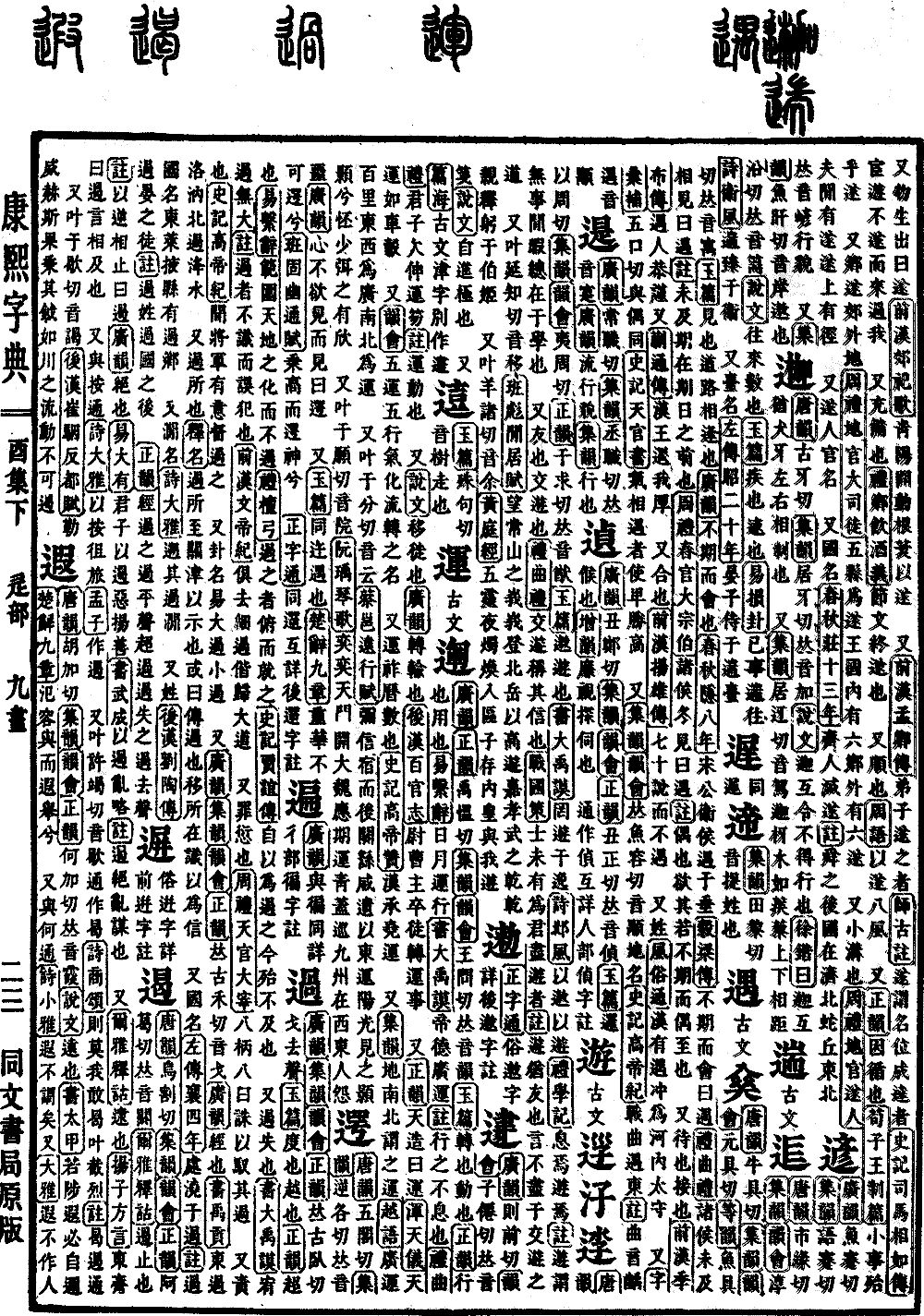
You Collection, Lower Volume
Radical: Walk (chuò)
Kangxi Strokes: 16
Page 1261, Entry 24
Pronounced e.
Classic of Rites (Erya), Explanation of Words: E means to stop. Commentary: To stop someone by going against them is called e.
Broad Rhymes (Guangyun): To cut off.
Book of Changes (Yijing), Great Possessing: The superior person uses this to curb evil and promote good.
Book of Documents (Shangshu), Successful Completion of the War: To suppress the chaotic strategy. Commentary: E means to cut off the plans of disorder.
Also, Classic of Rites (Erya), Explanation of Words: To reach.
Yang Xiong, Dialects (Fangyan): In eastern Qi, it is called e, meaning to reach one another.
Also, used interchangeably with an (to press/restrain).
Book of Odes (Shijing), Greater Odes: To restrain the marching troops. In the Mencius, it is written as e.
Also, rhymes with xu jie, pronounced xie. Commonly written as he.
Book of Odes (Shijing), Sacrificial Odes of Shang: Then no one dares to stop us. Rhymes with jie lie. Commentary: He and e are used interchangeably.
Also, rhymes with yu xie, pronounced ye.
Later Han History (Hou Hanshu), Rhapsody on Returning to the Capital by Cui Yin: Restraining might and majesty, firmly holding the battle-axe. Like the flow of a river, his movement cannot be stopped.