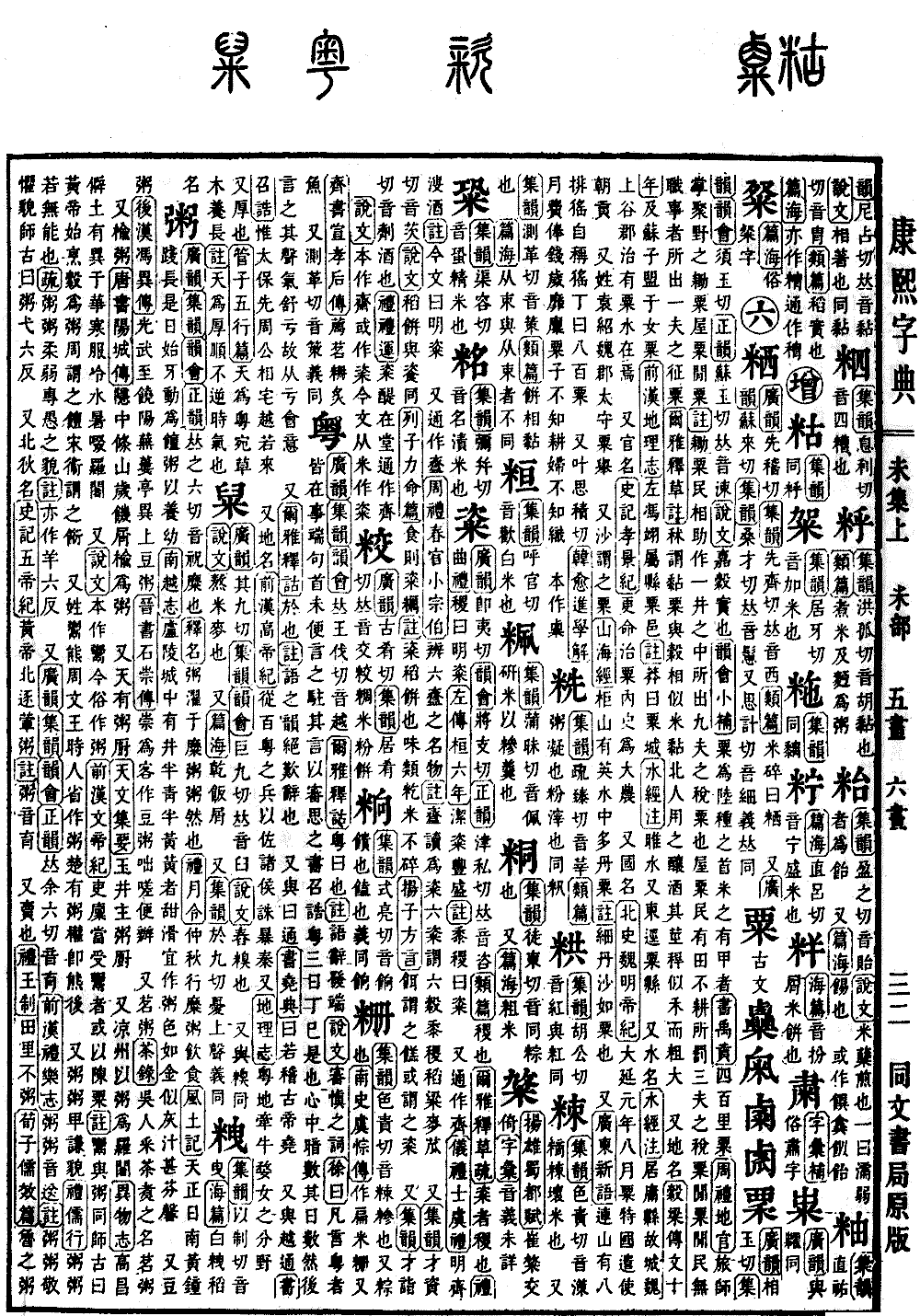
Wei Collection, Upper Volume
Radical: Rice (mǐ)
粢
Kangxi Stroke Count: 12
Page 908, Entry 29
Guangyun (Dictionary of Rhymes): Pronounced zī
Yunhui (Collection of Rhymes): Pronounced zī
Zhengyun (Standard Rhymes): Pronounced zī
Pronounced zī.
Leipian (Classified Chapters): Refers to broomcorn millet.
Erya (Approaching Elegance), Commentary on Plants: Zī is broomcorn millet.
Book of Rites (Liji), Quli: Broomcorn millet is called bright zī.
Zuo Tradition (Zuo Zhuan), Sixth Year of Duke Huan: Clean zī rice and abundant sacrificial offerings.
Commentary: Proso millet and broomcorn millet are called zī.
Also used interchangeably with the character qí.
Book of Etiquette and Ceremonial (Yili), Shi Yuli: Bright qí and strained wine.
Commentary: In current texts, it is written as bright zī.
Also used interchangeably with the character zī (sacrificial vessel).
Rites of Zhou (Zhouli), Spring Offices, Minor Recorder: Distinguish the names and types of the six zī.
Commentary: Zī is pronounced zī. The six zī refer to six types of grain: proso millet, broomcorn millet, rice, kaoliang, wheat, and wild rice.
Also, Jiyun (Collection of Rhymes): Pronounced cí
Pronounced cí.
Shuowen Jiezi (Explaining Graphs and Analyzing Characters): Refers to a rice cake, identical to the character cí.
Liezi (Book of Master Lie), Lì Mìng Chapter: What was eaten was zī rice and coarse grains.
Commentary: Zī is a rice cake. Its taste is similar to broken rice, but it is not broken.
Yangzi (Master Yang), Fangyan (Local Dialects): Food made from flour is called gāo, or also called zī.
Also, Jiyun (Collection of Rhymes): Pronounced jì
Pronounced jì. Refers to wine.
Book of Rites (Liji), Liyun: Zī tí wine placed in the hall. Used interchangeably with qí.
Shuowen Jiezi: Originally written as [], or written as zī. In current texts, it is written with the rice radical as 粢.
Textual Research: Shuowen Jiezi was originally written as zhāi. Note: According to Shuowen Jiezi, it is formed from qí and hé; now it has been changed to [].