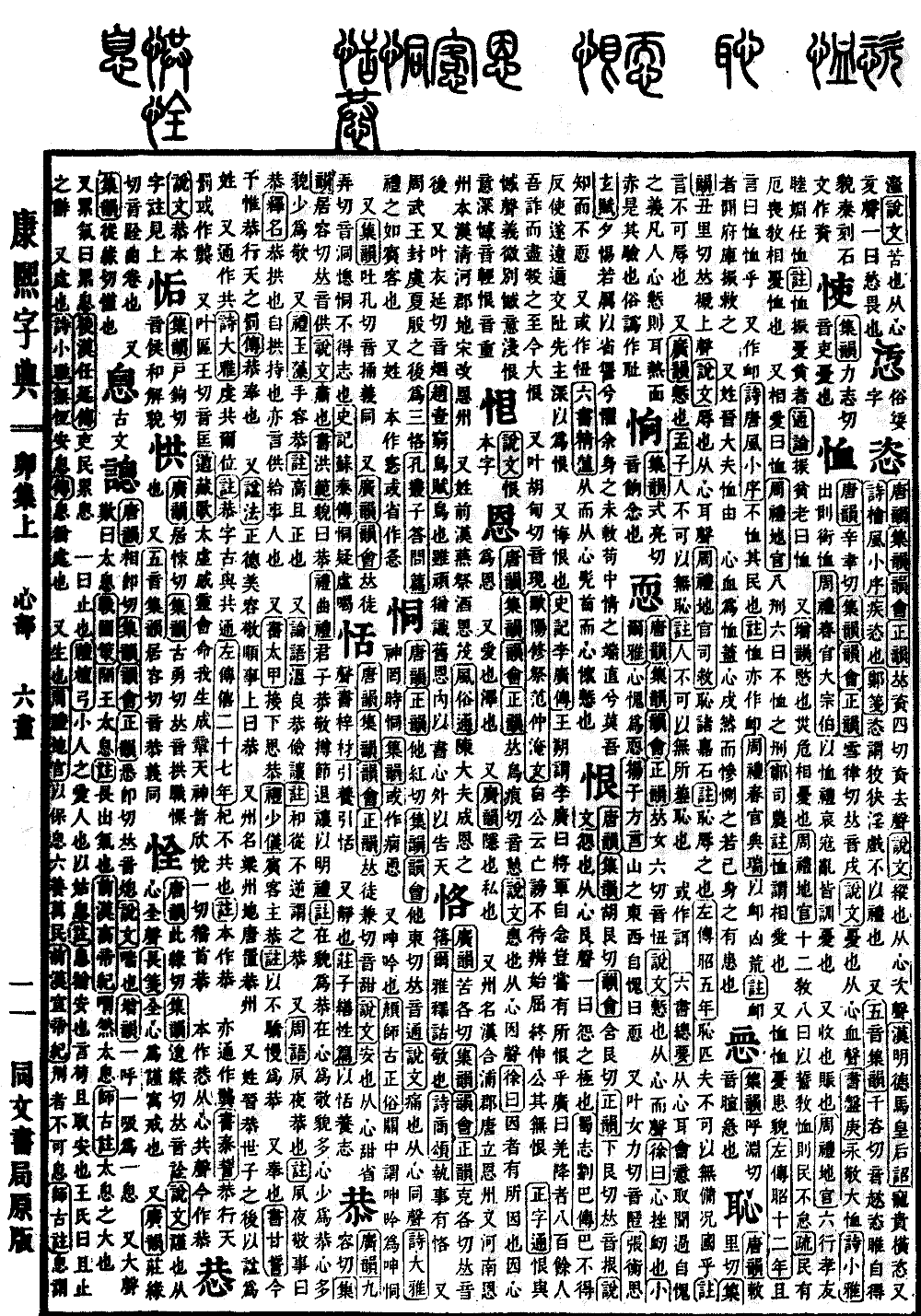
Mao Collection, Upper Volume
Radical: Heart (xīn)
Kangxi stroke count: 10
Page 385, Entry 02
Pronounced zi (falling tone). According to the Tang Rhyme (Tangyun), Collection Rhyme (Jiyun), Rhyme Compilation (Yunhui), and Orthodox Rhymes (Zhengyun), it is pronounced like the falling tone of zi.
The Explaining Graphs and Analyzing Characters (Shuowen Jiezi) defines it as unbridled or unrestrained. The character is composed of the radical for heart, with the component meaning next acting as the phonetic indicator.
The Edict of Empress Ma of the Han Dynasty (Han Mingde Ma Huanghou Zhao) mentions those who are favored and noble being arrogant and unrestrained. The Book of Odes (Shijing), in the introductory commentary to the Airs of Kuai, mentions resentment of unrestrained behavior. The scholar Zheng Xuan notes that the term refers to deceitful, licentious, and excessive behavior that disregards the laws of propriety.
According to the Five Sounds Collection of Rhymes (Wuyin Jiyun), it is also pronounced like the word zi. The compound phrase zisui describes a state of self-satisfaction and indulgence. In stone inscriptions from the Qin dynasty, the character is written in a variant form.