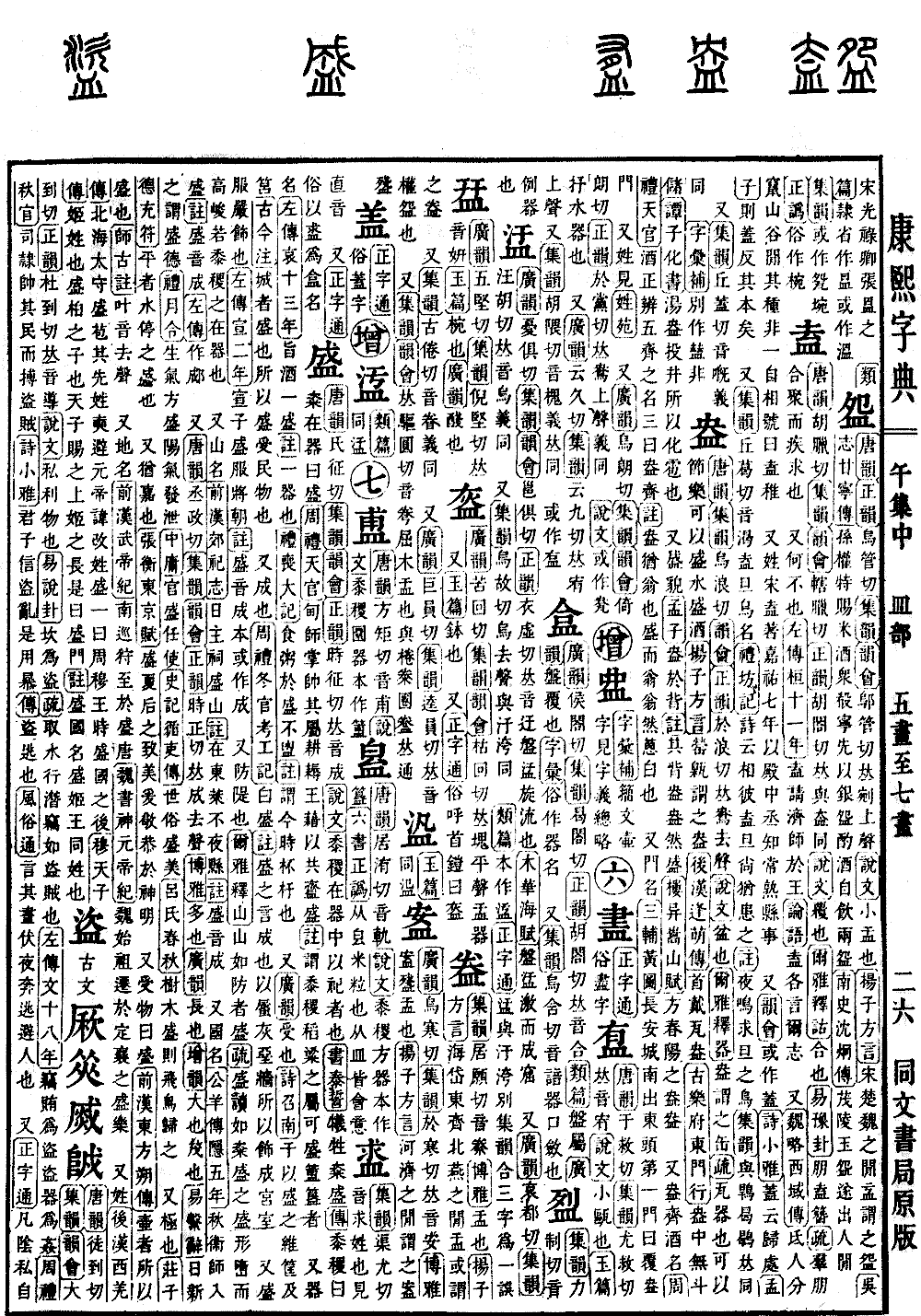
Wu Collection, Middle Volume
Radical: Vessel (mǐn)
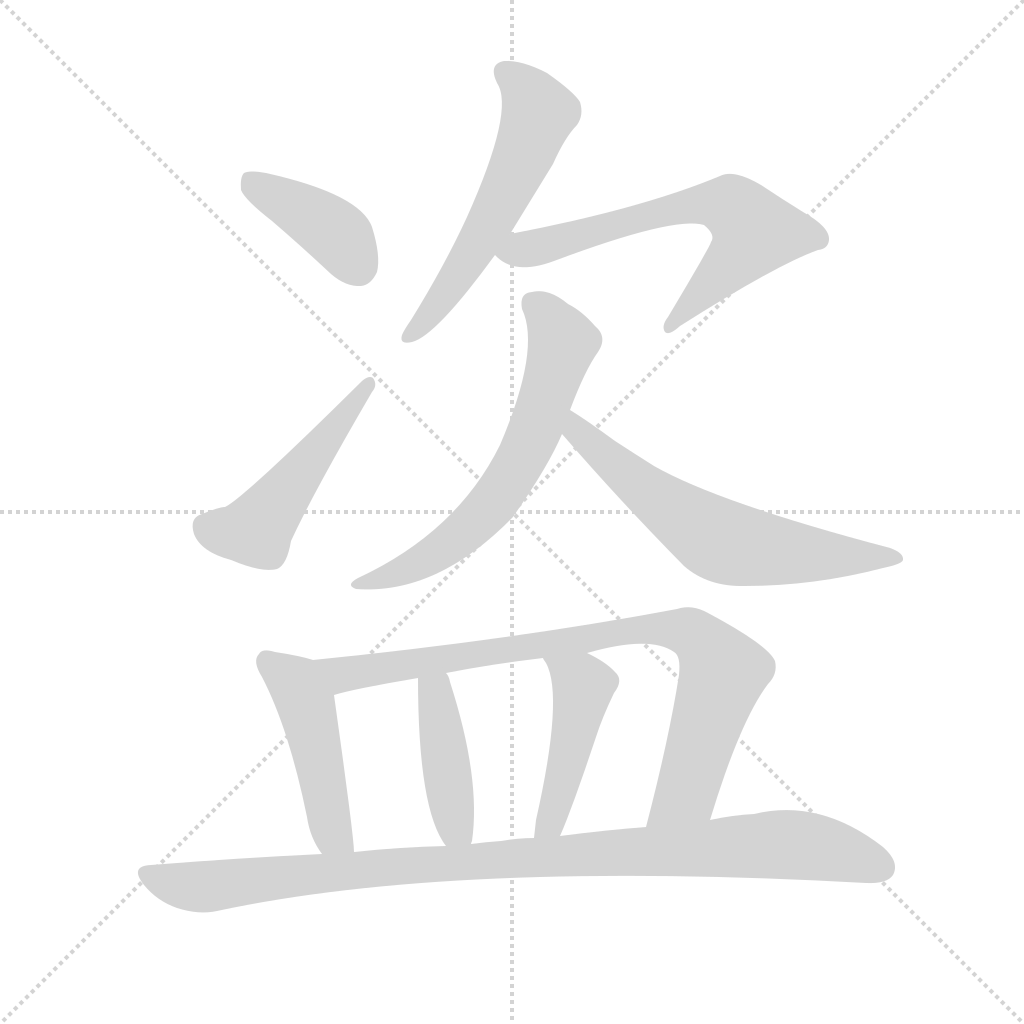
盜
Kangxi stroke count: 12
Page 794, Entry 16
Pronounced dào.
Shuowen Jiezi (Explanation of Graphs and Analysis of Characters): To secretly profit from objects.
Book of Changes (Yijing): Kan is the symbol of a thief.
Commentary (Shu): Taking water and moving stealthily, this is like a thief.
Zuo Commentary (Zuozhuan), 18th Year of Duke Wen: Stealing wealth is called theft; stealing ritual vessels is called treachery.
Rites of Zhou (Zhouli), Office of Autumn: The Director of Retainers leads the people to capture thieves and bandits.
Book of Odes (Shijing), Minor Odes: If the ruler believes thieves, chaos and violence will ensue.
Commentary (Zhuan): Theft is to escape.
Comprehensive Meaning of Customs (Fengsu Tong): It refers to those who hide by day and run by night, avoiding people.
Zhengzitong: All those who secretly seek their own benefit are called thieves.
Guliang Commentary (Guliang Zhuan), 4th Year of Duke Ai: In the Spring and Autumn Annals, there are three types of theft: secretly killing a high official is called theft; taking what one has no right to take is called theft; abandoning the upright path of the Central Kingdom to seize profit is called theft.
Also, the name of a spring.
Book of Later Han (Hou Hanshu), Treatise on Geography: In Xu Province, there is Thief Spring.
Garden of Stories (Shuoyuan): The water is called Thief Spring; Confucius would not drink from it because he detested the name.
Also, the name of a star.
History of Song (Songshi), Treatise on Astronomy: A guest star in the southeast is called the Thief Star, which governs great thefts.
Also, the name of a horse capable of traveling a thousand li.
Travels of King Mu (Mu Tianzi Zhuan): The right side horse is the Thief Black (daoli).
Erya, Commentary on Domesticated Animals: A fast horse with a small neck is called a Thief Black.
Also, the name of a plant.
Erya, Commentary on Plants: The plant fu is also called Thief Stem (daogeng).
Six Books of Corrected Errors (Liushu Zhenge): It is the same as the character for saliva (yan), meaning desire; wanting the contents of a vessel is theft, a compound ideograph. Derived from the vessel radical. The popular usage using the character for next (ci) is incorrect.