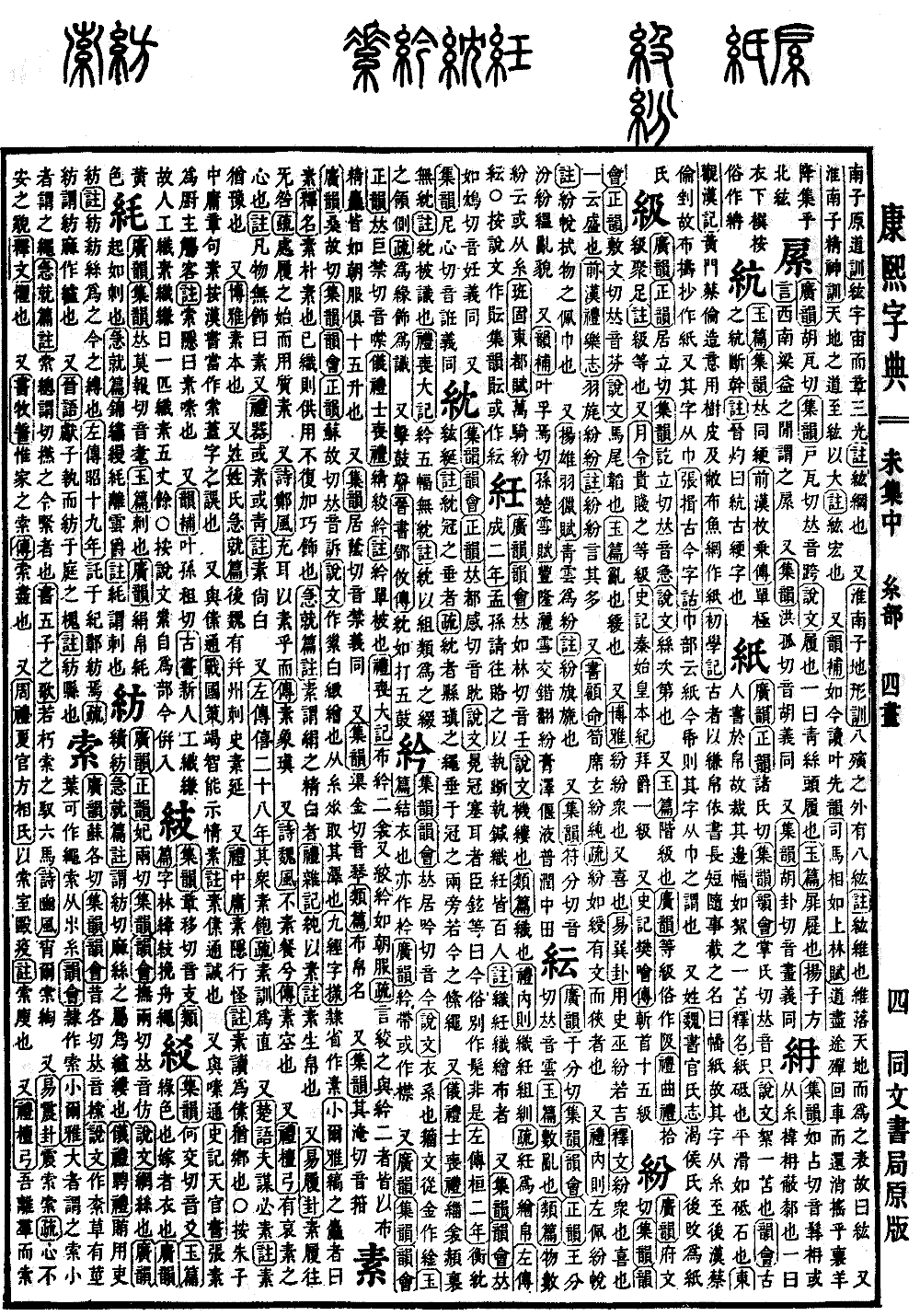
Wei Collection, Middle Volume
Radical: Silk (mì)
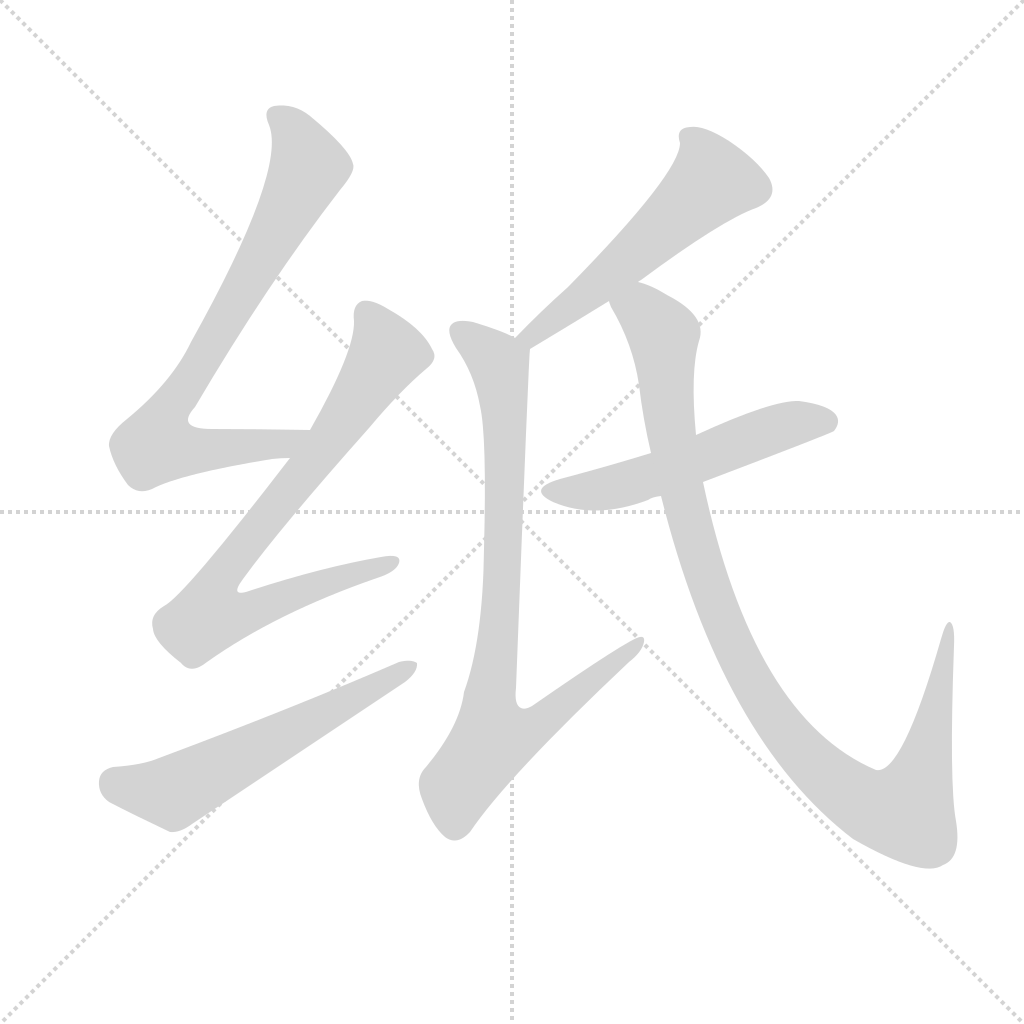
Paper
Kangxi Strokes: 10
Page 918, Entry 02
Pronounced zhi (rising tone)
Shuowen Jiezi (Explaining Single-component Characters and Analyzing Compound Characters): A thin layer of silk floss.
Rhyme Collection (Yunhui): In ancient times, people wrote on silk; they would cut off the edges, which resembled a thin layer of silk floss.
Explanations of Names (Shiming): Paper (zhi) is a whetstone (di); it is as smooth and level as a whetstone.
Records of the Eastern Han (Dongguan Hanji): Cai Lun of the Yellow Gate invented paper, making it from tree bark, old rags, and fishing nets.
Record of Early Learning (Chuxueji): In ancient times, silk fabric was cut to the length required by the writing; this was called fan paper, which is why this character contains the radical for silk. In the late Eastern Han dynasty, Cai Lun pounded old rags into a pulp to create paper.
This character also contains the radical for cloth.
Zhang Yi, Ancient and Modern Character Glosses: The cloth radical section says that paper is now written as a variant form. This implies that the character is derived from the cloth radical.
Also a surname.
Book of Wei (Weishu): The Kehou clan later changed their name to the Zhi clan.