Mao Collection, Middle Volume
Radical: Hand (shǒu)
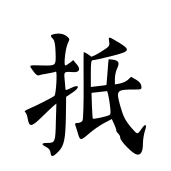
Entry: Zhi
Kangxi strokes: 8
Page 419, Entry 13
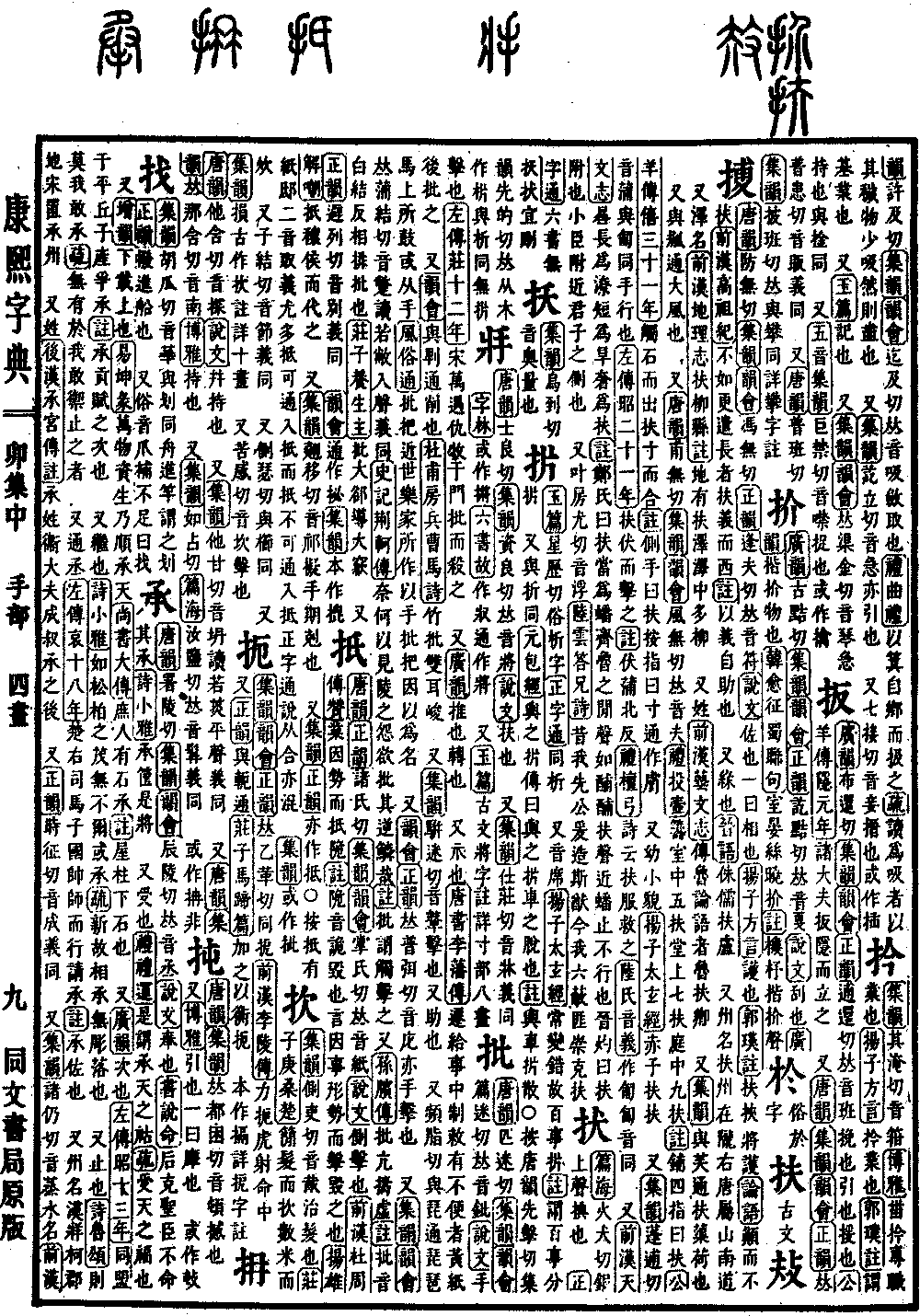
According to Tang Rhymes (Tangyun) and Correct Rhymes (Zhengyun), pronounced zhi (falling-rising tone). According to Collected Rhymes (Jiyun) and Rhyme Anthology (Yunhui), pronounced zhi (falling-rising tone).
According to Analytical Dictionary of Characters (Shuowen Jiezi), it means to strike from the side.
In the Eulogy for Du Zhou in the History of the Former Han (Qian Hanshu), it states: To operate based on momentum and strike down the crumbling. The commentary notes that the character gui (rising tone) means to destroy. It refers to attacking and destroying something by taking advantage of the situation.
In Yang Xiong’s Dissuading from Mockery (Jiechao), it states: To strike at the Marquis of Rang and replace him.
Additionally, according to Collected Rhymes (Jiyun), pronounced qi (rising tone). It means to prepare the hand to aim for a victory.
Additionally, according to Collected Rhymes (Jiyun) and Correct Rhymes (Zhengyun), it is also written in the variant form di (falling-rising tone).
Note: Zhi has the pronunciations zhi (falling-rising tone) and di (falling-rising tone), with many derived meanings. The character di can be used interchangeably with zhi, but zhi cannot always be used for di. The Correct Treasury of Characters (Zhengzitong) claims it is formed from the character he, which also leads to confusion. According to Collected Rhymes (Jiyun), it is sometimes written in a variant form.