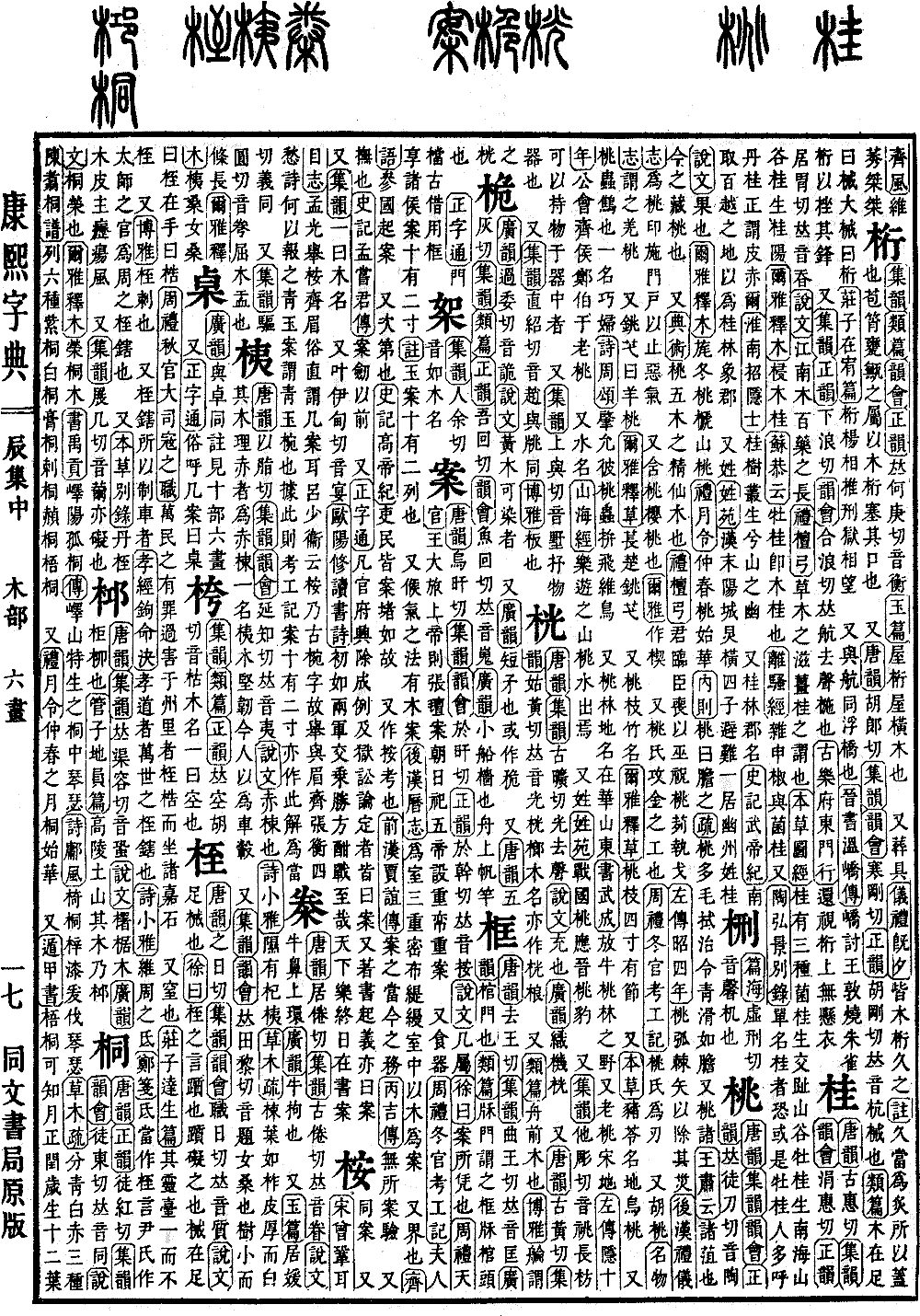
Chen Collection, Middle Volume
Radical: Tree (mù)
桎
Kangxi strokes: 10
Page 525, Entry 15
Pronounced zhi.
According to the Explanation of Simple and Compound Characters (Shuowen Jiezi), it refers to fetters for the feet. Xu states that the word zhi implies stumbling (zhi), meaning to be obstructed. Fetters for the feet are called zhi, while those for the hands are called gu.
In the Rites of Zhou (Zhouli), under the duties of the Minister of Justice (Da Sike), it is written: for the common people who have committed crimes or harm within the district, place them in fetters (zhigu) and seat them upon the auspicious stone.
It also means to block. In the Zhuangzi, chapter on Mastering Life (Dasheng), it is written: his spiritual platform is unified and unhindered.
Also, according to the Boya, zhi means to pierce.
Also, zhixia refers to the components used to control a carriage. In the Apocryphal Text of the Classic of Filial Piety (Xiaojing Goumingjue), it is written: the way of filial piety is the control mechanism (zhixia) for ten thousand generations.
In the Book of Odes (Shijing), Xiaoya section, it is written: only the base of the Zhou. Zheng notes that base should be written as zhi, meaning that the Yin family serving as Grand Master acted as the control mechanism (zhixia) for the Zhou dynasty.
Also, according to the Additional Records of the Materia Medica (Bencao Bielu), the bark of the danzhi tree is used to treat scrofulous sores.
Also, according to the Jiyun, it is pronounced er, and also means to obstruct.