Yin Collection, Middle Volume
Radical: Turban (jīn)
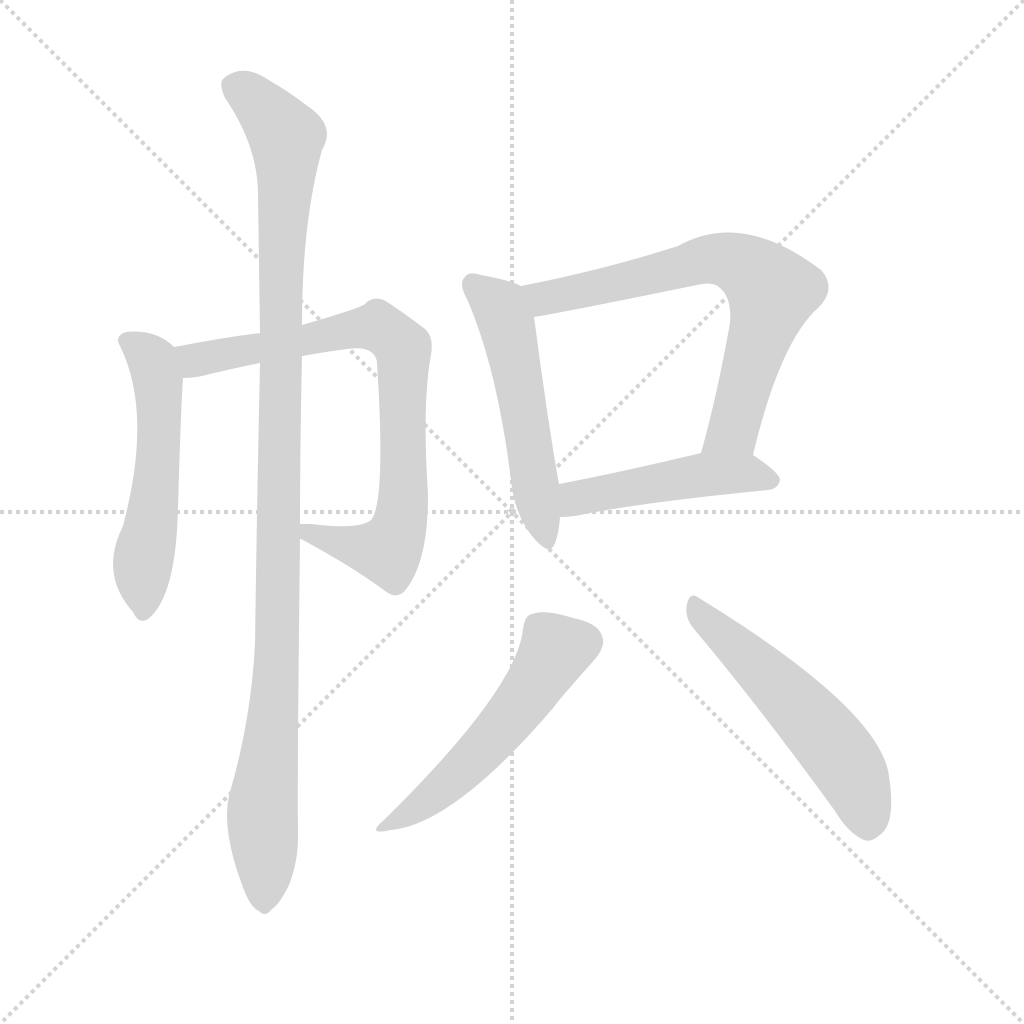
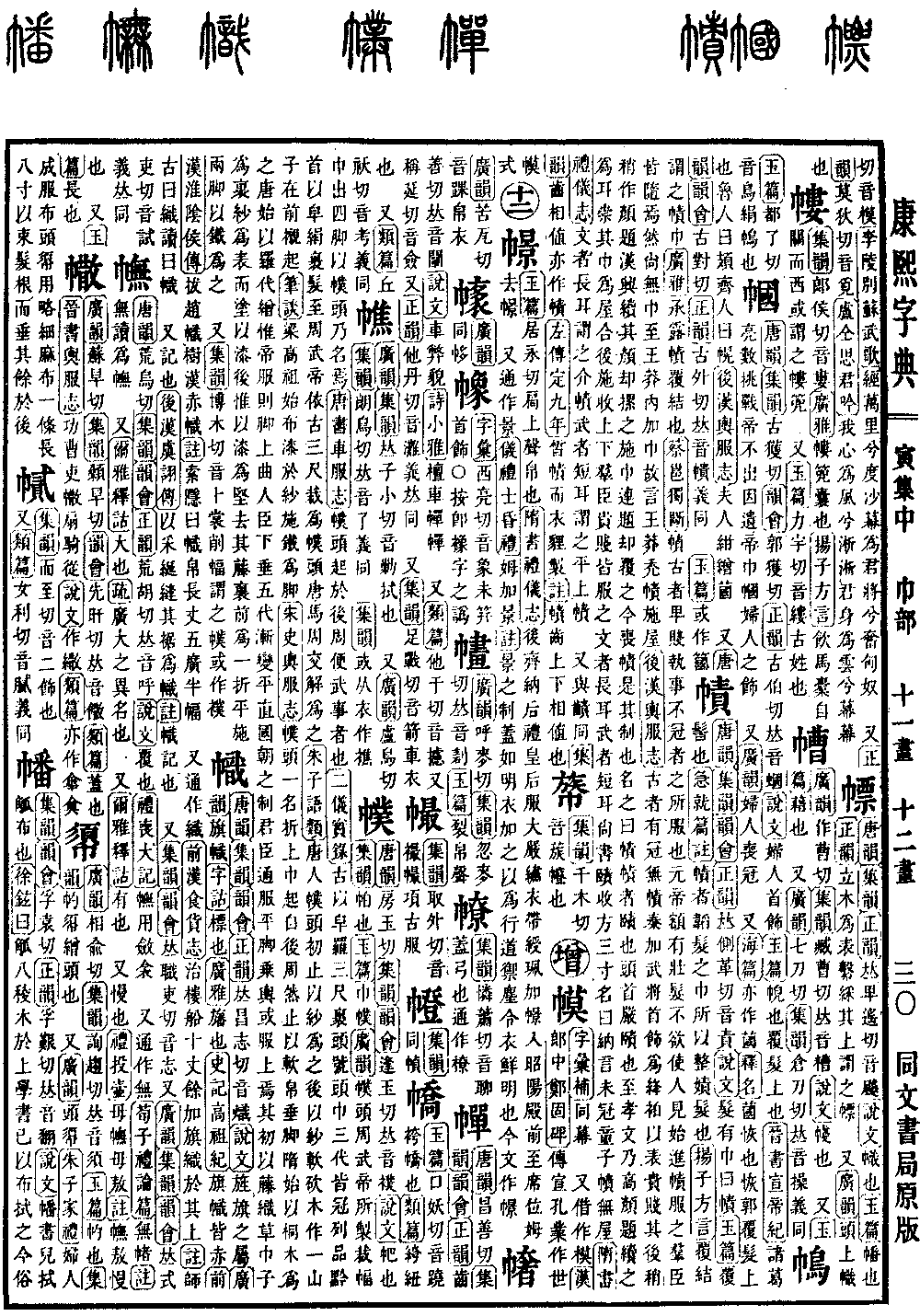
Zhi
Kangxi strokes: 15
Page 336, Entry 06
Tang Rhymes (Tangyun), Collected Rhymes (Jiyun), Rhyme Compendium (Yunhui), Correct Rhymes (Zhengyun): Pronounced chi (falling tone).
Shuowen Jiezi (Shuowen): A type of banner or flag.
Guangyun (Guangyun): A flag or banner.
Zigu (Zigu): A sign or marker.
Guangya (Guangya): A pennant.
Records of the Grand Historian (Shiji), Annals of Emperor Gaozu: The flags and banners were all red.
Book of Han (Qianhan), Biography of the Marquis of Huaiyin: Pulled down the Zhao banners and planted the red banners of the Han.
Commentary: Suo Yin states that a banner is one and a half zhang long and half a bolt of cloth wide.
Also written interchangeably as zhi.
Book of Han (Qianhan), Treatise on Food and Money: Constructed towership vessels over ten zhang long, and added flags and banners on top of them.
Commentary: Shigu states that the character here is read as zhi.
Also means a mark or sign.
Book of the Later Han (Houhan), Biography of Yu Xu: Used colored thread to sew onto the hem of the garment as a mark.
Commentary: Zhi means a mark.
Also: Collected Rhymes (Jiyun), Rhyme Compendium (Yunhui): Pronounced zhi (falling tone).
Also: Guangyun (Guangyun), Collected Rhymes (Jiyun), Rhyme Compendium (Yunhui): Pronounced shi (falling tone).
The meaning is the same.